A basic book on globalization
July 29, 2026
  • Read Ecopy
  • Circulation
  • Advertise
  • Careers
  • About Us
  • Contact Us
Android AppiPhone AppArattai
Organiser
  • ‌
  • Bharat
    • Assam
    • Bihar
    • Chhattisgarh
    • Jharkhand
    • Maharashtra
    • View All States
  • World
    • Asia
    • Europe
    • North America
    • South America
    • Africa
    • Australia
  • Editorial
  • International
  • Opinion
  • RSS @ 100
  • More
    • Op Sindoor
    • Analysis
    • Sports
    • Defence
    • Politics
    • Business
    • Economy
    • Culture
    • Special Report
    • Sci & Tech
    • Entertainment
    • G20
    • Azadi Ka Amrit Mahotsav
    • Vocal4Local
    • Web Stories
    • Education
    • Employment
    • Books
    • Interviews
    • Travel
    • Law
    • Health
    • Obituary
  • Subscribe
    • Subscribe Print Edition
    • Subscribe Ecopy
    • Read Ecopy
  • ‌
  • Bharat
    • Assam
    • Bihar
    • Chhattisgarh
    • Jharkhand
    • Maharashtra
    • View All States
  • World
    • Asia
    • Europe
    • North America
    • South America
    • Africa
    • Australia
  • Editorial
  • International
  • Opinion
  • RSS @ 100
  • More
    • Op Sindoor
    • Analysis
    • Sports
    • Defence
    • Politics
    • Business
    • Economy
    • Culture
    • Special Report
    • Sci & Tech
    • Entertainment
    • G20
    • Azadi Ka Amrit Mahotsav
    • Vocal4Local
    • Web Stories
    • Education
    • Employment
    • Books
    • Interviews
    • Travel
    • Law
    • Health
    • Obituary
  • Subscribe
    • Subscribe Print Edition
    • Subscribe Ecopy
    • Read Ecopy
Organiser
  • Home
  • Bharat
  • World
  • Operation Sindoor
  • Editorial
  • Analysis
  • Opinion
  • Culture
  • Defence
  • International Edition
  • RSS @ 100
  • Magazine
  • Read Ecopy
Home Bharat

A basic book on globalization

THE theme of this study is an appraisal of the dynamics of globalisation with its attendant ramifications and underpinnings that have bearing on a

Archive ManagerArchive Manager
Mar 9, 2013, 12:00 pm IST
in Bharat
Follow on Google News
FacebookTwitterWhatsAppTelegramEmail

Jayant Patel

8
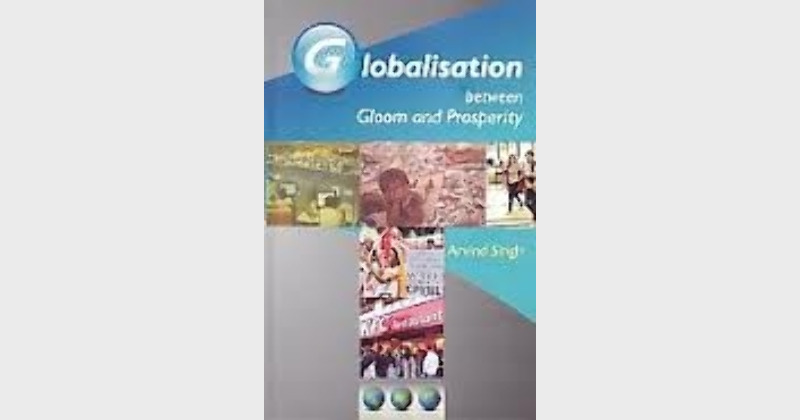
Globalisation between Gloom and Prosperity, Arvind Singh, Kalpaz Publications, Pp 306, Rs 900.00

THE theme of this study is an appraisal of the dynamics of globalisation with its attendant ramifications and underpinnings that have bearing on a nation state, communities and people. Globalisation is defined as a process in which there is an unprecedented acceleration in the movement of information, commodities and people and demands a set of policies that create the social conditions that are said to result from the inevitable logic of globalisation. It can even be said that the processes of globalisation are promoted more by neo-liberal political ideology than economics.

The book integrates the connection between economic and non-economic forces on the globalisation discourse, offering answers to vital questions on wide-ranging issues, like growth, poverty, inequality, social change, corporate behaviour and environmental exchanges through analyses of evidences and examination of the global economic process.

At first globalisation was made possible on the economic front by new and revolutionary developments in communication technology, which allowed rapid transmission of numeric, textural and graphic information. The author says it was this capacity to design structures at one place and realise them in tangible form in another far removed place that allows companies like Nike, Adidas, Gap and GM to organise “tightly their far-flung global networks.” One result of this is spatial organisation of the world economy and that a third of all international trade is not between countries but between branches of the same company. Intra-company transactions allow a company to avoid taxes by setting prices to minimise earnings in countries with low tax rates. This accounting practice is known as transfer pricing. Similarly information technology has given unprecedented mobility to capital, where billions of dollars move across national boundaries at lightning speed with little or no regulations. Thus foreign institutional investors’ and domestic institutional investors’ entry and exit on the stock market of developing countries ride the waves and make headlines in newspapers.

The author lists various stages of globalisation and gives detailed explanations of the first wave of globalisation in 1870-1914, the retreat into nationalism in 1914-15, the second wave of globalisation in 1945-80 and the new wave of globalisation in 1980 which was characterised by the entry of developing countries like India, China, South Korea, Taiwan, Singapore and Brazil. While the period marked the high voltage drama of higher growth and investment in some developing countries, it also saw many countries of Asia, Africa, Latin America decline in growth and investment. The most encouraging trend of the third wave of globalisation has been the entry of countries like China, Bangladesh and Sri Lanka where manufacture shares in their exports are above the world average of 81 per cent. Similarly countries like India, Turkey, Morocco and Indonesia have shares that are nearly as high as the world average.

(Kalpaz Publications, C-30, Satyawati Nagar, Delhi-110 052; [email protected])
ShareTweetSendShareSend
✮ Subscribe Organiser YouTube Channel. ✮
✮ Join Organiser's WhatsApp channel for Nationalist views beyond the news. ✮
Previous News

Low GDP as the price of democracy ?

Next News

Gram Swavlamban Padyatra to propagate DRI in Tharu villages

Related News

BMS National Working Committee Concludes in Ranchi

Jharkhand: BMS National Working Committee meeting concludes; Calls for EPS pension hike & amendments to labour codes

Rajabhoj Memorial Lecture Series Committee, Dhar, hosted a lecture on “Bhojshala: India’s Cultural Renaissance” at Milan Mahal

Rajabhoj Memorial Lecture Series: Bhojshala -A powerful symbol of India’s cultural renaissance

Sindhu River: The inseparable bond

Representative Image

Empty reservoir! What if one claim drains your family floater health insurance?

Bharat’s diverse languages have historically served as bridges of cultural unity, connecting people through a shared civilisational ethos (AI-generated image)

World Hindu Congress 2026: Why Bharatiya languages are the soul of India’s unity

Russia charges Telegram founder Pavel Durov with facilitating terrorism

Russia charges Telegram founder Pavel Durov with ‘facilitating terrorism’, issues international arrest warrant

Load More

Latest News

BMS National Working Committee Concludes in Ranchi

Jharkhand: BMS National Working Committee meeting concludes; Calls for EPS pension hike & amendments to labour codes

Rajabhoj Memorial Lecture Series Committee, Dhar, hosted a lecture on “Bhojshala: India’s Cultural Renaissance” at Milan Mahal

Rajabhoj Memorial Lecture Series: Bhojshala -A powerful symbol of India’s cultural renaissance

Sindhu River: The inseparable bond

Representative Image

Empty reservoir! What if one claim drains your family floater health insurance?

Bharat’s diverse languages have historically served as bridges of cultural unity, connecting people through a shared civilisational ethos (AI-generated image)

World Hindu Congress 2026: Why Bharatiya languages are the soul of India’s unity

Russia charges Telegram founder Pavel Durov with facilitating terrorism

Russia charges Telegram founder Pavel Durov with ‘facilitating terrorism’, issues international arrest warrant

Maoist leader Misir Besra arrested (File Photo)

Jharkhand Maoist stronghold dismantled: Rs 1 Crore bounty leader Misir Besra arrested

Delhi Police orders X to pull down derogatory, malicious & defamatory content against constitutional heads

The CJP protest gave influencers like Abhinav Bisht a platform for followers and fame, raising questions over the focus on NEET students

NEET Students Used as Pawns: How Abhinav Bisht & influencers monetised CJP protest for followers & paydays

Joint Awami Action Committee (JAAC) leader Sardar Umar Nazir Kashmiri accuses Pakistani security forces of killing 31 civilians

“Dissent will Continue”: Top PoJK leader Umar Nazir Kashmiri exposes Pakistan Army’s crackdown; 31 killed in 48 hours

Load More
  • Privacy
  • Terms
  • Cookie Policy
  • Refund and Cancellation
  • Delivery and Shipping

© Bharat Prakashan (Delhi) Limited.
Tech-enabled by Ananthapuri Technologies

  • Home
  • Search Organiser
  • Bharat
    • Assam
    • Bihar
    • Chhattisgarh
    • Jharkhand
    • Maharashtra
    • View All States
  • World
    • Asia
    • Africa
    • North America
    • South America
    • Europe
    • Australia
  • Editorial
  • Operation Sindoor
  • Opinion
  • Analysis
  • Defence
  • Culture
  • Sports
  • Business
  • RSS @ 100
  • Entertainment
  • More ..
    • Sci & Tech
    • Vocal4Local
    • Special Report
    • Education
    • Employment
    • Books
    • Interviews
    • Travel
    • Health
    • Politics
    • Law
    • Economy
    • Obituary
  • Subscribe Magazine
  • Read Ecopy
  • Advertise
  • Circulation
  • Careers
  • About Us
  • Contact Us
  • Policies & Terms
    • Privacy Policy
    • Cookie Policy
    • Refund and Cancellation
    • Terms of Use

© Bharat Prakashan (Delhi) Limited.
Tech-enabled by Ananthapuri Technologies