





Dr Prasun Prabhakar
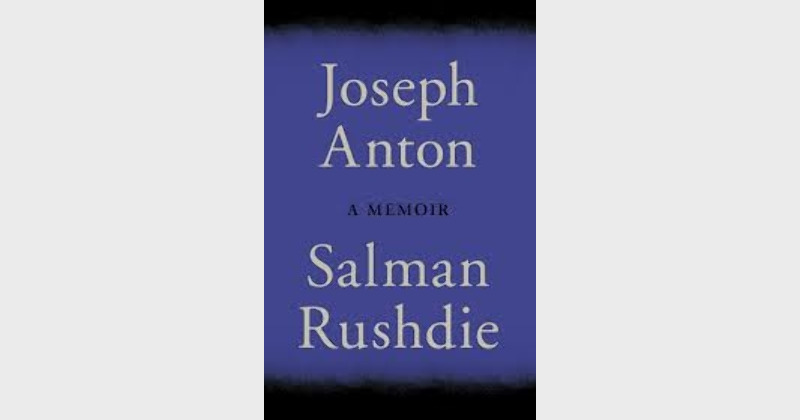
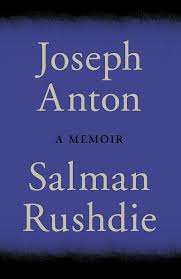
Joseph Anton, Salman Rushdie; London: Jonathan Cape, $ 75.00
 MUMBAI-born Salman Rushdie evokes extreme emotions, in those who agree with him and those who don’t. There are those who have read his books, and know what he stands for, but there are also many who know of him more through newspapers and television channels than through his books; they find him actually unreadable, but are aware of the divisive nature of his work. Either way, Rushdie, 65, is widely known across the world, so whenever a new book by him comes out, it is cause for another round of narrating the troubles – read death threats – he went through for his earlier books, notably, The Satanic Verses in 1989.
It was thus expected that his new book, Joseph Anton will also make news, when it came out in late 2012. Billed as a memoir, many find the book a better read than his earlier, dense books. For one, the book includes a detailed account of his life on the run when he faced death threats, when he stayed in 20 different ‘safe houses’ in Britain, and paid secret visits to friends such as writers Ian McEwan and Hanif Kureishi. Rushdie lived in several places in Wales, including in a bed & breakfast hotels run by a former policeman, rented cottages in Somerset, Gloucestershire and Oxfordshire, and then settled in Bishops Avenue in north London.
Rushdie’s police protection cost 1 million pounds a year but he had to provide the accommodation. He was taken everywhere in a bulletproof car. Several policemen were always with him. Written in the third person, the memoir is a personal narrative as well as a collection of comments and reporting in newspapers of what turned out to be a fight for freedom of expression that eventually led to millions of pounds being spent on his security by the British taxpayer.
The book is titled Joseph Anton, the name Rushdie selected when asked by his police protectors at the time for a pseudonym. He conjured his alias from two of his literary heroes, Joseph Conrad and Anton Chekhov. In the book, Rushdie writes that the police accompanied him everywhere, even to the lavatory, but he declined to wear a wig as a disguise. He writes: “He was offered bulletproof vests. He refused. He would not scuttle. He would walk with his head held high.”
Besides Rushdie’s account of his life in the UK and the US, the book has interesting details about his close engagement with India, including his pain at not being given a visa to travel to India for many years after his book The Satanic Verses evoked strong protests across India and a ban in the country. Rushdie admits in the book that an open letter he then wrote to former Prime Minister Rajiv Gandhi when his book was banned, was arrogant and angry.
Rushdie recalls that Salman Haider, a family friend and the then deputy high commissioner of India in London, had called him to formally inform him that the book had been banned in India. Rushdie writes that the ban pained him, more so after his previous book, Midnight’s Children, had been ‘so enthusiastically received’ in India, which was ‘a source of great pride’. It made the ban on importing The Satanic Verses in the country ‘a painful blow’.
On his widely-published open letter to Rajiv Gandhi at the time, Rushdie admits that it was arrogant: “This was…not how novelists were supposed to behave: scolding a prime minister. This was…arrogant. This was cheek”.
He goes on: “Well, OK, that was arrogant. Angry and injured also, but the arrogance was undeniably there. Very well. So it was. He was defending a thing he revered above most things, the art of literature, against a piece of blatant political opportunism. Maybe a little intellectual arrogance was called for”.
Rushdie writes that the open letter was an attempt to take the cultural high ground, and it concluded with a rhetorical appeal “to that posterity whose judgement could not be known by either Rajiv Gandhi or himself: ‘You own the present, Mr Prime Minister; but the centuries belong to art’ ”. According to Rushdie, Indian governments from the mid-1970s onwards, “ever since the time of Indira and Sanjay Gandhi”, had “often given in to pressure from religious interest groups, especially those claiming to control large blocks of votes”.
He writes: “By 1988, Rajiv Gandhi’s weak government, with elections due in November, cravenly surrendered to threats from two opposition Muslim MPs who were in no position to ‘deliver’ the Muslim electorate’s votes to the Congress party”.
Recalling the ban on The Satanic Verses, Rushdie writes that he did not expect it, “innocently, naively, even ignorantly”, and adds: “But in 1988 it was possible to believe in India as a free country in which artistic expression was respected and defended…Book burning was something that happened all too frequently across the border in Pakistan. It wasn’t the Indian way”.
India, he writes, “was surrounded by unfree societies – Pakistan, China, Burma – but remained an open democracy; flawed, certainly, perhaps even deeply flawed, but free”. According to him, The Satanic Verses was not examined by any properly authorised body in India, “nor was there any semblance of judicial process”. It had been banned under Section 11 of the Customs Act, which prevented the book from being imported.
Describing not being able to visit India for over 12 years as a ‘long exile”, Rushdie writes that being denied a visa and Indian embassies abroad keeping away from him was a “deep wound” inflicted on him by India. Leaving India in 1987 after shooting a documentary, Rushdie writes in the third person narrative: “He did not know it then, but this was the beginning of a long exile”.
A British citizen, Rushdie adds: ‘After India became the first country in the world to ban The Satanic Verses it would also refuse to give him a travel visa…He would not be allowed to come back, to come home, for twelve and a half years”. Describing the impact of the book’s ban and Iran’s ‘fatwa’ to kill him, Rushdie writes that “the wounds inflicted by India were the deepest”. There was no question, he was told, of his being given a visa “to visit the country of his birth and deepest inspiration”.
Rushdie recalls being told that he was also not welcome at the Nehru Centre in London.
“He was not even welcome at the Indian Cultural Centre in London because, according to the centre’s director (and grandson of the Mahatma) Gopal Gandhi, his presence there would be seen as anti-Muslim and would prejudice the centre’s secular credentials”, he writes.
Rushdie recalls that in 1997, he was similarly asked to stay away from official celebrations of 50 years of India’s Independence in New York. When Indian officials in New York were told that he was in town, Rushdie writes that “they backed away as if confronted by a rattlesnake”.
Rushdie was granted a visa in 1999, but did not travel following a furore when news of his impending visit reached India. In 2000, he travelled to New Delhi for an event where Commonwealth Writer’s Prize for Best Book was to be announced (it went to renowned South African writer J M Coetzee).
Delighted to be in India after the “long exile”, Rushdie travelled to Solan to visit his ancestral house, and then to New Delhi where, after initial fears of trouble were belied, he was warmly welcomed and feted. One reason for the change in 2000, he writes, was that his controversial book had become “old hat”.
He writes: “Oh, there’s a novelist in town for a dinner? What’s his name? Rushdie? So what? This was the view taken, almost without exception, by the Indian press…The script in people’s heads had been rewritten…What burst out in the city was not violence, but joy”.
Recalling the visit to India for a documentary on 40 years of India’s Independence in 1987, Rushdie describes Maharashtra politician Chhagan Bhujbal as a ‘walking political cartoon’ after meeting him for the shoot.
Narrating the visit for the Channel 4 documentary titled The Riddle of Midnight, Rushdie writes that the only politician he interviewed at the time was Bhujbal, who was then a leader of the Shiv Sena. Rushdie writes: “There was black comedy. The only politician he interviewed was Chhagan Bhujbal, the first mayor of Bombay to be a member of the Shiv Sena, the thuggish Marathi-nationalist and Hindu communalist party headed by a former political cartoonist, Bal Thackeray”.
He goes on: “Chhagan Bhujbal was a walking political cartoon. He allowed a TV crew to accompany him to the annual Ganpati celebrations and film how that festival in honour of elephant-headed Ganesh, which was once a day of celebration for members of all religious backgrounds, had been reduced to a fist-thumping, neo-Nazi assertion of Hindu power”. Rushdie quotes Bhujbal as saying: “You can call us fascist…We are fascist. And you can call us racist. We are racist”.
So whether you agree or disagree with him, this book certainly makes for an interesting read.
(The Random House Group Ltd., 20, Vauxhall Bridge Road London SW1V 2SA)
![A Representative image [ANI Photo]](https://organiser.org/wp-content/uploads/2025/12/representative-image-e1765612818961-120x70.webp)
Comments