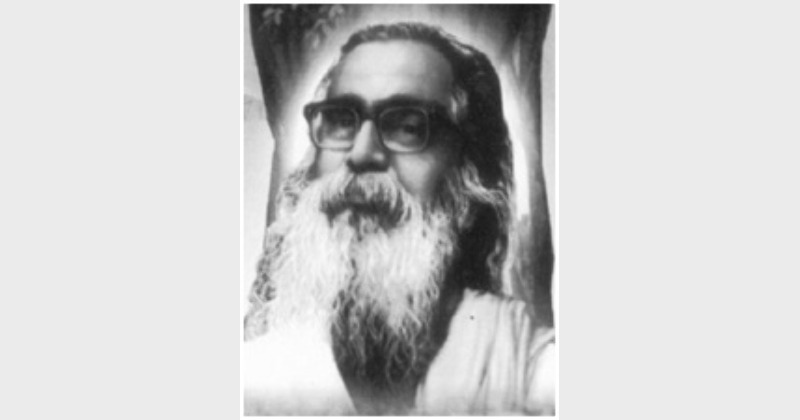
S. Gurumurthy
Social fabric vs Constitution: Guruji’s view then, American debate now.
THE emerging geo-political theatre in the West is not just a tussle between multi-culturalism and assimilation. According to a study by the Royal United Services Institute UK, a respected defence think tank, multi-culturalism seems to be pitted against national identity and national security.
(1) The issue is not whether multi-culturalism is good or bad, whether the West can afford if.
(2) Therefore in the debate between advocates of assimilation and protagonists of multiculturalism, Samuel Huntington calls for rejection of multiculturalism. He says: “The clash between the multiculturalists and the defenders of western civilisation and the American creed is, in James Kurth’s phrase, “the real clash” within the American segment of western civilisation. Americans cannot avoid the issue: Are we a western people or are we something else? The futures of the United States and of the West depend upon Americans reaffirming their commitment to western civilisation. Domestically this means rejecting the divisive siren calls of multiculturalism.
(3) Because of transition from cultural nationalism – based on assimilation of minorities and integrating them into the mainstream society – to multiculturalism, the very [Anglo-Protestant] identity of America is in question and the security of the West at risk.
But, Huntington’s view subordinates other cultures. Guruji’s accommodates
Huntington’s view that Anglo-Protestant culture is American identity has been heavily criticised in the US.
(4) While untington saw Anglo-Protestant culture as the mainstream or core culture and therefore the nationalism of US, he ran into difficulty in positioning other cultures and therefore he called them as “subordinate cultures”. He distinguished the core and subordinate cultures thus: “Most countries have a core or mainstream culture shared to varying degrees by most people in their society. In addition to their national culture, subordinate cultures usually exist as sub-national, or at times, trans-national groups defined by religion, race, ethnicity, region, class or other categories that the people feel give them something in common.”
(5) Huntington’s view of core culture and Guruji’s view of basic culture match. Yes. But the agreement ends there. Huntington’s view that non-Anglo Protestant cultures – read faiths – are subordinate is derived from monotheistic Christianity which labels all other faiths as inferior. This is where Guruji differs. He cites the concept of equal and mutual respect inheres in Hindu faith and culture.
(6) That is why the inclusive Hindu culture, including all within its scope, qualifies as the basic culture. That which is not inclusive cannot be core or basic to all. Huntington’s Anglo-Protestant core culture thesis isolates and subordinates other cultures; Guruji’s view accommodates and integrates. Huntington’s, admittedly not familiar with Hinduism, lacks the input of accommodative Hindu philosophy. That was why Guruji said that it was the duty of the Hindus to take this message to the world at large.
Unity in diversity is social virtue, multiculturalism is state policy
But the difficulty which Huntington faced in the US over the issue of Anglo-Protestant identity of America was precisely the difficulty which Guruji faced over the issue of Hindu identity in India – even though the philosophic bases of Huntington and Guruji were different. Holding ‘some educated and elite Americans’ and ‘globalisation, multiculturalism, cosmopolitanism, immigration, sub-nationalism, and anti-nationalism’ responsible for erosion in ‘national identity’, Huntington said that, ‘Corporate executives, professionals and Information Age technocrats espoused cosmopolitan over national identities’.
(7) He also pointed out that the ‘elites in government’
(8) joined by ‘elements of America’s elites in academia, media, business, and the professionals constituted the coalition to deconstruct America’
(9), ‘denounced the idea of Americanisation as un-American’, and declared that ‘America is even a “tossed salad”.
(10) Huntington had to emphasise the superiority of Anglo-Protestant culture and the subordination of non-Anglo Protestant cultures as they were mutually exclusive. But Guruji was clear that while the Hindu culture was the basic culture, other cultural streams were diversified expressions of the basic Hindu culture, not independent or autonomous. Guruji pointed out the amazing potential and power of the Hindu culture to assimilate even foreign races and faiths within the inclusive Hindu thought. So the idea of national culture in Guruji’s exposition was founded on the inclusive Hindu philosophy, culture and society
(11) but Huntington’s was the extension of exclusive monotheistic Chritianity.
Yet, the criticism of Guruji’s views by secular India is striking similar to the criticism of Huntington’s view, except that while the criticism of Huntington was logical and rational, Guruji was accused as communal and abused as fascist. The deconstructionist alliance in the US identified by Huntington approximates the secular alliance in India. Deliberately disregarding the world of difference between the concept of unity in diversity mediated by Hindu culture which treated all cultures with respect and Huntington’s theory of subordination other cultures to Anglo Protestant culture, founded on monotheistic Christianity, the secular Indian establishment is doing to India precisely what the deconstructionist alliance is doing to the US. In addition it is trivialising and marginalising the inclusive basic Hindu culture as one of the cultures of India and is deconstructing India into a collection of sub-national and subordinate cultures, dividing and separating them from the basic Hindu culture. The Indian seculars are reducing the adhesive of inclusive Hindu culture into one of the limbs of Indian national culture by state policy. They are substituting the state discipline for the social adhesive of Hindu culture. The seculars in India are enthusiastically campaigning for a multicultural India, like the multicultural US and multicultural UK and other nations in the Europe. They are blind to the reality that, unlike the Anglo-Protestant culture, the Hindu values recognise cultural diversity by social philosophy and practice. They have lost sight of the fact that multiculturalism is promoted through the state as a state policy, but unity in diversity inheres in the Hindu social virtue.
In a recent article titled “Let’s give up the Constitution” on the constitutional issue of fiscal deficit in US, Louis Michael Seidman, a professor of constitutional law at Georgetown University [author of the forthcoming book On Constitutional Disobedience] wrote in New York Times [30.12.2012] that social fabric and, most important, the sense that Americans are one nation and not the constitution have preserved America’s political stability. Asserting that social fabric would even survive the failure of the constitution, Seidman wrote:
“The deep-seated fear that such [constitutional] disobedience would unravel our social fabric is mere superstition. As we have seen, the country has successfully survived numerous examples of constitutional infidelity. And as we see now, the failure of the Congress and the White House to agree has already destabilised the country. Countries like Britain and New Zealand have systems of parliamentary supremacy and no written constitution, but are held together by longstanding traditions, accepted modes of procedure and engaged citizens. We, too, could draw on these resources. What has preserved our political stability is not a poetic piece of parchment, but entrenched institutions and habits of thought and, most important, the sense that we are one nation and must work out our differences. No one can predict in detail what our system of government would look like if we freed ourselves from the shackles of constitutional obligation, and I harbour no illusions that any of this will happen soon. But even if we can’t kick our constitutional-law addiction, we can soften the habit.”
(12)Compare what Siedman says in December 2012 with what Guruji had said decades earlier in more fundamental terms. Guruji had said: “The first and foremost effect of this trend [of constitutional individualism] would be the destruction of social fabric. The social contract theory [the other name for constitutional society] on which the western societies are based cannot stem this tide, because the theory is essentially one of mutual understanding between the individual and the society to protect each other’s interests. But when the individual begins to assert that it is after all a contract between individuals, that basis of social integrity itself falls to the ground. The entity called the “society” will then disrupt and dissipate…….. It is only when the society is looked upon as a living corporate body of which the individual is a limb that the real unifying social consciousness will be ingrained in him. Then alone will he be able to restrain his erratic impulses and harmonise them with the interests of the society. And this is exactly what the Hindu philosophy propounds.”
(13) Is not Seidman saying in secular terms in end December 2012 virtually what Guruji had said in basic philosophic terms decades earlier on the supremacy of social fabric? Again, how the constitutional and legal structure sometimes negates the spirit of the nation had been brought out by Guruji in the context of the government of India attempting to restructure the Indian society on socialist model. Guruji said: Socialism is not a product of this soil. It is not in our blood and tradition. It has absolutely nothing to do with the traditions and ideal of thousands of years of our national life. It is a thought alien to crores of our people here. As such it does not have the power to thrill our hearts, and inspires us to a life of dedication and character. Thus we see that it does not posses even the primary qualification to serve as an ideal for our national life. (14) What Guruji had foreseen in early 1970s came true in early 1990s. The constitutional backing for socialism that had peaked in early 1970s with the 24th and 25th constitutional amendments imposing socialist pattern of society on India, was reversed by state action in early 1990s and India ceased to be a socialist economy, even though the mandate of socialism still exists in our Constitution!
References:
[1] http://www.telegraph.co.uk/news/uknews/1578785/Britain-a-soft-touch-for-home-grown-terrorists.html
[2] Ben-Peter Terpstra, an Australian satirist and cartoon lover.
http://www.menzieshouse.com.au/2010/10/can-you-afford-multiculturalism.html?utm_source=fee dburner&utm_medium=feed&utm_ca mpaign=Feed%3A+Me nziesHouse+% 28Menzies+House%29
[3] The Clash of Civilizations and the Remaking of the World Order, Chapter 12, Multiculturalism and fall of Western civilization.
[3] Who Are We? Foreword [p.xvi]
[4] www.foreignaffairs.com/…/native-son-samuel-huntington-defends-the-homeland
[5]Who Are We? p.59
[6] Bunch of Thoughts [1980] p166
[7] Who Are We? p.63
[8] Ibid p.65
[9] Ibid p.66
[10] Ibid p. 67
[11] Bunch of Thoughts p.131, 132, 133; p147, 148; p161, 162; p217,
[12] http://www.nytimes.com/2012/12/31/opinion/lets-give-up-on-the-constitution.html? pagewanted=all&_r=0
[13] Bunch of Thoughts [1980] p13
[14] Ibid p264