Antiquities as human heritage asset
June 23, 2026
  • Read Ecopy
  • Circulation
  • Advertise
  • Careers
  • About Us
  • Contact Us
Android AppiPhone AppArattai
Organiser
  • ‌
  • Bharat
    • Assam
    • Bihar
    • Chhattisgarh
    • Jharkhand
    • Maharashtra
    • View All States
  • World
    • Asia
    • Europe
    • North America
    • South America
    • Africa
    • Australia
  • Editorial
  • International
  • Opinion
  • RSS @ 100
  • More
    • Op Sindoor
    • Analysis
    • Sports
    • Defence
    • Politics
    • Business
    • Economy
    • Culture
    • Special Report
    • Sci & Tech
    • Entertainment
    • G20
    • Azadi Ka Amrit Mahotsav
    • Vocal4Local
    • Web Stories
    • Education
    • Employment
    • Books
    • Interviews
    • Travel
    • Law
    • Health
    • Obituary
  • Subscribe
    • Subscribe Print Edition
    • Subscribe Ecopy
    • Read Ecopy
  • ‌
  • Bharat
    • Assam
    • Bihar
    • Chhattisgarh
    • Jharkhand
    • Maharashtra
    • View All States
  • World
    • Asia
    • Europe
    • North America
    • South America
    • Africa
    • Australia
  • Editorial
  • International
  • Opinion
  • RSS @ 100
  • More
    • Op Sindoor
    • Analysis
    • Sports
    • Defence
    • Politics
    • Business
    • Economy
    • Culture
    • Special Report
    • Sci & Tech
    • Entertainment
    • G20
    • Azadi Ka Amrit Mahotsav
    • Vocal4Local
    • Web Stories
    • Education
    • Employment
    • Books
    • Interviews
    • Travel
    • Law
    • Health
    • Obituary
  • Subscribe
    • Subscribe Print Edition
    • Subscribe Ecopy
    • Read Ecopy
Organiser
  • Home
  • Bharat
  • World
  • Operation Sindoor
  • Editorial
  • Analysis
  • Opinion
  • Culture
  • Defence
  • International Edition
  • RSS @ 100
  • Magazine
  • Read Ecopy
Home Bharat

Antiquities as human heritage asset

Through this book, James Cuno, former director of the Art Institute of Chicago, argues that antiquities are the cultural property of humankind, not of the countries that lay exclusive claim to them.

Archive ManagerArchive Manager
Dec 3, 2012, 02:26 pm IST
in Bharat
Follow on Google News
FacebookTwitterWhatsAppTelegramEmail

Manju Gupta
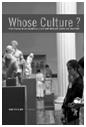
$img_titleWhose Culture? The Promise of Museums and the Debate over Antiquities
, James Cuno (Ed.), Princeton University Press, Pp 220, £ 12.50

Through this book, James Cuno, former director of the Art Institute of Chicago, argues that antiquities are the cultural property of humankind, not of the countries that lay exclusive claim to them.

In this compilation of articles, James Cuno assembles a group of eminent museum directors, curators and scholars to explain what’s at stake in the international controversy over who “owns” antiquities and why the museum’s critics couldn’t be more wrong for their dubious claim to a connection with the ancient cultures they represent. These experts argue herein that museums have value as repositories of objects dedicated to the dissemination of knowledge and dissolution of ignorance, where the artefacts of one culture and one time are preserved and displayed next to others without prejudice.

 The encyclopaedic museum emerges as a broad understanding and appreciation of the historical interrelatedness of the world’s diverse cultures and promotes inquiry and tolerance. In the process, it preserves our common artistic legacy in public domain for the benefit of posterity. “This is the promise of museums,” says the author.

This view, however, has been challenged as outmoded – the view of the past and misguided era of colonisation, during which European nations removed artefacts from other cultures for selfish reasons and at the expense both of the cultural sensitivities of “foreign” peoples and of the archaeological knowledge of the sites where these artefacts were found.

The essays in this volume point out the flaws in this criticism and its unfortunate implications for our knowledge of the past. None can deny that they promote a greater understanding of similarities between cultures due to their relentless contacts with each other and that greater gain is possible on seeing representative examples of diverse cultures together under one roof rather than to segregate them within modern natural borders.

The book is divided into three parts. Part One considers the values and cultural politics of museums in the current climate. Neil Macgregor writes from the perspective of director of the British Museum about his experience in formulating new programmes and policies, especially with regard to broadening public access to his museum’s great collections and to the museum’s role in discovering new truths about our world. Philippe de Montebello, director of the Metropolitan Museum of Art, argues passionately that museums should acquire antiquities, provenanced and unprovenanced for the contributions such acquisitions make to the preservation and further study of our common ancient past. Kwame Anthony Appiah lays the basis for the larger consideration of the politics of treating antiquities as a modern nation’s cultural property, which is at the cost of encouraging a broader understanding of the inter-relatedness and diversity of cultures and our common artistic legacy. He writes about ancient Nok sculpture of Nigeria, “We don’t know whether Nok sculptures were commissioned by kings or commoners. We don’t know whether the people who made them and the people who paid for them thought of them as belonging to the kingdom, to a man, to a lineage, to the gods. One thing we know for sure, however, is that they didn’t make them for Nigeria.”

In Part Two, the papers consider what can be learned from antiquities even without knowing their specific archaeological contents. James C.Y. Watt, an eminent Chinese historian, notes the limitations of archaeology for our greater understanding of our ancient past. He argues that archaeology has yet to help us understand why ancient artists made certain forms of jade or decorated bronze objects a certain way, or even, perhaps most poignantly, what ancient Chinese music sounded like, even though we have unearthed ancient Chinese instruments and thus know what they sound like today. Sir John Boardman, archaeologist and historian of ancient Greek art, argues forcefully against archaeologists’ “criticism of museums acquiring antiquities, including the familiar claim that unprovenanced antiquities have little meaning; that they rightfully belong to their ‘countries of origin’; that trade in antiquities leads to looting and loss of knowledge about the past. David I. Owen, professor of Ancient Near Eastern Studies, argues about the benefits of studying ancient Near Eastern cuneiform tablets for what they can teach us, even if we do not know the archaeological circumstances of their unearthing.

Part Three offers museological, philosophical and legal contexts within which to consider the more specific theses of the earlier papers. Michael F. Brown, anthropologist, considers the constraints on modern museums that seek to collect, present and interpret tangible elements of cultural heritage and what is often called “cultural property”. Since antiquities are defined as a nation’s cultural property, Michael Brown’s reflections on the accusations of cultural appropriation of indigenous people’s culture by non-indigenous scholars and museums are highly relevant.

(Princeton University Press, 41, William Street, Princeton, New Jersey-08540; www.pricneton.edu)

ShareTweetSendShareSend
✮ Subscribe Organiser YouTube Channel. ✮
✮ Join Organiser's WhatsApp channel for Nationalist views beyond the news. ✮
Previous News

Syrian quest for democracy A gripping narrative

Next News

A guide to money market function

Related News

Amazon in dock for mocking Hindu Gods

Amazon File: From Ganesha to Aryabhata-Has Amazon India become a platform for Anti-Hindu narratives?

The West Bengal Budget 2026–27 aims to drive growth through infrastructure, industry, innovation and welfare

Reimagining Bengal: How the West Bengal Budget 2026–27 seeks to balance growth, welfare & economic transformation

Pratiraksha is Gujarat Police's Aadhaar-based verification platform designed to identify illegal workers and prevent identity fraud in industrial sectors

Pratiraksha: How Gujarat police uses Aadhaar verification to secure industrial workforce against identity fraud

Israel-Iran crisis has highlighted not only shifting dynamics of West Asia but also growing confidence of India's foreign policy

India, Israel and the rise of strategic autonomy in an era of global geopolitical realignment

Saleem and Jaleel arrested in forced religious conversion case

Karnataka Conversion Case: Forced conversion of Hindu woman and minor son sparks outrage; Saleem and Jaleel arrested

Bareilly Cantonment Emerges as Model for Sustainable Urban Development in India (Image Source X)

Uttar Pradesh: Bareilly Cantonment becomes India’s first carbon-negative cantonment

Load More

Latest News

Amazon in dock for mocking Hindu Gods

Amazon File: From Ganesha to Aryabhata-Has Amazon India become a platform for Anti-Hindu narratives?

The West Bengal Budget 2026–27 aims to drive growth through infrastructure, industry, innovation and welfare

Reimagining Bengal: How the West Bengal Budget 2026–27 seeks to balance growth, welfare & economic transformation

Pratiraksha is Gujarat Police's Aadhaar-based verification platform designed to identify illegal workers and prevent identity fraud in industrial sectors

Pratiraksha: How Gujarat police uses Aadhaar verification to secure industrial workforce against identity fraud

Israel-Iran crisis has highlighted not only shifting dynamics of West Asia but also growing confidence of India's foreign policy

India, Israel and the rise of strategic autonomy in an era of global geopolitical realignment

Saleem and Jaleel arrested in forced religious conversion case

Karnataka Conversion Case: Forced conversion of Hindu woman and minor son sparks outrage; Saleem and Jaleel arrested

Bareilly Cantonment Emerges as Model for Sustainable Urban Development in India (Image Source X)

Uttar Pradesh: Bareilly Cantonment becomes India’s first carbon-negative cantonment

CM Yogi Adityanath making industry, investment and the connectivity revolution in Eastern Uttar Pradesh

The Purvanchal Growth Story: How industry, infrastructure, tourism & exports are fueling development in eastern UP

(Left) Fire at the coaching centre in Lucknow (Right) Members of ABVP extending all possible help

Lucknow Coaching Centre Fire tragedy is heartbreaking and deeply unfortunate: ABVP seeks action against culprits

Andhra Pradesh Minister and TDP National General Secretary Nara Lokesh

Nara Lokesh dismisses rumours of TDP sabotaging Modi government, reaffirms unconditional NDA support

With new military deployments, export opportunities and potential Russian production, BrahMos is entering a new era of strategic relevance

BrahMos enters high-volume production as military demand and global export orders surge

Load More
  • Privacy
  • Terms
  • Cookie Policy
  • Refund and Cancellation
  • Delivery and Shipping

© Bharat Prakashan (Delhi) Limited.
Tech-enabled by Ananthapuri Technologies

  • Home
  • Search Organiser
  • Bharat
    • Assam
    • Bihar
    • Chhattisgarh
    • Jharkhand
    • Maharashtra
    • View All States
  • World
    • Asia
    • Africa
    • North America
    • South America
    • Europe
    • Australia
  • Editorial
  • Operation Sindoor
  • Opinion
  • Analysis
  • Defence
  • Culture
  • Sports
  • Business
  • RSS @ 100
  • Entertainment
  • More ..
    • Sci & Tech
    • Vocal4Local
    • Special Report
    • Education
    • Employment
    • Books
    • Interviews
    • Travel
    • Health
    • Politics
    • Law
    • Economy
    • Obituary
  • Subscribe Magazine
  • Read Ecopy
  • Advertise
  • Circulation
  • Careers
  • About Us
  • Contact Us
  • Policies & Terms
    • Privacy Policy
    • Cookie Policy
    • Refund and Cancellation
    • Terms of Use

© Bharat Prakashan (Delhi) Limited.
Tech-enabled by Ananthapuri Technologies