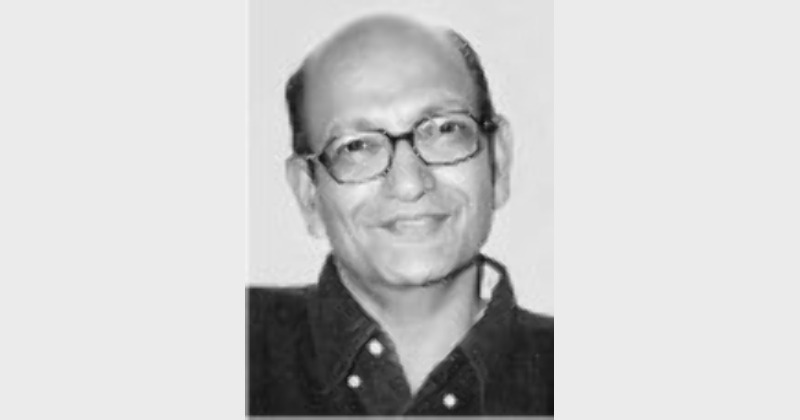
Dr Bharat Jhunjhunwala
Weak monsoons have once again put the nation’s food security on the anvil. Cabinet has cleared the Food Security Act (FSA) about six months ago. About 75 per cent of rural and 50 per cent of urban households will be provided seven kg food grains per person per month at a price of less than Rs three per kg. The underlying intention of removing hunger is to be wholly welcome. Hungry people do not make a global power.
The proposed law is being opposed on grounds of the unbearable fiscal burden. The food subsidy bill today stands at about Rs 63k crore. This will rise by another 60k crore, including the administrative expenditure of Rs five per kg to be incurred by Food Corporation of India. Some writers have stated that the burden will further increase by another 100k crore on account of investments for increasing agricultural production. Attributing this investment to the FSA is unwarranted. This investment is required on grounds of food security of the country and should be done even in absence of the FSA.
The argument of unbearable fiscal burden is not acceptable. The two crore government employees constitute of the bulwark of India’s middle class. About Rs 500k crore per year is paid to them as wages. Average wage of an employee of Public Sector Undertaking was Rs six lacs in 2009-10. Against this huge amount, the FSA provides a subsidy of mere Rs 1,500 per person per year. The middle class intelligentsia does not find a burden of 500k crore unbearable but that of 60k crore to be so!
Yet, shortcomings in the FSA need to be removed. The problem of selecting the beneficiaries will persist. Studies show that many poor are excluded from the BPL lists while many better-off families are included. Then there is problem of delivery. A World Bank study found that only 41 per cent of the food grains reached the beneficiaries. I reckon about three-fourths of this, or 30 per cent of the total would have reached the poor households. Remaining 70 per cent is misdirected or leaked.
The gravity of this leakage needs to be appreciated. Say, the Government purchases 10 kg wheat at Rs 15 per kg for Rs 150. Additional expenditure of Rs five per kg is incurred by the Food Corporation. Total cost is Rs 200. Now three kg reaches the intended poor beneficiaries. They could have bought the three kg wheat from the open market for Rs 45. They get it for Rs nine. They get relief of Rs 36. The Government incurs an expenditure of Rs 200 to reach a relief of Rs 36!
Suggestion is that the proposed budget if Rs 125k crore for the FSA may be distributed to the 120 crore citizens of the country at Rs 1000 per person per year. Every citizen would be able to buy about 66 kg wheat per year or 5.5 kg per month—nearly same as proposed in the FSA.
The rigmarole of classifying people into APL and BPL households will be wholly eliminated. The poor will no longer have to carry the stamp of being poor on their forehead. The money paid to APL families can be recovered by imposing an equivalent surcharge on Income Tax. Every citizen will get not only food security but also be able to use the money for medicines and enhance his life security.
Main problem in cash transfer is of reaching the money to the people. I had occasion to study the floods in Gorakhpur about a decade ago. It was found that the revenue officials were asking for about 20 per cent of the relief amount in cash before handing the cheque. But we also have the example of the Provident Fund Organisation. This organisation handles about three crore accounts of workers and is successful except for minor corruption. This organisation can be given the responsibility of maintaining accounts of the 120 crore citizens. The UID project and ATM system can make the process easier to handle.
Second problem is of misuse of cash. Indeed, some families may use the money for liquor or other purposes. This problem is not solved by distribution of grains, however. I live in Uttarakhand. My employees routinely buy grains from the ration shop and sell to the commercial shopkeeper. Moreover, we must honour the decision of the beneficiary to buy liquor instead of food. I made study of slum dwellers in Bangalore in the seventies. The people collected empty tins of jams and preserves and converted them into tubes for marketing of incense sticks. I found that drinking was beneficial for them. They would come back home in the evening carrying a sack of tins having trudged maybe 20 km on foot. They would be so tired that they could not sleep and could not go for collection the following day. Left with no recourse, they drank, slept and were ready for the rounds in the morning. We should not deprecate such drinking necessitated by poverty.
Third alleged problem is of inflation. Increase in market price of grains can render the cash transfer inadequate for providing the required amount of food grains. The simple solution is to index the cash transfer to inflation. None of the arguments against cash transfers hold in my opinion. These arguments are being made by the government-heavy middle class to protect its moolah.
We have already implemented cash transfer schemes successfully. The Employment Guarantee Scheme transfers cash because works done are mostly a sham. The Janani Suraksha Yojana provides cash incentives to pregnant mothers for a hospital delivery. The Dhanlakshmi Yojana provides cash incentives for immunisation and schooling. These schemes do not indicate misuse of cash.
Cash transfer schemes are being implemented across the world today. The ‘Familias en Acción’ scheme in Colombia provides cash incentives for a student passing the High School. A World Bank study found increase of 12 per cent in the number of students passing. About Rs 1,000 per month is provided to the beneficiaries in Philippines subject to hospital delivery, immunisation and schooling of the child. The Bolsa Familia programme in Brazil provides cash incentives for health checkup and admission to school. Food subsidy is being distributed in cash in Mauritius. Success of these programme establishes that the poor are quite capable of handling cash properly. Indeed, the cash transfer scheme in lieu of FSA can be made conditional to a person casting his vote or other social objectives.
The real issue is babu versus aam admi. The bureaucracy wants to make such schemes that actually perpetuate poverty but create an impression of removing the same so that the stream of benefits can continue to accrue to them in welfare works. The politicians are happy to go along as they need the support of the government employees to get reelected. This unholy nexus between the babus and netas must be broken. There is no case for expansion of an already bloated welfare mafia in the name of food security. This must be done soon before another failure of monsoons puts the nation in the hands of foreign powers.