Oil rush, a boon or a curse
August 31, 2026
  • Read Ecopy
  • Circulation
  • Advertise
  • Careers
  • About Us
  • Contact Us
Android AppiPhone AppArattai
Organiser
  • ‌
  • Bharat
    • Assam
    • Bihar
    • Chhattisgarh
    • Jharkhand
    • Maharashtra
    • View All States
  • World
    • Asia
    • Europe
    • North America
    • South America
    • Africa
    • Australia
  • Editorial
  • International
  • Opinion
  • RSS @ 100
  • More
    • Op Sindoor
    • Analysis
    • Sports
    • Defence
    • Politics
    • Business
    • Economy
    • Culture
    • Special Report
    • Sci & Tech
    • Entertainment
    • G20
    • Azadi Ka Amrit Mahotsav
    • Vocal4Local
    • Web Stories
    • Education
    • Employment
    • Books
    • Interviews
    • Travel
    • Law
    • Health
    • Obituary
  • Subscribe
    • Subscribe Print Edition
    • Subscribe Ecopy
    • Read Ecopy
  • ‌
  • Bharat
    • Assam
    • Bihar
    • Chhattisgarh
    • Jharkhand
    • Maharashtra
    • View All States
  • World
    • Asia
    • Europe
    • North America
    • South America
    • Africa
    • Australia
  • Editorial
  • International
  • Opinion
  • RSS @ 100
  • More
    • Op Sindoor
    • Analysis
    • Sports
    • Defence
    • Politics
    • Business
    • Economy
    • Culture
    • Special Report
    • Sci & Tech
    • Entertainment
    • G20
    • Azadi Ka Amrit Mahotsav
    • Vocal4Local
    • Web Stories
    • Education
    • Employment
    • Books
    • Interviews
    • Travel
    • Law
    • Health
    • Obituary
  • Subscribe
    • Subscribe Print Edition
    • Subscribe Ecopy
    • Read Ecopy
Organiser
  • Home
  • Bharat
  • World
  • Operation Sindoor
  • Editorial
  • Analysis
  • Opinion
  • Culture
  • Defence
  • International Edition
  • RSS @ 100
  • Magazine
  • Read Ecopy
Home Bharat

Oil rush, a boon or a curse

Oil rush, a boon or a curseJayant PatelThis book analyses half a century of data to produce a broad account of the politics and economics of oil wealth.

Archive ManagerArchive Manager
Aug 31, 2012, 12:15 pm IST
inBharat
Follow on Google News
Facebook
Twitter
WhatsAppTelegramEmail

Jayant Patel

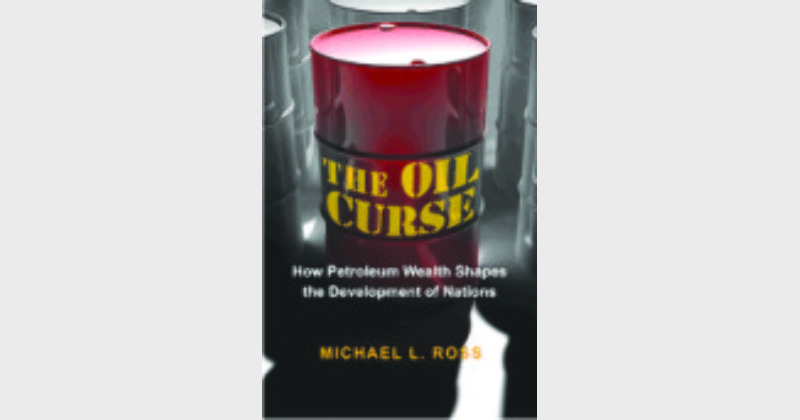
The Oil Curse: How Petroleum Wealth Shapes the Development of Nations, Michael L Ross, Princeton University Press, Pp 289 (HB), £ 29.95
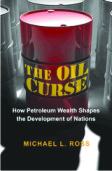
$img_titleThis book analyses half a century of data to produce a broad account of the politics and economics of oil wealth. Taking a comprehensive look as the political and economic consequences of petroleum wealth, especially in developing countries, it shows through analysis of 50 years of data for 170 countries of the world that extracting oil does not lead to slow economic growth or make governments weaker or less effective.

The book begins by saying that since 1980, the developing world has become wealthier, more democratic and more peaceful – this is true of countries without oil, while the oil States, like Algeria, Angola, Colombia, Nigeria, Sudan and Iraq are scarred by decades of civil war. These political and economic ailments constitute what is called the resource base. It is more acutely a “mineral curse”, not caused by other natural revenues like forest, fresh water or fertile agricultural land, but due to the presence of petroleum – which creates for more than 90 per cent of the world’s mineral trade, “producing the largest problems for the greatest number of countries. The resource curse is overwhelmingly an oil curse.”

The author tries to show that since about 1980, oil-producing countries in the developing world have become less democratic and more secretive, suffer from violent insurgencies and their economies provide women with fewer jobs and less political influence, proving “geology is not destiny”.

Why should petroleum have such strange effects on a country’s economic and political health? Some observers blame the intervention of foreign powers in oil-rich countries and manipulating their governments while others fault the international oil cartels for exploiting these resources to earn greater profits for themselves.

The author argues that political and economic problems of the oil States can be traced to the unusual properties of petroleum reserves, that is, whether the States use the revenue to benefit a few or the masses as this has far-reaching effects on a country’s political and economic well-being. According to the author, petroleum revenues have four distinctive qualities – their scale, source, stability and secrecy. The scale of revenues can be massive with low-income oil-producing countries showing stupendous increase, for instance, it is 600 per cent in Azerbaijan, making such governments authoritative enough to silence dissent or lead to violent insurrections where the masses seek a larger share.

The sources of revenues for oil-funded governments are not financed by taxes on their citizens but by the sale of State-owned assets, making the governments of oil-producing countries undemocratic as they are less susceptible to public pressure.

As for stability, the volatility of oil prices can make the government’s earnings fluctuate. This leads to squandering of their resource wealth or aggravation of regional conflicts.

Finally, the secrecy of the petroleum revenues compounds these problems. It is said that in Iraq, Saddam Hussein used to channel his government’s expenditure through the Iraqi National Oil Company, whose budget was secret.

Thus the most important political facts about oil – and the reasons that cause so much trouble for many developing countries – are that the revenues it bestows on governments are unusually large, do not come from taxes, fluctuate unpredictably and can be easily hidden. On reading these reasons, one is tempted to ask what about the revenues that certain developed countries take home after taking charge of the oil fields of Iraq or Libya?

(Princeton University Press, 41, William Street, Princeton, New Jersey 08540; press.princeton.edu)


Share
Tweet
SendShareSend
✮ Subscribe Organiser YouTube Channel. ✮
✮ Join Organiser's WhatsApp channel for Nationalist views beyond the news. ✮
Previous News

A journey to an old textile town

Next News

Revisiting World War II history with compelling narratives

Related News

Students at the Gautam Buddha University, Greater Noida

Mann Ki Baat: PM Modi praises GBU’s mission ShakthiSAT, says dreams of daughters are now taking flight to space

Dutch TikTokker Angelo Bryson, known as Superhuman Unchained, at a pro-Palestine protest.

Dutch TikTokker recently converted to Islam livestreams stabbing three in Amsterdam; Watch video

From Kanchipuram to Kalamkari, India’s traditional textiles reflect its rich regional cultures and centuries-old craftsmanship

From Kanchipuram to Kalamkari: Exploring India’s rich traditional textiles and regional clothing heritage

Punjabi Influencer Abducted, Burnt Alive Near Morinda

Punjab Law and order crisis: Influencer Manjeet Kaur abducted, burnt alive after attack near Morinda

‘Dimagi Naxals’ romanticising Mao, Stalin and Pol Pot

The Swadeshi movement turned Indian enterprise into a powerful force for economic self-reliance, national pride and the struggle for Swaraj

Building Economic Swaraj: How Indian enterprises fought foreign rule and reclaimed national pride

Load More

Latest News

Students at the Gautam Buddha University, Greater Noida

Mann Ki Baat: PM Modi praises GBU’s mission ShakthiSAT, says dreams of daughters are now taking flight to space

Dutch TikTokker Angelo Bryson, known as Superhuman Unchained, at a pro-Palestine protest.

Dutch TikTokker recently converted to Islam livestreams stabbing three in Amsterdam; Watch video

From Kanchipuram to Kalamkari, India’s traditional textiles reflect its rich regional cultures and centuries-old craftsmanship

From Kanchipuram to Kalamkari: Exploring India’s rich traditional textiles and regional clothing heritage

Punjabi Influencer Abducted, Burnt Alive Near Morinda

Punjab Law and order crisis: Influencer Manjeet Kaur abducted, burnt alive after attack near Morinda

‘Dimagi Naxals’ romanticising Mao, Stalin and Pol Pot

The Swadeshi movement turned Indian enterprise into a powerful force for economic self-reliance, national pride and the struggle for Swaraj

Building Economic Swaraj: How Indian enterprises fought foreign rule and reclaimed national pride

Prime Minsiter Narendra Modi and Uzbekistan President Shavkat Mirziyoyev

India-Uzbekistan Herald New Chapter: Uranium deal, 30-day visa-free entry to Indians & $5bn trade propel bilateral ties

The new FCRA rules seek to curb unchecked foreign funding, strengthen financial accountability, and protect Bharat’s national security

Stopping Unchecked Foreign Money: How new FCRA rules protect Bharat’s security and financial sovereignty

Keralam CM VD Satheeshan, DCC member Chembil Anil (Left to Right)

Keralam Congress infighting surfaces in CM VD Satheeshan’s vehicle blockade; DCC member Chembil Anil arrested, remanded

Indian Logistics Data Bank tracks ten crore containers, transforming freight visibility and strengthening the nation’s logistics network

From Lothal Dockyard to Ten Crore Containers: India’s Logistics Data Bank transforms EXIM freight tracking

Load More
  • Privacy
  • Terms
  • Cookie Policy
  • Refund and Cancellation
  • Delivery and Shipping

© Bharat Prakashan (Delhi) Limited.
Tech-enabled by Ananthapuri Technologies

  • Home
  • Search Organiser
  • Bharat
    • Assam
    • Bihar
    • Chhattisgarh
    • Jharkhand
    • Maharashtra
    • View All States
  • World
    • Asia
    • Africa
    • North America
    • South America
    • Europe
    • Australia
  • Editorial
  • Operation Sindoor
  • Opinion
  • Analysis
  • Defence
  • Culture
  • Sports
  • Business
  • RSS @ 100
  • Entertainment
  • More ..
    • Sci & Tech
    • Vocal4Local
    • Special Report
    • Education
    • Employment
    • Books
    • Interviews
    • Travel
    • Health
    • Politics
    • Law
    • Economy
    • Obituary
  • Subscribe Magazine
  • Read Ecopy
  • Advertise
  • Circulation
  • Careers
  • About Us
  • Contact Us
  • Policies & Terms
    • Privacy Policy
    • Cookie Policy
    • Refund and Cancellation
    • Terms of Use

© Bharat Prakashan (Delhi) Limited.
Tech-enabled by Ananthapuri Technologies