





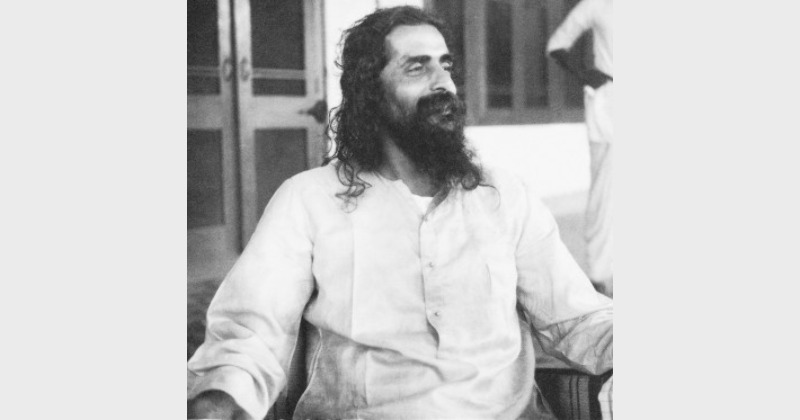
 We saw how views of the Supreme Court of India later expressed on Hinduism, Hindutva, minorities, and related subjects have converged with that of Shri Guruji stated decades ago. Now we shall see, as briefly mentioned earlier, substantial convergence between the views of editors and scholars of The Fundamentalism Project in US and Guruji’s views expressed again decades earlier. However, before probing that unusual convergence, here are some basic facts about how the concept of religious fundamentalism evolved and how the Fundamentalism Project came to be instituted.
Origin and evolution of fundamentalism and Fundamentalism Project
The concept of religious fundamentalism was a product of American Protestant evangelism of the late 19th and early 20th centuries. The evangelists aggressively argued that belief that the Bible is inerrant – that is the Bible contained no error – was fundamental for true Christianity and charged the modernists with undermining that belief. This conflict between modernists and Christians yielded the idea of fundamentalism. The term “fundamentalism” coined by Baptist editor Curtis Lee Laws in 1920 to describe Christians ready for “battle royal for the Fundamentals”, became common use. The Fundamentals: A Testimony To The Truth (1910-15), a set of 12 volumes published by the Bible Institute of Los Angeles, affirming Orthodox Protestant beliefs became the new Bible of modern Christian Fundamentalism. Millions of these volumes were sent free to “ministers and missionaries” the world over. “Fundamentalism” entered the dictionary in 1922. Religious Fundamentalism was specific to the US discourse till 1980s. But the rise of anti-modernist and anti-secular, militant religious movements all over the world in late 1980s led the American Academy of Arts and Sciences to institute “The Fundamentalism Project” to study the phenomenon of religious fundamentalism. The Project, which lasted from 1987 to 1995, yielded five volumes of literature running to over 3500 pages. The Academy claims that the volumes produced assist US government public agenda to deal with religious fundamentalism.
Directed by Christian pastor and Christian scholar
But the fundamentalism project was not led by neutral or secular scholars. Its editors were Martin E Marty and R Scott Appleby. Marty, an ordained Lutheran Pastor from 1952, had worked in parishes till 1963. From 1963 to 1998, he taught at the Chicago University Divinity School, which teaches Christian theology and trains Christian ministers. He also edited Christian Century and led the American Society of Church History and the American Catholic Historical Association. His book, Righteous Empire: The Protestant Experience in America, on Protestant Christian ascendency as the righteous empire in US won national award. He believed that US was a Protestant Christian nation. Appleby was a scholar on Christianity. He chaired the religious studies department of St. Xavier College, Chicago, from 1982 to 1987, authored Church and Age Unite and The Modernist Impulses of American Catholicism, co-edited Being Right: Conservative Catholics in America, and co-authored Creative Fidelity: American Catholic Intellectual Traditions, and Transforming Parish Ministry: The Changing Roles of Clergy, Laity and Women Religious. It is this Christian pastor and Christian scholar combine that guided the Fundamentalism Project to define what was fundamentalism and who were fundamentalists!
Geo-Christian bias and impulse
The Project first struggled to define fundamentalism itself! It saw modernity and fundamentalism as conflicting (Fundamentalism Project, vol 1 p vii). According to the Project, fundamentalists abhorred the essentials of modernity, namely preference for secular rationality, adoption of religious tolerance, and individualism. (ibid). The Editors openly admitted that “fundamentalism” was a controversial term and most authors of the Project were uneasy with it. (ibid p viii). The editors noted that when some scholars, who had suggested replacements such as “revolutionary, non-traditionalist Islamic (or Jewish, or Christian or whatever) radicalism”, were asked to define these alternatives, they said pretty much what fundamentalism meant. So, for want of a better term, “fundamentalism” was retained. Surprisingly, even after conceding that fundamentalism itself was a controversial term, the Editors expanded the term of “fundamentalism” to include “fundamentalist-like movements”. (ibid p.vii/ix). In the Introductory chapter titled “The Fundamentalism Project: A User’s Guide”, the Editors, basically Christian in outlook, suddenly brought in the undefined term “fundamentalist-like” as equal to ‘fundamentalism”. Extrapolating “fundamentalist-like” into “fundamentalism” was mischievous. Religious Fundamentalism is basically an attribute of the Abrahamic faiths. Without such extrapolation, the non-Abrahamic faith and peoples – the Asians, particularly Hindus, Buddhists, Confucians, Sikhs and Shinto – could not be bracketed with the real and genuinely fundamentalist Abrahamic religions. And unless they were so bracketed, Abrahamic faiths and Jews, Christians, and Muslims – the “People of the Book” — would alone stand exposed as intolerant and fundamentalists. That would be self-defeating to geo-Christianity. Therefore, the Editors had to innovate the new concept “fundamentalist-like” and advise the readers to think that it was as good as “fundamentalism” (ibid) without defining what “fundamentalist-like” means. This underscores the geo-Christian impulses of the Fundamentalism Project.
Abrahamic religions “purely fundamentalist”
But with all their strategic efforts to expand the meaning of “fundamentalism” by introducing the undefined term “fundamentalist-like” to rope in the non-Abrahamic faiths and people, the Editors let the cat out the bag in their Interim Report on A Hypothetical Family in Chapter 15 of the same Volume-1 itself. Here the Editors admit that only Abrahamic faiths are purely fundamentalist. They say, under the title “constructing pure fundamentalism” (Ibid Chapter 15, p 820) that, “Some traits of fundamentalism examined here are more accurately attributable to the “People of the Book”, Jews, Christians, and Muslims, than to their first, or distant, cousins in the fundamentalist family: Hindus, Sikhs, Buddhists and Confucians. Sacred texts do not play the same constitutive role in South Asian and Far Eastern traditions as they do in Abrahamic faiths…..both to intensify missionary efforts and to justify extremism”. So a first conclusion of The Fundamentalism Project is that the Hindu, Buddhist, Confucian and Sikh faiths do not fall within the pure fundamentalist faiths. If they are not bracketed with the Abrahamic faiths, the effect would be a certificate to the Hindu-Buddhist traditions, namely that they are incapable of being fundamentalists, which would automatically mean that only the Abrahamic faiths are bigoted and fundamentalist. To overcome that only the Editors brought in the term “fundamentalist-like” with the intent to paint all faiths with the same Abrahamic brush.
Hinduism not fundamentalist, RSS fundamentalism
“synthetic”
On the RSS, which they brand as revivalist, the editors say in the same breath: “Revivalists believe that new socio-religious order among that Hindus is crucial for the vitality – if not the very survival – of Hinduism in the modern world. Both to affect internal reforms and to ward off external threats, Hindus must organise”. And conclude, “If fundamentalist religion implies a resolute reaction to forces of modernity, then the fundamentalist Hinduism is necessarily organised Hinduism”. (ibid Vol 1, p 828)
The editors conclude here that Hinduism is a fundamentalist religion and fundamentalist Hinduism is necessarily organised Hinduism. Nowhere else in the entire five volumes there is any suggestion by any scholar that Hinduism is a fundamentalist religion. On the contrary, it is expressly excluded from the list of genuinely fundamentalist religions. Apart from what is stated in Volume 1 (p 820) referred to above, it is again made clear in the chapter (Volume 5 p 399) titled “Fundamentalism: Genus and Species” (the co-editor Appleby being one of the authors of the chapter) by distinguishing between “pure fundamentalism” and “synthetic fundamentalism”. The authors further say under the subtitle “Abrahamic Fundamentalism” (ibid p 416), “Thus similarities in religious tradition attributable to a common heritage explain the association of fundamentalism, as we have defined it, with Christianity, Islam and Judaism. We speak of movements sharing in these characteristics, in these traditions as Abrahamic fundamentalisms. Fundamentalism was defined from an examination of the Abrahamic cases, since it was first observed and studied in these traditions. Militant, restorative-reactive religious movements in other traditions, which do not share important features of Abrahamic theology and practice, or where some features have been introduced imitatively, may perhaps be called fundamentalist-like movements. Though not an Abrahamic religion, the Sikh case shares almost all of the specified characteristics”. The authors say that when “Hindu nationalists” borrow “religious structures and concepts from Abrahamic religions” that is “synthetic fundamentalism”, namely, such (Hindu) fundamentalism is not genuine, unreal. QED: Hinduism is not, by nature, a fundamentalist religion, as it cannot be. Therefore, the conclusion (p 828/Volume 1) that Hinduism is a fundamentalist religion is completely contradicted by the conclusion that, if at all it is only the Sikhism, not Hindu religion, which shares the fundamentalist status with Abrahamic religions (p 416/Volume 5). So, the prefix “fundamentalist” to Hinduism in Volume 1 (p 828) is clearly self-contradictory.
In fact, it is the RSS, which the scholars, including Appleby argue, is fundamentalist-like, not Hinduism. On RSS, they say: “The Hindu RSS is a preemptive ethno-nationalist-cultural movement mobilised against the dilution of Hindu identity by the penetration of the secular, pluralist Indian state and against the inroads of Islam and Christianity. In reaction to these threats it has created a kind of synthetic fundamentalism, extracting religious component out of Hindu culture, according priority to the Lord Rama and privilege to certain ancient texts”.
But, why does Hinduism have to borrow or imitate such concepts from Abrahamic faiths or the RSS create synthetic fundamentalism? Obviously only for self-defence, like weapons, which the adversary has, are acquired for defending oneself!
Despite such contradiction and bias and regardless of the fact that the Project is from a Christian perspective, there is large measure of convergence between Shri Guruji and The Fundamentalism Project on how the terms “Hindu fundamentalism”, “Hindu revivalism”, “reactionary Hinduism” “militant Hinduism” are inappropriate to Hinduism, on how the concept of “Nation” (Rashtra) is different from “Rajya” (State), on how “Hindu Rashtra” is “an all inclusive term for all sections of the society”, on how “RSS is a cultural and not a religious or political organisation”, on how the “Abrahamic (semitic) faiths are narrow in their religious view” and on how narrow fundamentalism “is a feature of the semitic/Abrahamic faiths”. Await the coming parts.










Comments