





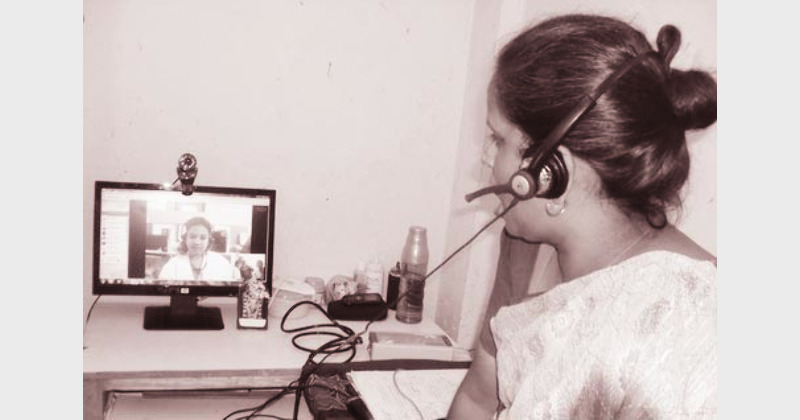
Rural Health care through telemedicine
Ethical and legal aspects?
By Dr SS Agarwal, MD (Medicine)?
 As the tele-medicine projects develop among the countries, for the rural health care, the ethical and legal problems of Telemedicine by telecare come into more attention. These issues include duty and standard of care, confidentiality and security, rights of access, malpractice, physician licensure and reimbursement, intellectual property rights, and the ethical and legal aspects of healthcare advice and provision on the Internet.
Confidentiality and the Law
The principle of confidentiality in medical ethics dates back to Hippocrates. It has been developed in various codes, which states that a doctor must preserve ‘absolute confidentiality in all he knows about his patient’ even after the patient’s death. Telemedicine creates special problems due to the involvement of non-clinical personnel in teleconsultations, and the vulnerability of transmission lines to security breaches.
The patient-doctor relationship
Patients who reveal personal information to their doctors must be able to trust them not to divulge the same information to others incidental to the care process.
Patient consent to disclosure of information
Most patients understand that the principal physician in charge of their case will need to ensure that all members of the team have the information necessary to discharge fully their professional roles in the care process. When patients give consent to disclosure of information about them, you must make sure that they understand what will be disclosed, the reasons for disclosure and the likely circumstances; if a patient consents to disclosure of personal health information then he or she has an obvious interest in knowing what information is recorded in their medical record.
Consent to treatment
Every competent adult has a right to refuse or consent to available medical treatment or healthcare and the clinicians in charge of this care must obtain a patient’s consent before proceeding with the treatment. Any clinician who proceeds without this consent runs the risk of prosecution for tort of battery or negligence. Courts will only accept consent as a valid declaration if patients are made fully aware of the options available to them. Consent may be implicit (offering an arm for a blood pressure measurement) or explicit (signing a form of consent before a surgical operation).
Tele medicine equipments
• Poor quality, obsolete or worn-out devices;
• Incompatibility with ancillary equipment;
• Poor documentation;
• Inappropriate use;
• Inadequate training;
• Mistakes in servicing or lack of servicing.
These comments apply mainly to operational equipment failure or malfunction but what if the fault lies in equipment design or construction? Surely these faults are the responsibility of the manufacturer? Well, yes and No. The courts like to refer to ‘development defects’ by which they mean defects that were impossible to foresee at the time the equipment was designed. The equipment may actually have been manufactured to this same design at a much later date in which case it may still be subject to development defects.
Operational risks due to technology
These operational risks are precisely those identified by the MDA as the main causes of adverse incidents.
Analysis of these causes shows that they fall into two categories: inadequacies due to technology and those due to personnel insufficiencies. We can distinguish four main technology risks [8]:
Quality of Images: A patient has the right to expect that a consultant can draw the same, correct conclusions from an image on a telemedicine display screen as he or she can decide from a conventional face-to-face consultation. This is especially important for pathology, dermatology and radiography investigations.
Lack of Suitable Equipment: The responsibility for providing the equipment for a healthcare service lays with the appropriate health services managers.
Malfunctioning Equipment: The breakdown of computer or video equipment is unfortunately one of the more common features of telemedicine. The faults are usually simple and traced to the interfaces between the various components. However, the effects can be just as devastating and as fatal as more serious defects.
Inadequate Guidelines: A guideline can be viewed as a bridge between the technology and the participants in the teleconsultation. The guidelines determine the process of teleconsultation and the documentation provides a record of therapy, prescriptions, drug dosages, future plans etc. This combination of protocol and record of action provides a powerful audit trail that can be of considerable value in any legal dispute.
Operational risks due to personnel
We can distinguish five main risks to telemedical practice arising from deficiencies in the care team:
Poor Communication: A protocol is helpful in identifying the stages of a teleconsultation where special care is needed to ensure clarity of communication between participants. Deaf and elderly patients are particularly prone to misunderstandings, as are patients whose native tongue is not the language of the consultation.
Reviewing the record of a teleconsultation is also helpful to check for errors, for example, in prescriptions and drug doses, directions to the patient and follow-up appointments.
Limited Ability: The employment of under-qualified practitioners in clinical radiology reflects the shortage of posts in this area. This is a worrying situation since, as one study showed, non-specialist doctors had an error rate in detecting potentially significant abnormalities that was nearly 40 per cent higher than consultant radiologists.
Poor Training: Ideally, training should include not only the clinical aspects of telemedical treatment but also the ability to use the technology effectively as well as interpersonal and interviewing skills.
Improper Delegation: The delegation of care to less well-qualified subordinates and the necessity of establishing their competence has also come to our attention several times. If a task is beyond the competence of a delegate then the ultimate responsibility reverts to the delegating clinician. It is essential for the patient’s safety and well-being that subordinates make it clear if they are proficient in the tasks they are asked to perform.
Unclear Responsibility: The requirement of clear responsibility for a telepatient’s care is no different from that of a patient treated by conventional medicine. An issue for telemedical care may be the number of medical staff involved in the process, and due diligence on the part of the lead clinician is necessary to ensure that each member of the (often frequently changing) team is aware of their own responsibilities and those of other members. The patient should also know who is in charge of his or her care.
These are simple precautions to avoid malpractice or negligence complaints.
(The writer is national convener, BJP Medical Cell)?










Comments