BOOMKARK-2
December 12, 2025
  • Read Ecopy
  • Circulation
  • Advertise
  • Careers
  • About Us
  • Contact Us
Android AppiPhone AppArattai
Organiser
  • ‌
  • Bharat
    • Assam
    • Bihar
    • Chhattisgarh
    • Jharkhand
    • Maharashtra
    • View All States
  • World
    • Asia
    • Europe
    • North America
    • South America
    • Africa
    • Australia
  • Editorial
  • International
  • Opinion
  • RSS @ 100
  • More
    • Op Sindoor
    • Analysis
    • Sports
    • Defence
    • Politics
    • Business
    • Economy
    • Culture
    • Special Report
    • Sci & Tech
    • Entertainment
    • G20
    • Azadi Ka Amrit Mahotsav
    • Vocal4Local
    • Web Stories
    • Education
    • Employment
    • Books
    • Interviews
    • Travel
    • Law
    • Health
    • Obituary
  • Subscribe
    • Subscribe Print Edition
    • Subscribe Ecopy
    • Read Ecopy
  • ‌
  • Bharat
    • Assam
    • Bihar
    • Chhattisgarh
    • Jharkhand
    • Maharashtra
    • View All States
  • World
    • Asia
    • Europe
    • North America
    • South America
    • Africa
    • Australia
  • Editorial
  • International
  • Opinion
  • RSS @ 100
  • More
    • Op Sindoor
    • Analysis
    • Sports
    • Defence
    • Politics
    • Business
    • Economy
    • Culture
    • Special Report
    • Sci & Tech
    • Entertainment
    • G20
    • Azadi Ka Amrit Mahotsav
    • Vocal4Local
    • Web Stories
    • Education
    • Employment
    • Books
    • Interviews
    • Travel
    • Law
    • Health
    • Obituary
  • Subscribe
    • Subscribe Print Edition
    • Subscribe Ecopy
    • Read Ecopy
Organiser
  • Home
  • Bharat
  • World
  • Operation Sindoor
  • Editorial
  • Analysis
  • Opinion
  • Culture
  • Defence
  • International Edition
  • RSS @ 100
  • Magazine
  • Read Ecopy
Home Bharat

BOOMKARK-2

A good resource book on RTI?

Archive ManagerArchive Manager
Jan 16, 2012, 08:53 am IST
in Bharat
Follow on Google News
FacebookTwitterWhatsAppTelegramEmail

A good resource book
on RTI?

By Manju Gupta?
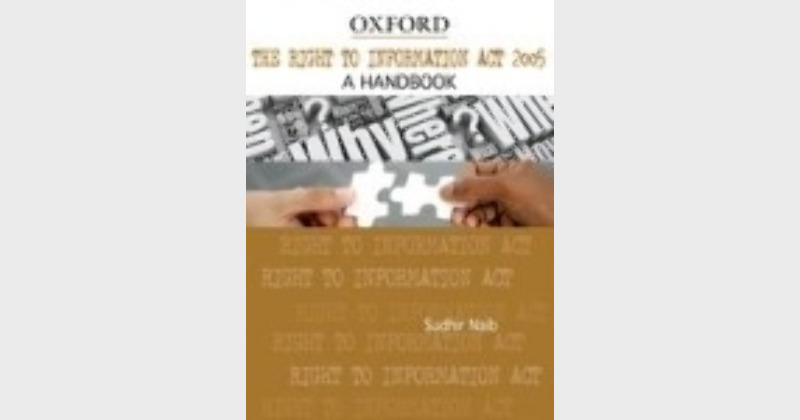
$img_titleThe Right to Information Act 2005: A Handbook, Sudhir Naib, Oxford University Press, Pp 329,  Rs 795.00?

This is a resource book which is a must for all pubic information officers and information commissioners as it presents a comprehensive analysis of the RTI Act.

Passed by India’s Parliament in 2005, the Right to Information Act has made it the right of every citizen of India to access information held by or under the control of not only the executive but also of the judiciary and the legislature, from the office of the President of India to that of the humblest village council. The Right to Information is increasingly considered an inseparable part of any public participation in the process of governance and hence of development.

The book discusses the Central Information Commission and court decisions which are particularly useful for public information officers and appellate authorities who need to be aware of how the commissions and courts interpret the law, so that their own decisions can be made accordingly.

The opening chapter ‘Freedom of Information: A Global Perspective’ summarises the growth, development and present trends of the papers towards the universal applicability of this doctrine in a global context. It discusses the historical evolution of FoI (Freedom of Information) starting with Swedish Freedom of the Press Act in 1766. There has been a significant increase in recognising the importance of access to information both as a human right and as an important right to promote good governance and fight corruption. The discussion here reveals that the movement towards greater openness in access to information is global and the growth in the number of countries that have adopted such laws in the last decade has been phenomenal. The general public can find more about the decisions that affect their lives and ensure that the public authorities become accountable for their actions. This chapter also discusses efforts made by international bodies for adoption of FoI, benefits of FoI laws and issues in the implementation of FoI laws.

The second chapter traces the origins of the RTI movement starting from Devdungri in Rajasamund district of Rajasthan from 1987 till the passing of the RTI Act in 2005. A comprehensive analysis of such Acts adopted by nine Indian states has been done which shows that the provisions of the RTI Act of 2005 are much better than the state laws. Thus, with the passage of the National Act, the state laws have either lapsed or are being repealed.

The fourth chapter provides comprehensive guidelines for public authorities and their objections under the Act.

The fifth chapter covers Central Information Commission’s decision and Government of India institutions relating to Public Information Officers and their role. This chapter covers inter-alia procedures for disposal of request, time limit for supply of information and implications for non-adherence to the provisions of the Act.

Chapter 6 covers general points required to be kept in view while applying exemptions for disclosure under Section 8(1). It also looks into cases where exemptions can be waived when public interest in disclosure outweighs the harm to the protected interests.

Chapter 7 deals with the various categories of information which are exempted from disclosure. Each of these exemptions is discussed in detail.

The last chapter covers procedures regarding disposal of first appeal by the Department Appellate Authority and for disposal of second appeal by the Information Commissioner.

(Oxford University Press, YMCA Library Building, Jai Singh Road, New Delhi-110001; www.oup.com)

ShareTweetSendShareSend
✮ Subscribe Organiser YouTube Channel. ✮
✮ Join Organiser's WhatsApp channel for Nationalist views beyond the news. ✮
Previous News

BOOKMARK-1

Next News

BOOKMARK-3

Related News

Uttarakhand: Bhowali Mosque allegedly encroaches 43 nali of government land; Role of forest dept & admin questioned

A representative image

National supercomputing mission deploys 37 systems; Total capacity reaches 40 petaflops in Bharat

Awami League rejected the national elections scheduled for February 2026(File Photo)

Awami League rejects Bangladesh elections scheduled by the ‘killer fascist Yunus clique’s illegal Election Commission’

A representative image

New labour regime extends legal protections to artists, creators, and digital workers for the first time

Tamil actor Rajinikanth (Left) and Prime Minister Narendra Modi (Right)

75 Years of Thalaiva: PM Modi lauds Rajinikanth for generational impact and remarkable five-decade film career

A representative image featuring NIA's logo and officials

Jharkhand: NIA conducts search at terror suspect Alam’s house in Hazaribagh

Load More

Comments

The comments posted here/below/in the given space are not on behalf of Organiser. The person posting the comment will be in sole ownership of its responsibility. According to the central government's IT rules, obscene or offensive statement made against a person, religion, community or nation is a punishable offense, and legal action would be taken against people who indulge in such activities.

Latest News

Uttarakhand: Bhowali Mosque allegedly encroaches 43 nali of government land; Role of forest dept & admin questioned

A representative image

National supercomputing mission deploys 37 systems; Total capacity reaches 40 petaflops in Bharat

Awami League rejected the national elections scheduled for February 2026(File Photo)

Awami League rejects Bangladesh elections scheduled by the ‘killer fascist Yunus clique’s illegal Election Commission’

A representative image

New labour regime extends legal protections to artists, creators, and digital workers for the first time

Tamil actor Rajinikanth (Left) and Prime Minister Narendra Modi (Right)

75 Years of Thalaiva: PM Modi lauds Rajinikanth for generational impact and remarkable five-decade film career

A representative image featuring NIA's logo and officials

Jharkhand: NIA conducts search at terror suspect Alam’s house in Hazaribagh

Constituent Assembly (File Image)

Inside the Constituent Assembly: The committees, minds and milestones

A Representative Image

Indian Railways overhauls ticketing system with robust cybersecurity, Aadhaar verification to curb misuse

CM Mohan Majhi with receipents of citizenship certificates under the CAA 2019 during a programme held in Bhubaneswar

Odisha: 35 people granted citizenship under CAA; CM Majhi asks who will shelter persecuted Hindus if not Bharat?

Representative image

Microsoft announces Rs 1.4 lakh crore plan to develop new AI and data centre networks in India

Load More
  • Privacy
  • Terms
  • Cookie Policy
  • Refund and Cancellation
  • Delivery and Shipping

© Bharat Prakashan (Delhi) Limited.
Tech-enabled by Ananthapuri Technologies

  • Home
  • Search Organiser
  • Bharat
    • Assam
    • Bihar
    • Chhattisgarh
    • Jharkhand
    • Maharashtra
    • View All States
  • World
    • Asia
    • Africa
    • North America
    • South America
    • Europe
    • Australia
  • Editorial
  • Operation Sindoor
  • Opinion
  • Analysis
  • Defence
  • Culture
  • Sports
  • Business
  • RSS @ 100
  • Entertainment
  • More ..
    • Sci & Tech
    • Vocal4Local
    • Special Report
    • Education
    • Employment
    • Books
    • Interviews
    • Travel
    • Health
    • Politics
    • Law
    • Economy
    • Obituary
  • Subscribe Magazine
  • Read Ecopy
  • Advertise
  • Circulation
  • Careers
  • About Us
  • Contact Us
  • Policies & Terms
    • Privacy Policy
    • Cookie Policy
    • Refund and Cancellation
    • Terms of Use

© Bharat Prakashan (Delhi) Limited.
Tech-enabled by Ananthapuri Technologies