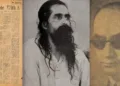
Andhra Pradesh Urdu Academy Chairman and Minority Hakkula Parirakshana Samithi (MHPS) president Farooq Shibli has said that he would not sing the national song Vande Mataram, citing religious reasons, even as the song has been accorded equal status with the national anthem and Parliament has recently extended legal protection to it.
Speaking at a public meeting on August 23, 2026, Shibli said Muslims would not recite Vande Mataram as, according to him, doing so would conflict with Islamic beliefs.
“Muslims will not recite Vande Mataram and I am also not singing it,” Shibli said, arguing that Muslims worship and praise only Allah.
Shibli also referred to the recently enacted legal provisions concerning Vande Mataram and said that Muslims would continue to abstain from singing it even if a law provided for a three-year prison term.
“Even if a bill is introduced imposing a three-year prison sentence for refusing to sing Vande Mataram, Muslims will still not recite it,” he said.
His remarks have come in the backdrop of the Andhra Pradesh government, headed by Chief Minister N. Chandrababu Naidu, participating in the nationwide commemoration of 150 years of Vande Mataram.
The Centre has also issued formal Orders Relating to the National Song of India, specifying the official version of Vande Mataram, occasions for its rendition and the protocol to be observed when it is sung or played. The Ministry of Home Affairs order identifies Vande Mataram, written by Bankim Chandra Chatterjee, as India’s National Song.
Parliament extends legal protection to Vande Mataram
The issue has acquired a fresh legal dimension in 2026. Parliament passed the Prevention of Insults to National Honour (Amendment) Bill, 2026, which was introduced in the Rajya Sabha on July 24, passed by the Rajya Sabha on July 29 and by the Lok Sabha on July 30. The amendment extends the protection under Section 3 of the Prevention of Insults to National Honour Act, 1971, to the National Song.
Under the amended provision, intentionally preventing the singing of the National Song or causing disturbance to an assembly engaged in its singing can attract imprisonment of up to three years, a fine, or both. The enhanced punishment for repeat convictions also applies to the National Song.
Against this backdrop, Shibli’s assertion that Muslims would not sing Vande Mataram despite the possibility of a three-year prison term has brought his remarks into focus, particularly as he holds the position of chairman of the Andhra Pradesh Urdu Academy, a government-appointed post under the TDP-led State government.