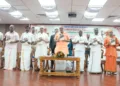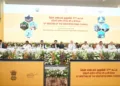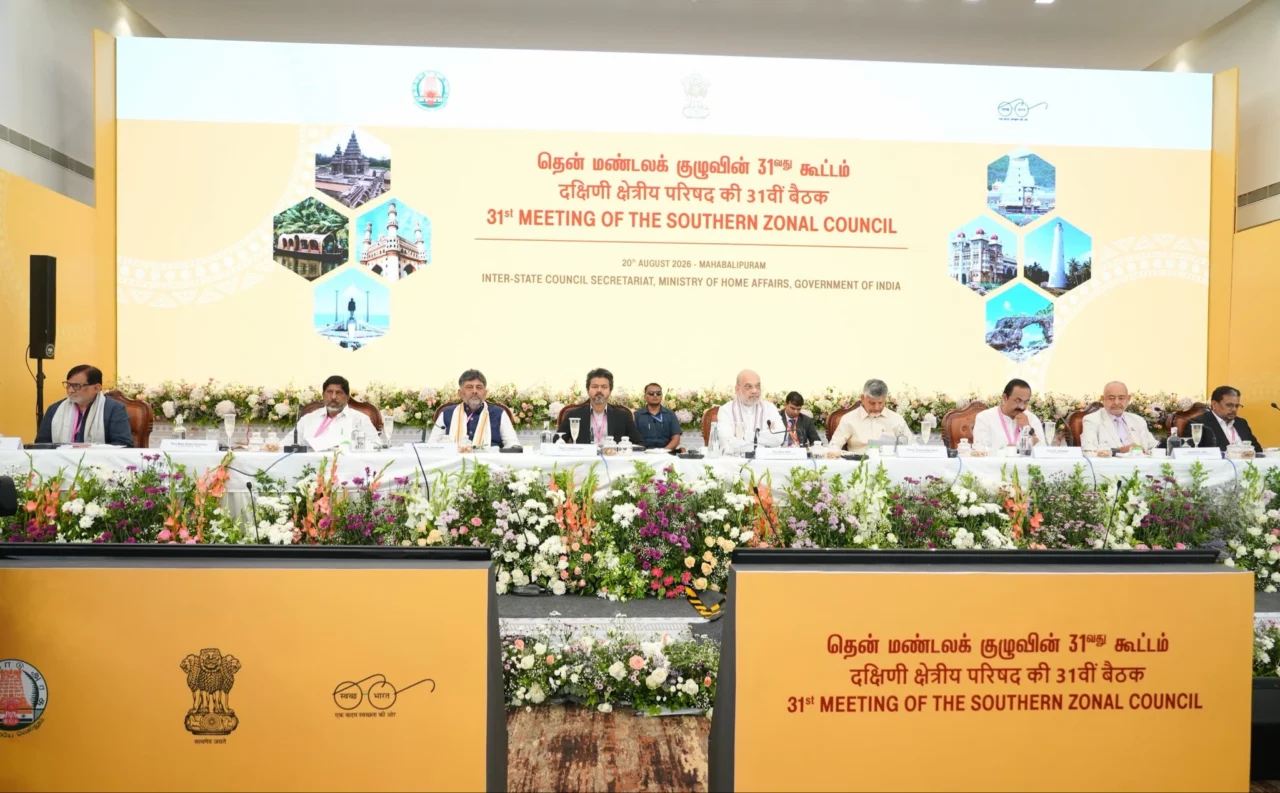
The 31st meeting of the Southern Zonal Council (SZC) commenced in Mahabalipuram, Tamil Nadu, on August 20, 2026, with Union Home Minister and Minister of Cooperation Amit Shah chairing the meeting. The Southern Zonal Council comprises Andhra Pradesh, Karnataka, Keralam, Tamil Nadu and Telangana, along with the Union Territories of Puducherry, Andaman and Nicobar Islands and Lakshadweep.
The five Zonal Councils, including the Southern Zonal Council, were established under Sections 15 to 22 of the States Reorganisation Act, 1956.
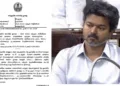
Union Home Minister and Minister of Cooperation Shri Amit Shah is the Chairman of the Southern Zonal Council, while Tamil Nadu Chief Minister C. Joseph Vijay is the Vice-Chairman. The Chief Ministers of the member states serve as Vice-Chairman of the Council by rotation.
The 31st meeting is being organised by the Inter-State Council Secretariat, Ministry of Home Affairs, with the Government of Tamil Nadu as the host. It is being attended by the Chief Ministers, Lieutenant Governors and Administrators of the member states and Union Territories of the Southern region, along with two senior ministers from each state. Chief Secretaries, Advisors and other senior officers of the State Governments, as well as senior officers of the Central Government, are also participating.
Participated in the 31st Southern Zonal Council meeting in Mahabalipuram, Tamil Nadu, chaired by Hon’ble Union Home Minister Shri Amit Shah.
It was an opportunity to engage with the Hon’ble Chief Ministers, Deputy Chief Ministers, Ministers and senior officials from across the… pic.twitter.com/fvG36J09GI
— DK Shivakumar (@DKShivakumar) August 20, 2026
Six Chief Ministers—Tamil Nadu Chief Minister Joseph Vijay, Karnataka Chief Minister D.K. Shivakumar, Kerala Chief Minister Satheesan, Telangana Chief Minister Revanth Reddy, Andhra Pradesh Chief Minister Chandrababu Naidu and Puducherry Chief Minister Rangasamy—are expected to participate in the meeting. The Administrators of the Andaman and Nicobar Islands and Lakshadweep are also likely to participate.
The Zonal Council has constituted a standing committee at the level of Chief Secretaries. Issues proposed by the states are submitted for discussion before the Zonal Council’s standing committee. After deliberation, the remaining issues are placed before the Zonal Council meeting for consideration.
Prime Minister Narendra Modi has envisioned ‘TEAM BHARAT’ for the nation on the basis of cooperative federalism, and the Zonal Councils are making significant contributions in this direction.
These councils function on the conviction that strong states build a strong nation. They provide a structured mechanism for dialogue and discussion on issues affecting two or more states, or the Centre and the states, thereby serving as a platform to foster mutual cooperation. Under the leadership of PM Modi, Zonal Council meetings have evolved into a powerful platform for finding solutions through dialogue.
Reportedly, the role of the Zonal Councils is advisory in nature. However, over the past few years, these Councils have proved to be an important factor in fostering healthy bonds of mutual understanding and cooperation across various regions. With the cooperation of all State Governments, Central Ministries and Departments, a total of 69 meetings of the various Zonal Councils and their Standing Committees have been held in the last approximately 12 years, from June 2014 till now.
The Zonal Councils provide a forum for resolving issues and disputes and making progress on them between the Centre and the member States and Union Territories, among the member States and Union Territories, and within the region.
These Councils also discuss broad issues of national importance, including the implementation of Fast Track Special Courts (FTSCs) for the speedy investigation and early disposal of cases of rape against women and children, as well as issues related to education.
In addition, various issues of common interest at the regional level are covered, including issues related to the Andhra Pradesh Reorganisation Act, important projects concerning water sharing, the Pradhan Mantri Awas Yojana (Gramin), issues related to civil aviation and several other matters.