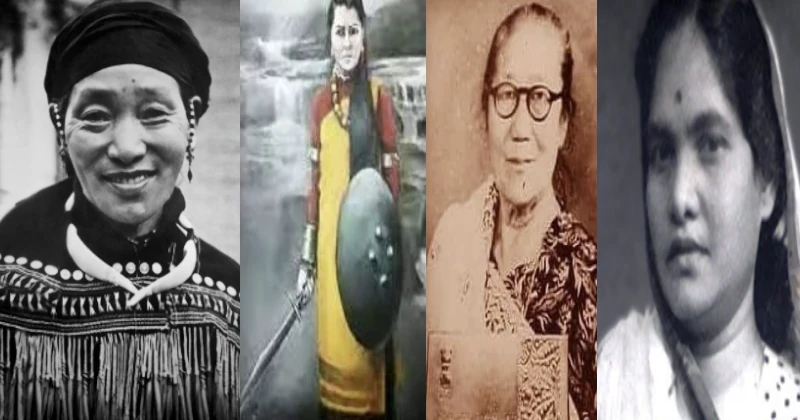
On the solemn occasion of Independence Day (August 15), Bharat honours the fierce valour, unyielding patriotic spirit, and supreme sacrifices of its indigenous tribal communities-the unsung defenders of Bharat Mata. Long before the mainstream national discourse took shape, India’s tribal heroines stood as an indomitable wall of resistance, leading relentless crusades against oppressive foreign British rule to protect their Sanatan traditions, sacred ancestral lands, and civilisational heritage.
Legendary tribal heroines like Rani Gaidinliu-the fearless freedom fighter from the North-East who waged a relentless holy struggle against British imperialism to safeguard her indigenous faith and culture – alongside Phulo-Jhano, Kanaklata Barua, and the young martyr Kalibai, injected immense spiritual energy, courage, and grassroots power into the Bharatiya freedom movement. Through armed resistance, social awakening, indigenous education, and deep self-sacrifice, these warrior queens and brave daughters of the soil shattered the shackles of colonial oppression, proving that the true heartbeat of India’s freedom struggle beat strongest in its native roots.
This report brings to light the heroic sagas of these fierce tribal daughters of Bharat, whose unyielding courage, supreme sacrifice, and devotion to the motherland laid the bedrock of our civilisational resistance against foreign rule. Their timeless legacy stands as an immortal testament to the true, unsung guardians of India’s freedom and native heritage.
Rani Gaidinliu: The Fearless Defender of Heraka Heritage and Naga Sovereignty
Rani Gaidinliu (January 26, 1915 – February 17, 1993), hailed as the “Rani Laxmibai of Nagaland,” was a towering symbol of indigenous resistance from Tamenglong, Manipur. At the tender age of 13 in 1930, she plunged into the freedom struggle by joining forces with her brother Haipou Jadonang and Cousin in the spiritual and political Heraka Movement. The core objective of this sacred crusade was to banish colonial oppressors from their sacred soil, protect native cultural traditions against foreign encroachment, and re-establish sovereign Naga rule. Waging a relentless war against British imperialism, she became a beacon of civilisational pride for the North-East. Recognising her extraordinary devotion to the motherland, the Indian state conferred upon her the Padma Bhushan in 1982, issued a commemorative postage stamp in 1996 following her passing in 1993, and minted a special commemorative coin in 2015 to immortalise her glorious legacy.
Ka Phan Nonglait: The Tactical Shield of Khasi Hills
Ka Phan Nonglait (1799 – December 6, 1850) stands tall as the pioneering female freedom fighter of Meghalaya’s Khasi Hills, celebrated for her unmatched tactical genius and fierce resistance to British colonial expansion. Fighting under the heroic leadership of Khasi warrior U Tirot Sing, she executed one of the most brilliant guerrilla ambushes in indigenous military history. Spotting a battalion of British soldiers resting near a waterfall, she cleverly lulled them into a false sense of security by serving them refreshments. As soon as the invaders let down their guard, she swiftly disarmed them, casting their weapons deep into a rocky fissure within the stream and leaving them completely defenceless. This decisive act allowed U Tirot Sing’s forces to launch a crushing counterattack, annihilating 32 British troops and forcing a historic colonial retreat. Honored to this day through the landmark ‘Phan Nonglait Falls,’ her daring strategy remains a golden chapter in Bharat’s anti-colonial saga.
Helen Lepcha: The Swadeshi Crusader of the Eastern Himalayas
Helen Lepcha (January 14, 1902 – August 8, 1982), born in Sangmoo village, Sikkim, was a legendary tribal revolutionary who channeled the power of Swadeshi and self-reliance to dismantle colonial economic dominance. She travelled tirelessly across regions urging the masses to embrace native industries, spin the charkha, and awaken their innate love for Bharat Mata. Her selfless dedication shone brightest during the devastating 1920 Bihar floods in Muzaffarpur, where her relentless humanitarian relief work so deeply impressed Mahatma Gandhi that he affectionately named her ‘Savitri Devi.’ Continuing her fearless nationalist journey, she represented Sikkim at the 1921 Ahmedabad Congress Session alongside Dr. Sarojini Naidu, and later led a massive force of over 10,000 coal miners in Jharia to fiercely resist the exploitation of tribal labour. Honoured by the Bengal government as a Tribal Chief in 1958 and awarded the prestigious Tamra Patra alongside a freedom fighter pension by the Union Government in 1972, her life remains a powerful testament to native socio-political awakening.
Sushila Samad: The Intellectual Pioneer and Munda Vanguard
Sushila Samad (June 7, 1906 – December 10, 1960), hailing from the proud Munda tribal community of West Singhbhum, Jharkhand, shattered colonial socio-cultural barriers to become the nation’s first indigenous female ‘Vidushi’ (BA Honors graduate). Educated at Prayag Mahila Vidyapeeth, she seamlessly blended academic brilliance with revolutionary zeal, working as a Hindi poet, journalist, editor, publisher, and freedom fighter who mobilised tribal women toward political consciousness. When the historic Dandi March commenced in 1930, it was Sushila Samad who spearheaded the tribal women’s resistance movement across the Jharkhand region, proving that intellectual prowess and grassroots nationalism go hand in hand. Her trailblazing literary work and unyielding leadership during the independence movement laid a strong foundation for indigenous women’s empowerment and national pride.
Tileswari Baruah: The Immortal Child Martyr of Dhekiajuli
Tileswari Baruah (1930 – September 20 1942), a 12-year-old warrior girl from Dhekiajuli, Assam, etched her name in golden letters during the fiery 1942 Quit India Movement as a member of the elite ‘Mrityu Bahini’ (Suicide Squad). Bound by a sacred oath to unfurl the national tricolour over colonial police stations regardless of the ultimate cost, this young daughter of the soil marched fearlessly into the line of fire. On 20 September 1942, British bullets cut down her tender life, but her supreme sacrifice turned Dhekiajuli into a sacred shrine of Indian freedom. Celebrated annually as ‘Martyrs’ Day’ across Assam, her memory continues to inspire the nation; she was personally paid tribute by the Prime Minister during his visit to Dhekiajuli and honoured nationwide as a national child hero under the ‘Har Ghar Tiranga’ campaign.
Kanaklata Barua: The Immortal Flag-Bearer of Assam’s Freedom Struggle
Kanaklata Barua (December 22, 1924 – September 20 1942), revered across Assam as ‘Birbala’ and the ‘Rani Laxmibai of Assam,’ etched her name in golden letters in the saga of Indian independence when she made the ultimate sacrifice at just 17 years of age during the 1942 Quit India Movement. As a fearless member of the legendary ‘Mrityu Bahini’ (Suicide Squad), she led a grand procession of patriots on September 20, 1942, toward the Tezpur police station with a single sacred mission: unfurling the national tricolor atop the colonial outpost. Undeterred by the oppressive British police officer who threatened her with lethal gunfire if she took another step, Kanaklata marched forward with unshakeable resolve, clutching the national flag tight against her chest. As colonial forces opened fire, she took the fatal bullet and embraced martyrdom for Bharat Mata, leaving behind a brilliant legacy of youthful heroism that continues to inspire nationalist spirit throughout the country.
Parbati Giri: The Crusader of Social Awakening and Native Welfare in Odisha
Parbati Giri (January 19, 1926 – August 17, 1995), affectionately hailed as the “Mother Teresa of Western Odisha,” emerged as a formidable pillar of native socio-political awakening from Sambalpur, Odisha. Leaving school at the tender age of 11 to throw herself into the Quit India Movement, she openly challenged British rule by age 16, enduring imprisonment for her defiance against colonial tyranny. Following her release, she traversed the region to mobilize public support for the liberation struggle, later dedicating her entire post-independence life to selfless service, education, health, and the uplifting of orphan children in her native soil. Her academic dedication saw her complete formal studies from Prayag Mahila Vidyapeeth in 1950, and her towering legacy of social service was forever honored when the Odisha government named the “Parbati Giri Mega Lift Irrigation Scheme” in 2016 and Sambalpur University awarded her an honorary doctorate in 1998, cementing her status as a true symbol of Bharatiya Nari Shakti.
Kuntala Kumari Sabat: The Literary Nightingale and Nationalist Healing Hand
Kuntala Kumari Sabat (February 8, 1901 – August 23, 1938), born in Bastar, Chhattisgarh, was an extraordinary visionary who wielded both medicine and nationalist literature as weapons in the service of the motherland. Known by prestigious titles such as the “Nightingale of Odisha” and “Utkal Bharati,” she broke societal barriers by earning her medical degree in Cuttack to serve as a physician while simultaneously igniting patriotic fervour through her fiery poetic works, most notably her celebrated collection ‘Anjali.’ Actively associated with reformist organisations like ‘Nav Vidhan’ and the Brahmo Samaj, she organised women and infused cultural pride across the region, turning her medical career and literary talent into an indomitable instrument of national awakening and native pride.
Kalibai: The Brave Bhil Maiden and Immortal Goddess of Native Education
Kalibai (1936 – June 19, 1947), a 12-year-old Bhil tribal girl from Dungarpur, Rajasthan, revered as the “Goddess of Education,” stands as an immortal icon of sacred reverence for the Guru-Shishya tradition and fierce resistance against oppressive rule. On June 19, 1947, when colonial police and regional authorities dragged her teacher, Nanabhai Khant, behind a military jeep for defying restrictions on native education, young Kalibai demonstrated unmatched courage by sprinting toward the vehicle and severing the dragging rope with her grass-cutting sickle to save her teacher’s life. The brutal colonial forces responded by showering the young child with bullets, crowning her martyrdom in defence of her Guru and the right to educate her people; today, her heroic sacrifice lives on through schools, colleges, pan-Indian memorials, and state honours that salute her unmatched bravery.
Rani Ropuiliani: The Mizo Queen Who Defied British Imperial Expansion
Rani Ropuiliani (1828 – January 3, 1895) was a fiercely independent tribal ruler and freedom fighter from Mizoram who stood as an unyielding wall against British colonial encroachment in the Lushai Hills. Taking full command of governance following her husband’s death, she united the Mizo people during the 1890 British invasions, stubbornly refusing to submit to foreign rule or pay colonial taxes. Proclaiming her deep spiritual bond to the motherland with the historic words, “The land of Mizoram is my mother,” she led a relentless armed and political resistance to protect her people’s sovereignty, enduring imprisonment and suffering until her final breath rather than surrendering her native soil to foreign oppressors.
Leepa: The Great Andamanese Heroine of the Battle of Aberdeen
Leepa (Martyred May 17, 1859), a courageous warrior woman of the Great Andamanese tribe, inscribed a tragic yet magnificent chapter of supreme sacrifice during the historic Battle of Aberdeen against British colonial forces. On May 17, 1859, as indigenous tribal warriors fought a desperate battle to defend their island home from British annexation, Leepa laid down her life alongside her unborn child for the honour of her ancestral land. Though the battle ended in tragedy due to the betrayal of her husband, Dudhnath Tiwari-an escaped British convict who leaked the tribal battle plans to colonial troops-Leepa chose martyrdom over compromise, proving that the flame of freedom burned brightest among India’s most remote indigenous defenders.
Phulo and Jhano: The Twin Santhal Warriors of the Historic 1855 Rebellion
Phulo Murmu and Jhano Murmu (1832 – 1856), twin Santhal sisters from Sahibganj, Jharkhand, were fierce military commanders who played a decisive role in the historic Santhal Rebellion (1855–1856) alongside their heroic brothers, Sido and Kanhu. Rejecting colonial oppression and foreign exploitation, these brave sisters organized and trained hundreds of tribal women in martial arts, swordsmanship, and archery, turning them into a formidable combat force against British troops and their local henchmen. Wielding weapons on the frontlines, both sisters fought valiantly until they attained martyrdom at the Battle of Warlight in 1856; their immortal legacy of tribal pride and female valor is honored today through major educational institutions like the Phulo-Jhano Medical College and state welfare initiatives in Jharkhand.
These inspiring sagas of our tribal heroines stand as an unquestionable proof that the true soul of Indian freedom was nurtured in the deepest roots of our native soil, guarded fiercely by the original children of Bharat Mata. Far from being passive spectators, these brave daughters, warrior queens, and young martyrs fought not merely for a political shift, but for the sacred protection of their Sanatan heritage, ancestral lands, and civilisational self-respect against foreign oppressors. Their supreme sacrifices shatter the flawed colonial narrative and serve as an eternal reminder that Bharat’s independence was forged through the blood, valour, and unyielding nationalist spirit of its indigenous heroes. As our nation marches forward with renewed cultural pride, honouring their legendary legacy is essential to safeguarding our sovereignty, upholding native traditions, and inspiring every generation to keep the flame of supreme devotion to the motherland burning bright.