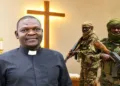

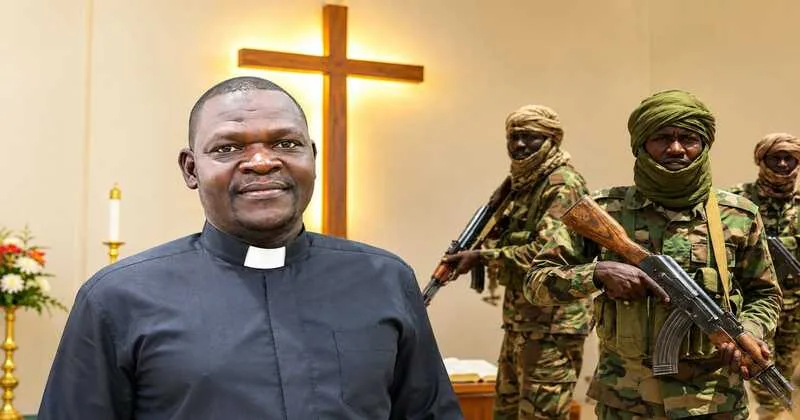
New Delhi: Recent confirmation from church authorities in South Kordofan has verified the targeted abduction and brutal killing of Pastor Adel Idris Jongool, marking a dangerous escalation in the systemic targeted violence carried out by Islamic extremist factions against Sudan’s minority Christian population. The Diocese of Heiban of the Episcopal Church of Sudan (ECS), through an official press statement issued by Bishop Al-Sir Hassan Kuku, confirmed the pastor’s death following a coordinated raid by radical armed elements in the Nuba Mountains region.
The lethal assault occurred on July 24 when heavily armed insurgents stormed the Dabbi area within Hiban County, also known as Heiban District. The perpetrators were identified as members of a radical break-away group from the rebel Sudan People’s Liberation Army-North (SPLA-N), operating with direct support from Islamic extremist groups.
Reports say that the militants singled out Pastor Jongool of the Episcopal Church of Sudan, forcibly removing him before executing him. The attack was driven by deep-seated religious and tribal animosity aimed directly at wiping out Christian leadership and terrorizing non-Muslim civilians in the area.
Systematic targeting of Church leaders and Christian communities
The execution of Pastor Jongool is the latest incident in an aggressive campaign targeting Christian clergy and institutions across South Kordofan. According to press statements from the Diocese of Heiban, the July 24 raid directly followed another coordinated attack on July 23 in Heiban town. In that assault, Islamic militant elements raided Christian neighborhoods, leaving an unconfirmed number of Christian believers dead and abducting several prominent church leaders whose whereabouts remain unknown.
Lamenting the continuous slaughter of clergy under his oversight, Bishop Al-Sir Hassan Kuku forcefully condemned the killing as completely unacceptable. The bishop urged all combatant factions to respect religious personnel and cease targeting sacred institutions. However, local sources confirm that Christian figures are intentionally sought out by extremist combatants seeking to eradicate the Christian presence in the region.
This bloody pattern was established weeks prior on June 19, when the same extremist-backed SPLA-N break-away faction launched a violent attack against the Holy Cross Catholic parish in Kauda, located in South Kordofan. During that raid, the militants opened fire inside the parish compound, killing a Catholic priest and one of his security guards, while critically injuring a second guard who survived after hospital treatment.
The recurring assaults against both Episcopal and Catholic clergy demonstrate a calculated, sectarian drive by Islamist armed factions to destroy Christian community networks across the Nuba Mountains.
Religious war, factional alliances, and the peril of minority Christians
The ongoing violence against Christians occurs against the backdrop of Sudan’s broader civil conflict, which has pitted rival military factions against one another while exacerbating religious persecution. The Nuba Mountains had long served as a stronghold for the SPLA-N in its fight against the central government in Khartoum. However, the region dissolved into further chaos after the primary SPLA-N forces entered into an alliance with the paramilitary Rapid Support Forces (RSF) to fight against the Sudanese Armed Forces (SAF).
This strategic alliance triggered the emergence of radical break-away factions fighting against the main SPLA-N. These break-away groups, aligned with and backed by Islamic extremist groups, have turned their weaponry directly against soft civilian targets, specifically targeting Christian enclaves out of explicit religious ideology.
Both the primary warring armies, the SAF, commanded by Gen. Abdelfattah al-Burhan, and the RSF, led by Mohamed Hamdan Dagalo, possess deeply rooted Islamist backgrounds.
Derived in part from the notorious Janjaweed militias that carried out state-sponsored violence under former dictator Omar al-Bashir, both the RSF and SAF have systematically targeted displaced Christians, accusing them of supporting rival combatants. Although both military commanders attempt to portray themselves internationally as defenders of religious freedom and democracy, their forces continue to enforce sectarian terror on the ground.
Sudan’s population is predominantly Muslim, with Muslims making up 93 percent of the country, while adherents of traditional ethnic religions account for 4.3 percent. Christians constitute a minority of 2.3 percent. Since the October 2021 military coup dismantled the transitional government, which had briefly rescinded apostasy laws and outlawed labeling religious groups as infidels, state-sponsored and militia-driven persecution has surged.
The targeted killings on June 19, July 23, and July 24 underscore an brutal reality that for Sudan’s small Christian minority, the civil war has become a direct battle for survival against armed Islamist extremism.