Indian intelligence and cyber-security agencies have reportedly uncovered what they describe as a coordinated ecosystem involving Pakistan-linked disinformation operators, overseas bot networks and Khalistani extremist groups allegedly attempting to exploit domestic protest movements in India. According to intelligence inputs accessed by News18, these entities are accused of leveraging genuine public grievances to reshape online narratives, internationalise domestic issues and promote anti-state or separatist messaging.
Officials say the pattern reflects what security agencies refer to as Pakistan’s “K2 Strategy” a long-standing approach that seeks to link the Kashmir and Khalistan issues while exploiting India’s democratic processes and internal fault lines for hostile propaganda campaigns.
Agencies Say Genuine Protests Are Being Targeted
According to intelligence officials, the alleged networks do not typically create protest movements from scratch. Instead, they reportedly identify demonstrations that originate from legitimate concerns such as farmers’ issues, labour disputes, unemployment, student movements or youth-led campaigns.
Once these protests begin attracting public attention, overseas operators allegedly attempt to infiltrate the online discourse by amplifying selective narratives and gradually shifting conversations away from policy demands towards broader anti-government or separatist themes.
Officials maintain that the overwhelming majority of participants in such protests are ordinary citizens exercising their democratic rights. However, they allege that foreign influence operations seek to exploit these movements for geopolitical objectives.
Pakistan, Europe and North America Under Scanner
According to the intelligence inputs, the alleged ecosystem involves handlers operating from Pakistan in coordination with overseas Khalistani organisations and online networks based in North America and Europe.
Security agencies claim these networks closely monitor trending protest-related hashtags across social media platforms before deploying coordinated digital campaigns aimed at increasing the visibility of divisive content.
The objective, agencies allege, is to transform issue-based protests into broader campaigns questioning India’s democratic institutions while generating international attention.
Bot Networks, AI Content and Troll Clusters
A major concern highlighted by investigators is the alleged use of coordinated inauthentic behaviour across social media platforms.
According to intelligence reports, networks operating from Pakistan and several Western countries allegedly use bot accounts, troll clusters and AI-generated content to amplify selected narratives.
Officials say these accounts monitor trending hashtags, adopt popular protest slogans and circulate provocative content to influence online conversations.
Rather than immediately promoting extremist rhetoric, agencies claim the strategy is often gradual—slowly reframing discussions from demands for accountability and reforms towards confrontation with the Indian state.
Cyber-security experts have repeatedly warned that coordinated online influence campaigns increasingly rely on automation, artificial intelligence and algorithm-driven amplification to maximise their reach.
Funding Channels Under Investigation
Investigators have also flagged alleged financial channels that may be supporting fringe elements attempting to influence protest movements.
According to the intelligence inputs, agencies suspect the use of dark-money transfers, covert hawala networks and fake diaspora charities to move funds.
These mechanisms are allegedly used to provide logistical or financial support to individuals seeking to gain influence within otherwise peaceful demonstrations.
Officials said investigations into these financial trails remain ongoing.
Attempts to Trigger Violence
Security agencies have further alleged that individuals with criminal backgrounds are sometimes encouraged to provoke confrontations during demonstrations.
According to officials, the objective is to trigger a stronger police response that can then be recorded and circulated globally as evidence of alleged state repression.
Investigators believe such visuals are often amplified through international social media campaigns and online networks to shape perceptions outside India.
Officials say this strategy seeks to convert isolated incidents into global narratives critical of India’s democratic institutions.
Government Crackdown on Disinformation
The Union government has previously taken action against Pakistan-linked information networks accused of spreading coordinated disinformation during major domestic developments.
The Ministry of Information and Broadcasting has blocked multiple YouTube channels and websites that were allegedly involved in disseminating misleading or false content during events such as the Farmers’ Protests and protests against the Citizenship (Amendment) Act (CAA).
Authorities have maintained that such actions are aimed at countering organised disinformation campaigns originating from outside India.
Focus on Sikhs for Justice
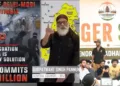
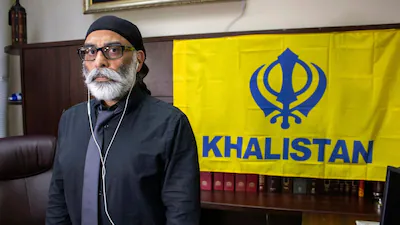
Intelligence agencies continue to closely monitor Sikhs for Justice (SFJ), a pro-Khalistan organisation that primarily operates from North America and Europe.
Officials allege that during high-profile protests, overseas actors circulated videos offering cash incentives to participants for displaying secessionist symbols at prominent public locations, including the Red Fort during the violence that accompanied the 2021 Republic Day tractor rally.
Indian authorities have previously designated SFJ as an unlawful organisation under the Unlawful Activities (Prevention) Act (UAPA), and several cases have been registered against its members and supporters in connection with alleged separatist activities.
Growing Concern Over Digital Radicalisation
According to intelligence agencies, foreign influence operations are increasingly targeting India’s digital ecosystem, particularly younger internet users, to amplify polarising narratives and internationalise domestic issues.
Officials say social media platforms have become a key battleground where coordinated campaigns attempt to shape public opinion by exploiting existing social and political debates.
While emphasising that peaceful protests remain a constitutional right and that the vast majority of demonstrators raise legitimate concerns, agencies warn that hostile foreign actors may seek to exploit democratic movements through disinformation, coordinated online amplification and covert funding mechanisms.
Security agencies continue to monitor these networks as part of broader efforts to counter cyber-enabled influence operations and safeguard India’s information ecosystem from external interference.