In recent years, social media has circulated emotionally charged claims describing a so-called “Indian Holocaust,” alleging that thousands of Indian Army soldiers were killed in British gas chamber experiments during the 1930s–40s. These posts often reference Rawalpindi and the British chemical weapons facility at Porton Down. While there is a real historical backdrop involving chemical warfare research under the British Empire, many of the viral claims significantly exaggerate or misrepresent what is actually documented in historical records.
The Indian Holocaust- This must go viral
Hitler did not come to India – Then who put 20000 Indian Army Soldiers in Gas Chambers??
The Britishers did- 1930 British Holocaust on Indians for 10 years suspected to have killed over 20000 soldiers
This story won’t give you… https://t.co/kVbCwCyj2T pic.twitter.com/f8AgbnxKJy
— Comman Man (@CommanMan777589) July 1, 2026
British Chemical Weapons Research and Indian Soldiers
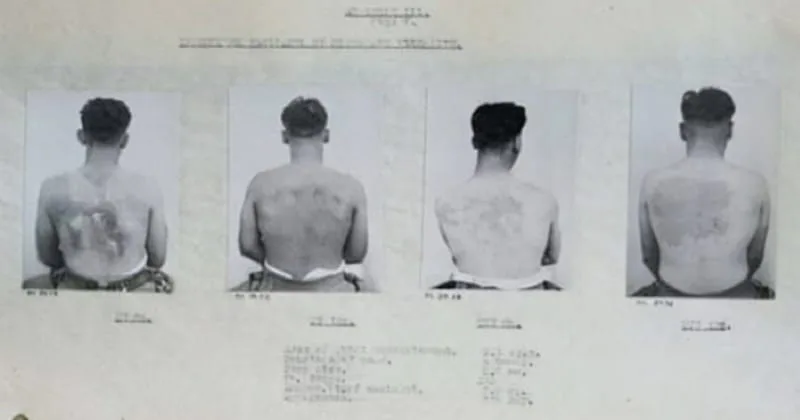
During the early and mid-20th century, the British military actively researched chemical warfare as part of preparations for future conflicts, especially after the large-scale use of such weapons in World War I. A key centre for this research was the chemical defence establishment at Porton Down, where scientists studied the effects of toxic agents and tested protective equipment like respirators and gas masks. Within this broader military framework, personnel from across the British Empire, including soldiers from the British Indian Army, were sometimes involved in controlled exposure trials and training exercises. These activities were primarily intended to understand battlefield effects and improve defensive measures, although the ethical standards and consent procedures of that era were far different from modern expectations.
What Happened at Rawalpindi?
Claims about “gas chambers in Rawalpindi” refer to military research and training facilities in colonial India where chemical defence preparations were conducted. Historical evidence suggests that some controlled exposure experiments or demonstrations involving chemical agents like mustard gas may have taken place to evaluate their physiological impact and to train troops in protective responses. However, these were not extermination facilities or mass execution chambers, but rather military testing environments operating under wartime research programs. Importantly, while these experiments likely caused discomfort and possibly injury to some participants, there is no verified archival evidence supporting claims of mass fatalities or tens of thousands of deaths in such settings.
The most significant concern surrounding these experiments is not exaggerated casualty figures, but the ethical reality of how colonial military systems functioned. Soldiers in the British Indian Army operated within a strict hierarchical structure where genuine informed consent was often limited or ambiguous by modern standards. Even when participation was recorded as voluntary, the power imbalance between colonial authorities and Indian troops raises serious questions about coercion, awareness of risks, and the ability to refuse participation without consequence. This makes the issue ethically troubling, even if the scale of harm is far smaller than viral narratives suggest.
Most established historical research agrees that the British military conducted chemical weapons research during World War II and that colonial troops, including Indians, were sometimes involved in controlled testing or training environments. However, historians also consistently note that there is no credible documentation supporting claims of “20,000 deaths in gas chambers” or systematic mass killings in such experiments. While injuries and suffering may have occurred due to exposure trials, the scale described in viral posts is not supported by verifiable military archives or peer-reviewed historical studies.
Such narratives tend to spread rapidly online because they combine elements of real historical injustice with emotionally powerful framing. Colonial-era exploitation, secrecy around military research, and limited public knowledge of such experiments create fertile ground for simplified and dramatic reinterpretations. Social media often amplifies these accounts without rigorous sourcing, turning complex historical realities into viral but distorted stories that prioritise emotional impact over factual accuracy.
The history of British chemical warfare research and the involvement of colonial troops is undeniably a subject that raises important ethical and historical questions. It reflects a period when military science, empire, and limited human rights protections intersected in troubling ways. However, responsible historical understanding requires careful separation of documented evidence from exaggerated or unverified claims. Acknowledging real colonial injustices is important, but it is equally important to avoid inflating or distorting facts, so that history remains accurate, credible, and meaningful.