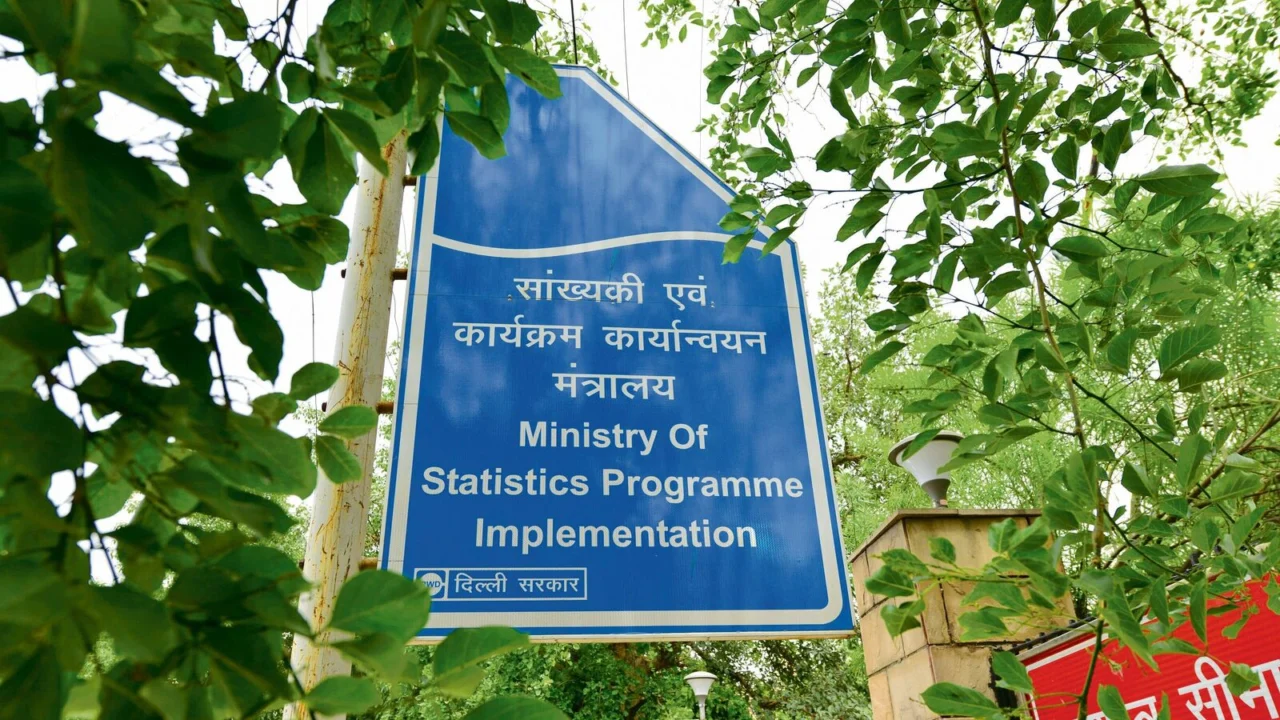
The Ministry of Statistics and Programme Implementation (MoSPI) has entered into a partnership with the Grassroots Research and Advocacy Movement (GRAAM) under the Embark India Development Fellowship programme. The collaboration is expected to create a bridge between academic research, grassroots insights and government decision-making by placing young professionals directly within the Ministry to work on policy and governance challenges.
The partnership was formalised through the signing of a Statement of Intent (SoI), under which two fellows will be engaged to support MoSPI’s ongoing initiatives in areas such as data governance, public policy, programme implementation and capacity development.
Government officials described the initiative as an important step towards bringing fresh perspectives and research-driven solutions into public administration at a time when data, evidence and innovation are increasingly shaping policymaking across sectors.
Partnership formalised through statement of intent
The Statement of Intent was signed during a ceremony attended by senior officials from both organisations.
The event was graced by the presence of P. R. Meshram, Director General (Data Governance), MoSPI. The agreement was formally signed by Dr. Basavaraju R. Shreshta, Executive Director of GRAAM, and Prasoon Verma, Director of the Training Unit under MoSPI’s Capacity Development Division.
Officials said the agreement marks the beginning of a structured collaboration between the Ministry and a research organisation that has spent more than a decade working on public policy, governance reforms, programme evaluation and community engagement across India.
The fellowship programme will enable selected researchers to work closely with government departments, contributing directly to projects that influence policy design and implementation.
What is the embark India development fellowship?
The Embark India Development Fellowship is designed as a platform where talented and research-oriented professionals can gain practical exposure to governance while simultaneously contributing to public policy initiatives.
Under the programme, fellows will be embedded within MoSPI and assigned to specific projects aligned with the Ministry’s objectives.
They will undertake research assignments, support policy formulation, analyse governance challenges and help develop innovative solutions to improve programme implementation and institutional effectiveness.
Officials believe such fellowships can play a vital role in bringing specialised knowledge and analytical skills into government systems.
The Ministry stated that the initiative seeks to combine academic rigour with practical governance experience, creating mutual benefits for both policymakers and young professionals.
Why MoSPI needs research fellows
As India’s nodal agency for official statistics and programme monitoring, MoSPI plays a critical role in policymaking.
The Ministry is responsible for collecting, analysing and disseminating statistical information across a wide range of sectors including the economy, employment, agriculture, industry and social development.
It also oversees programme monitoring and evaluation mechanisms that help governments assess the effectiveness of welfare schemes and development initiatives.
In recent years, the growing importance of data-driven governance has increased the demand for specialised research and analytical capabilities within government institutions.
Officials say fellowships such as the Embark India Development Fellowship can help address this need by bringing highly motivated researchers into the policy ecosystem.
The fellows are expected to contribute to projects involving data governance, capacity building, programme implementation and public policy analysis.
Bridging research and governance
One of the key objectives of the partnership is to bridge the gap that often exists between academic research and public administration.
Research institutions frequently generate valuable insights and policy recommendations, but translating these findings into actionable government programmes can be challenging.
By placing researchers directly within government departments, the fellowship seeks to ensure that evidence-based knowledge can be integrated more effectively into policymaking.
The Ministry believes that exposure to government systems will also help researchers better understand practical implementation challenges, administrative constraints and the realities of policy execution.
Officials said the arrangement creates a two-way learning process where government benefits from fresh ideas while fellows gain hands-on experience in governance.
Focus on innovation and capacity building
According to MoSPI, the fellows will work on projects that contribute to governance innovation and institutional strengthening.
Capacity building is expected to be a major area of focus.
Government institutions increasingly require specialised training, digital skills and analytical capabilities to manage large-scale programmes effectively.
The fellowship programme is expected to support these efforts through research-based recommendations and innovative approaches to public administration.
Officials noted that modern governance challenges require interdisciplinary expertise and collaborative problem-solving.
The programme has therefore been designed to encourage experimentation, innovation and evidence-driven solutions.
What is GRAAM?
The Grassroots Research and Advocacy Movement, better known as GRAAM, is a development research and public policy organisation that describes itself as a “think-and-act tank.”
Founded in 2011, the organisation works at the intersection of research, policy engagement and grassroots development.
Unlike conventional think tanks that focus primarily on policy analysis, GRAAM combines research with field-level implementation and community engagement.
Its work spans policy research, programme evaluation, impact assessment, governance reforms, social development initiatives and stakeholder consultations.
The organisation collaborates with governments, civil society groups, academic institutions and private sector organisations to address developmental challenges.
A key aspect of GRAAM’s approach is its emphasis on ensuring that the voices of communities at the grassroots level are reflected in policy decisions.
More than a decade of policy engagement
Over the past fifteen years, GRAAM has built a substantial portfolio of policy and governance-related work.
The organisation traces its origins to January 12, 2011, when it was established with the objective of strengthening evidence-based policymaking and improving accountability in governance.
In its early years, GRAAM conducted evaluation studies related to rural livelihoods and sanitation programmes.
Its work contributed to policy discussions around the National Rural Livelihood Mission and other development initiatives.
The organisation also played a role in consultations linked to the Karnataka State Rural Livelihood Mission and participated in World Bank-supported social accountability initiatives.
Expansion across India
What began as a Karnataka-focused organisation gradually expanded its footprint to several states across the country.
Over the years, GRAAM undertook projects in Andhra Pradesh, Telangana, Jharkhand, Assam, Chhattisgarh and other states.
Its work covered diverse sectors including education, health, livelihoods, governance, social protection and skill development.
The organisation also established partnerships with leading academic and research institutions including Cornell University, McGill University’s Max Bell School of Public Policy, the Institute for Social and Economic Change (ISEC), CFTRI, RV University and others.
These collaborations helped strengthen its research capabilities and expand its policy engagement activities.
Contributions to public policy
GRAAM’s policy contributions span a wide range of sectors.
The organisation contributed to Karnataka’s Vision 2025 document and played a role in preparing human development reports for the state.
It also worked on policy recommendations related to education reform, vocational education, disability inclusion and social security.
One of its notable interventions involved advocating for the inclusion of persons with disabilities in the Mahatma Gandhi National Rural Employment Guarantee Act (MGNREGA) framework.
The organisation has also undertaken studies for national bodies, including research related to forest rights and livelihoods for the National Commission for Scheduled Tribes.
In recent years, GRAAM participated in consultations linked to the Karnataka Skill Policy 2023-2030 and served as the National Coordination Organisation for the Development and Decentralisation Working Group under the G20 Civil20 engagement process.
Previous government collaborations
The MoSPI partnership is not GRAAM’s first engagement with government institutions.
In 2021, the organisation signed a Statement of Intent with the Development Monitoring and Evaluation Office (DMEO) of NITI Aayog.
It has also collaborated with various ministries, state governments and international organisations including UNICEF and the World Health Organisation.
These partnerships have focused on programme evaluation, policy research, governance reforms and capacity-building initiatives.
The experience gained through such collaborations is expected to support the implementation of the fellowship programme within MoSPI.
Benefits for fellows
For the selected fellows, the programme offers an opportunity to work at the heart of government policymaking.
Participants will gain direct exposure to public administration, policy formulation, data systems and programme implementation.
Such experiences are often difficult to acquire through academic programmes alone.
The fellowship is expected to provide insights into how government institutions function, how policies are designed and how decisions are made at the national level.
Officials believe this practical exposure will help develop a new generation of policy professionals equipped to address complex governance challenges.
Strengthening evidence-based governance
The partnership between MoSPI and GRAAM comes at a time when governments around the world are increasingly relying on evidence, data and research to design public policies.
Whether it is welfare delivery, employment generation, health programmes or education reforms, policymakers are under growing pressure to make decisions based on reliable data and measurable outcomes.
By integrating researchers into government systems, the fellowship programme seeks to strengthen this evidence-based approach.
The initiative also reflects a broader recognition that solving contemporary governance challenges requires collaboration between government institutions, researchers and civil society organisations.
Officials from both organisations expressed optimism about the potential impact of the partnership.
For GRAAM, the collaboration represents another step in its mission to connect grassroots realities with policymaking and governance reforms.
While the immediate programme involves only two fellows, both organisations view it as a pilot initiative that could create a model for future collaborations between government institutions and research organisations.
As India continues to focus on data-driven governance and evidence-based policymaking, partnerships such as the one between MoSPI and GRAAM may play an increasingly important role in shaping the next generation of public policy and administrative innovation.