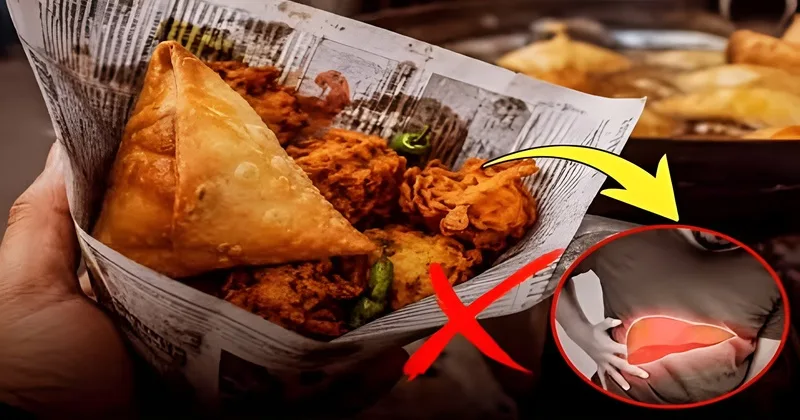
In a significant move to protect public health, the Maharashtra government has prohibited the use of newspapers and recycled printed paper for serving, wrapping, and storing food items across the state. The decision aims to prevent harmful chemicals present in printing ink and recycled paper from contaminating food and posing serious health risks to consumers.
🚨 BIG BREAKING
Maharashtra has BANNED the use of newspapers and recycled printed paper for serving, wrapping, or storing food 🔥
— The order aims to prevent food contamination from printing ink and other harmful chemicals.
— Megh Updates 🚨™ (@MeghUpdates) June 25, 2026
Maharashtra’s New Food Safety Directive
The Maharashtra government has directed all food vendors, restaurants, hotels, street food stalls, caterers, bakeries, sweet shops, grocery stores, and food businesses to immediately stop using newspapers or recycled printed paper for any food-related purpose. This includes:
-Wrapping cooked or uncooked food
-Serving snacks and meals on newspaper sheets
-Packing bakery items
-Storing food in recycled printed paper
-Using newspapers as liners inside food containers
The order has been issued under the provisions of the Food Safety and Standards Act, 2006, and aligns with guidelines issued by the Food Safety and Standards Authority of India (FSSAI).
Why Has Maharashtra Imposed the Ban?
For decades, newspapers have been commonly used across India to wrap samosas, pakoras, vada pav, bhajiyas, fried fish, sweets, and other takeaway food. However, health experts have consistently warned against the practice.
Printing ink used in newspapers contains several chemicals that are not safe for human consumption. These include toxic heavy metals such as lead and cadmium, along with mineral oils, pigments, solvents, and various industrial chemicals used during the printing process. When hot, oily, or moist food comes into direct contact with newspaper, these harmful substances can migrate into the food, increasing the risk of contamination and posing potential long-term health hazards.
When hot or oily food comes into contact with newspaper, these chemicals can migrate into the food. The transfer becomes even greater when food is served immediately after cooking.
Recycled printed paper may contain additional contaminants such as adhesives, dyes, residues from previous printing processes, and chemical preservatives, making it even more hazardous for direct food contact.
Health Risks Associated with Newspaper Packaging
Medical experts warn that continuous exposure to chemicals found in newspaper ink may contribute to:
-Food poisoning
-Digestive disorders
-Liver damage
-Kidney problems
-Hormonal imbalance
-Neurological disorders
-Reproductive health issues
-Increased long-term cancer risk due to prolonged exposure to toxic substances
Children, pregnant women, and elderly individuals are considered particularly vulnerable to these contaminants.
FSSAI Had Already Issued National Advisory
The Maharashtra government’s order reinforces an advisory previously issued by the Food Safety and Standards Authority of India (FSSAI), which clearly stated that newspapers and recycled printed paper should never be used for wrapping, storing, or serving food.
According to FSSAI, there is no safe level of direct contact between food and newspaper ink, especially when the food is hot, oily, or moist. The regulator has repeatedly urged food business operators to switch to food-grade packaging materials approved for direct food contact.
The directive applies to a wide range of food businesses across Maharashtra, including restaurants, hotels, street food vendors, tea stalls, bakeries, sweet shops, cafés, caterers, grocery stores, food delivery outlets, and food processing units. All such establishments are required to stop using newspapers and recycled printed paper for serving, wrapping, or storing food. Authorities are expected to carry out regular inspections and enforcement drives to ensure compliance with the new food safety regulations.
Safe Alternatives for Food Packaging
The government has advised food businesses to switch to certified food-grade packaging materials such as butter paper, food-grade paper, parchment paper, aluminium foil (where appropriate), approved food-grade plastic containers, paper boxes specifically manufactured for food packaging, and biodegradable food-grade packaging materials. These alternatives are designed to prevent the migration of harmful chemicals into food, maintain hygiene standards, and ensure the safe handling, storage, and serving of food.
Environmental Concerns and the Need for Safer Recycling
While recycled paper plays an important role in reducing waste and promoting sustainability, experts stress that not all recycled paper is suitable for food contact. Recycled printed paper often contains residual inks and chemicals that cannot be completely removed during recycling. The ban therefore, distinguishes between environmentally friendly recycling practices and food-safe packaging standards.
Street vendors and small food businesses are likely to face an initial increase in packaging costs as they transition to approved food-grade materials. However, public health experts argue that the long-term benefits of preventing food contamination outweigh the additional expense. Government agencies may also conduct awareness campaigns to educate vendors about safe packaging practices.
Maharashtra’s decision represents an important step toward improving food safety standards in one of India’s largest states. By eliminating the use of newspapers and recycled printed paper in food handling, the government aims to reduce consumers’ exposure to toxic chemicals while encouraging businesses to adopt hygienic, food-grade packaging solutions.
The move also serves as a reminder that seemingly harmless everyday practices can carry hidden health risks, reinforcing the need for greater awareness among both food vendors and consumers about safe food handling and packaging practices.