






Union Minister for Road Transport and Highways Nitin Gadkari informed the Lok Sabha on December 4 that the existing toll plaza system on national highways will be replaced within a year by a fully electronic, barrier-free toll collection model.
📍नई दिल्ली | लोक सभा
सांसद श्री @MPDharmendraYdv जी द्वारा आजमगढ़ – वाराणसी हाईवे पर टोल के संबंध में पूछे गए प्रश्न का केंद्रीय मंत्री श्री @nitin_gadkari जी द्वारा उत्तर। #QuestionHour #लोकसभा #WinterSession pic.twitter.com/xOTEhoxbcf
— Office Of Nitin Gadkari (@OfficeOfNG) December 4, 2025
During Question Hour, Gadkari explained that the new framework is intended to ensure seamless travel, removing the need for vehicles to halt at toll booths. He added that pilot trials are already underway at 10 locations and will be scaled up across the country over the next 12 months.
“This toll system will end. No one will stop you for toll collection. Within a year, an electronic toll system will be implemented nationwide,” Gadkari said.
The new system will follow the Multi-Lane Free Flow (MLFF) Electronic Toll Collection model. It will integrate AI-enabled Automatic Number Plate Recognition (ANPR) cameras with the existing RFID-based FASTag setup. As vehicles pass beneath overhead gantries, they will be identified automatically, allowing toll charges to be deducted without any need to slow down or switch lanes.
Gadkari noted that requests for proposals have already been floated and finalised for introducing the FASTag–ANPR barrier-free tolling system at selected plazas. The broader rollout will take place in phases, depending on the performance and outcomes of these initial deployments.
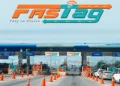
This initiative builds on India’s National Electronic Toll Collection (NETC) programme, managed by the National Payments Corporation of India (NPCI). Introduced nationwide in 2016, NETC offers a unified, interoperable platform for FASTag-based toll payments. FASTag is an RFID tag placed on a vehicle’s windshield and linked to a bank account or prepaid wallet. When vehicles move through toll lanes equipped with scanners, the toll fee is automatically deducted, and drivers receive instant transaction alerts.
Why are physical toll plazas being phased out?
Although FASTag has significantly reduced wait times, vehicles still have to slow down or halt at barriers for verification. The MLFF system seeks to eliminate these physical checkpoints altogether, reducing congestion, boosting average travel speeds, and removing bottlenecks—particularly on high-traffic routes. Once fully deployed, this barrier-less tolling model is expected to become the standard method of fee collection across India’s national highway network.















Comments