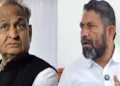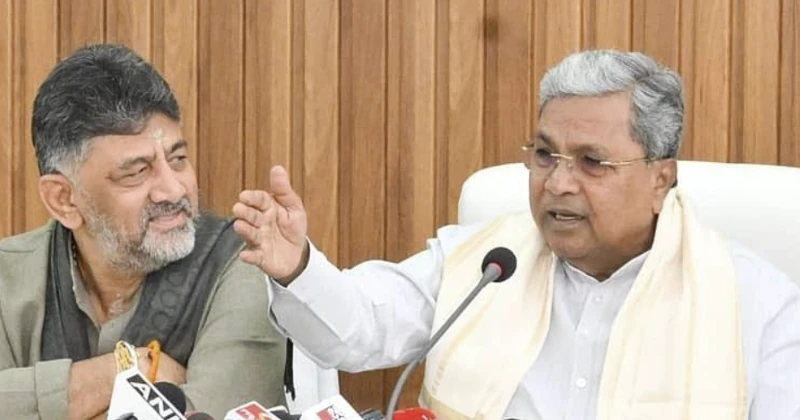
The Congress high command may have hoped that a carefully choreographed breakfast meeting, followed by a joint press conference, would silence the growing debate over power-sharing in Karnataka. But Chief Minister Siddaramaiah and Deputy Chief Minister DK Shivakumar ended up raising more questions than answers. Their attempt to project unity appeared strained, scripted and filled with contradictions—leaving political observers wondering if the leadership tussle is truly settled or simply being deferred.
The meeting held at CM Siddaramaiah’s Cauvery residence was billed as a “decisive clarity session” mandated by the high command. Yet, when both leaders finally faced the media, their defensive responses, half-statements and repeated references to “high command instruction” painted a picture far from clarity.
Chief Minister Siddaramaiah began the press conference by accusing the media and opposition of spreading confusion. According to him, “There was no confusion earlier, there is no confusion now, and there will be none in the future.”
But this assertion immediately clashed with the fact that he had just held a breakfast meeting—on high command orders to resolve the very confusion he claimed never existed. If no confusion existed, why did the high command intervene? Why instruct both leaders to “settle” differences?
Instead of answering directly, Siddaramaiah continued to skirt the questions, irritating several reporters present at the briefing.
The strange exchange on X, between the two leaders during the height of the leadership debate further heightened the uncertainty.
DK Shivakumar had cryptically posted that “keeping the word is the greatest power.” Within hours, Siddaramaiah counter-posted, asserting that “the word given to the people is our world.”
The media asked whether these posts indicated a disagreement between the two. Instead of clarification, journalists were bluntly told, “We cannot answer all your questions. We will follow whatever the high command decides.”
At a press conference called specifically to end speculation, refusing to answer direct questions only intensified public doubt.
One of the most pressing questions whether the high command discussed a leadership change after 2.5 years—was met with the same vague answer: “We will act as the high command says.”
Notably, Siddaramaiah avoided directly denying that such a discussion took place. This ambiguity has only fed the belief that the much-talked-about power-sharing agreement may indeed exist, but neither leader wishes to acknowledge it publicly.
The most telling moment came when a journalist asked, “The power-sharing confusion started between you and DK Shivakumar. How are we responsible for this?”
Siddaramaiah responded: “Yes, confusion was created between us. The solution is for me and DK Shivakumar to settle as per the high command’s instructions.”
This admission directly contradicted his earlier statement that “no confusion ever existed.” If the confusion never existed, what exactly was “settled”? And why was the high command compelled to intervene?