J&K HC dismisses bail plea of BKI financier Gurpartap Singh in 61kg Arnia border heroin Seizure
NEW DELHI: The Jammu and Kashmir and Ladakh High Court has refused bail to Gurpartap Singh, an accused in a cross-border narco-terrorism case involving the smuggling of heroin and arms from Pakistan to raise funds for Babbar Khalsa International (BKI) which is a banned terrorist outfit
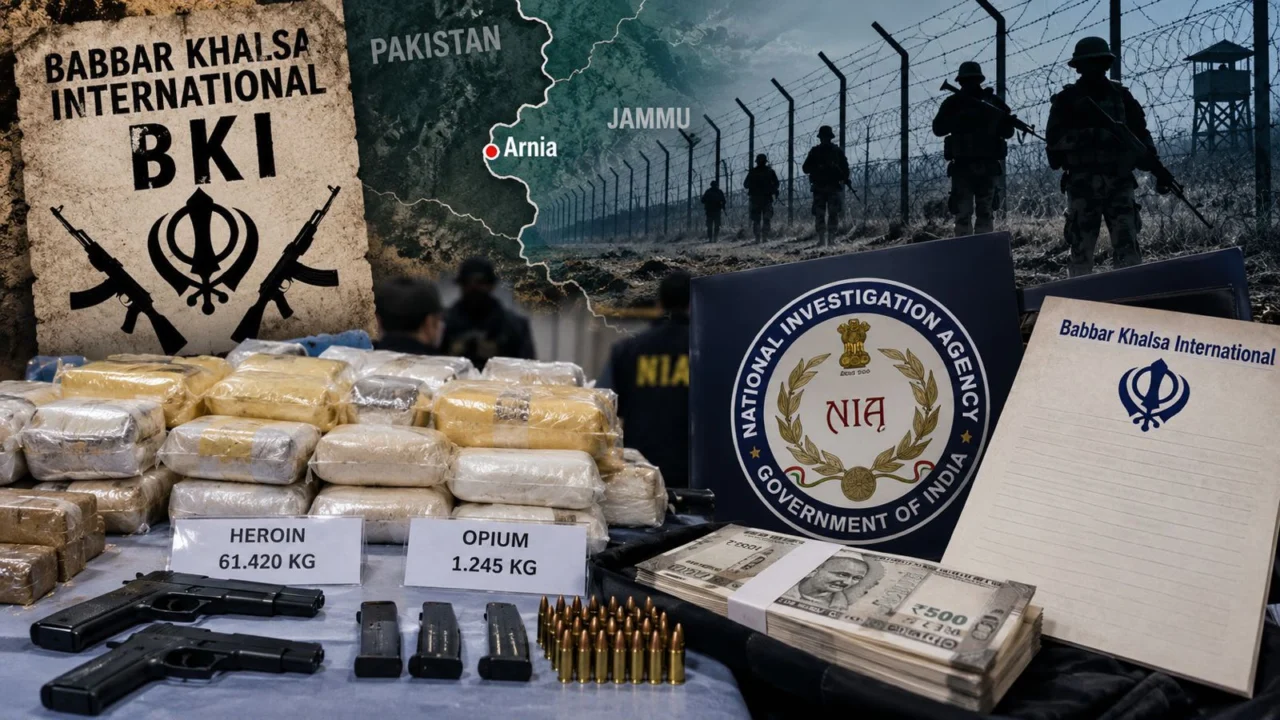
The case dates back to September 20, 2020, when a team of Jammu and Kashmir Police patrolling near the International Border at Arnia in Jammu came under fire from the Pakistani side. A search subsequently carried out by the Border Security Force (BSF) between the Bulley Chak and Budhwar border outposts led to the recovery of a huge cache consisting of 61.420 kg of heroin, 1.245 kg of opium, two pistols, three magazines and 100 live cartridges.
An FIR was registered at Arnia Police Station. However, as the investigation progressed, suspicions emerged about the involvement of BKI in the smuggling racket. The National Investigation Agency (NIA) took over the case in November 2020.
The agency alleged that the narcotics were being smuggled through the Jammu border for subsequent sale in Punjab, with the proceeds intended to finance BKI’s activities. The weapons brought across the border were allegedly meant for its operatives.
Seven persons were arrested in connection with the case. On April 17, 2021, the NIA filed its chargesheet against Gurpartap Singh, Sham Lal, Ajeet Kumar alias Kala, Bishan Das alias Raju, Jasraj Singh, Subhash Chander and Gurbaksh Singh.
Gurpartap Singh, a resident of Tarn Taran in Punjab, was accused of being one of the principal organisers of the racket. According to the NIA, he had provided Rs 20 lakh for an earlier consignment of 10 kg of heroin, procured special bags for carrying the money and even directed men to survey vulnerable stretches of the International Border.
Investigators also claimed to have recovered a letter pad bearing the name of BKI from his residence.
After the Special NIA Court at Jammu rejected his bail application in October 2025, Singh approached the High Court, citing prolonged incarceration and delay in trial. His counsel argued that no contraband had been recovered directly from him and that some of the co-accused had already secured bail.
But the Division Bench of Justices Sanjay Dhar and Shahzad Azeem was not persuaded by his plea.
The Court found that Singh’s alleged role was considerably different from those of the co-accused who had been granted bail. While they were accused of acting as carriers or local facilitators, Singh was alleged to have spearheaded the smuggling operation and arranged its finances.
The Bench relied on statements of protected witnesses and other material collected during the investigation. Several important witnesses, including experts, were yet to be examined.
The Court also considered the restrictions on granting bail under Section 43D(5) of the UAPA and Section 37 of the NDPS Act, finding that Singh’s prolonged incarceration was insufficient to justify his release in the circumstances of the case.
Finding sufficient prima facie material against Singh, the High Court dismissed his appeal on October 13 and upheld the Special NIA Court’s refusal to grant bail. It nevertheless asked the trial court to expedite the proceedings and fix an appropriate schedule for recording the remaining evidence.
