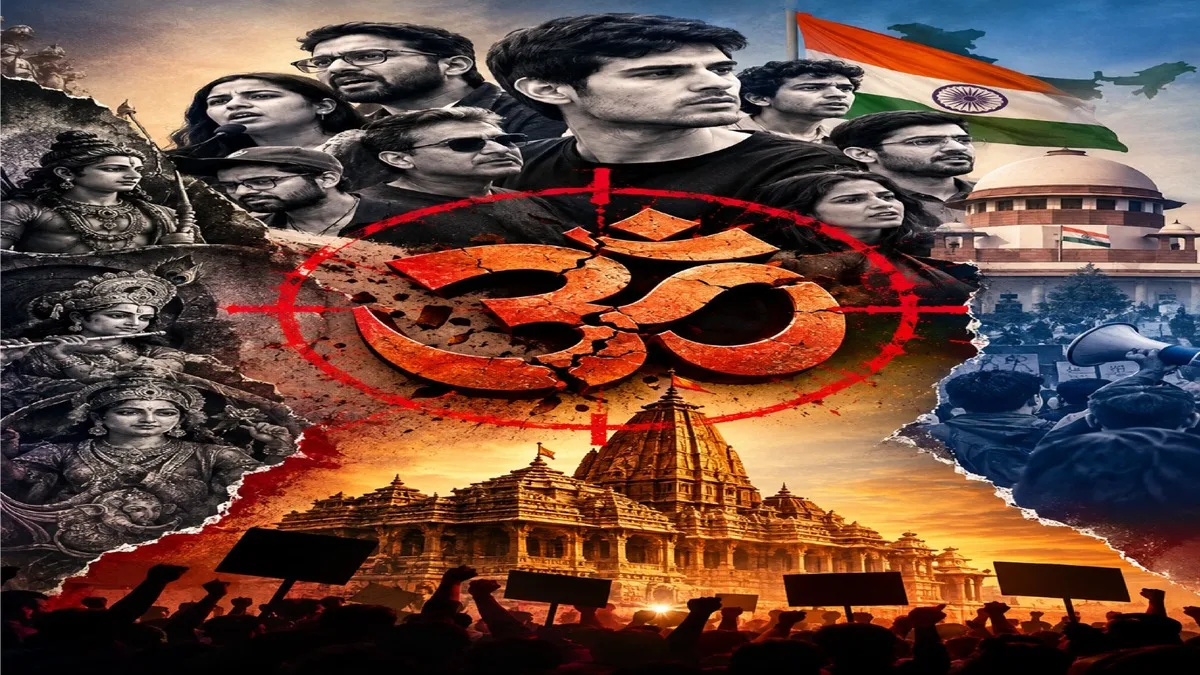
Under the guise of youth protests: How CJP and Left-Islamist figures target India's sanatan cultural roots
The Cockroach Janata Party (CJP) may appear today as a digital political movement launched by Abhijeet Dipke in May 2026. In reality, however, it is a narrative presented in the name of youth unemployment, electoral reform and “fix the schools”, whose target is Hindus, Hindutva and the Sanatan order of India, a stream that has flowed unbroken for centuries.
If anyone finds this hard to believe, they should examine the movement’s activities and the statements of those associated with it, from which a very different picture of the CJP will emerge of its own accord. The latest evidence is the slogans of “Hindutva Murdabad” (death to Hindutva) raised at an unauthorised protest in Panaji, Goa, which is the most glaring example of this thinking. In this incident, police have registered an FIR against 300 unidentified protesters.
According to Panaji Police Inspector Vijaykumar Chodankar, slogans of “Murdabad, Murdabad, Hindutva Murdabad” were raised during the demonstration, which promoted religious disharmony and hurt the sentiments of the Hindu community. A case was registered under Sections 196 and 299 of the Bharatiya Nyaya Sanhita on the complaint of a local resident, Ramprasad Kelkar. Chief Minister Pramod Sawant said that attempts to disturb communal harmony would not be tolerated. Seven people were detained and later released on the orders of the Bombay High Court. Yet several questions arise: how are such incidents occurring across the country at the same time?
Indeed, this incident is not isolated. Between 2018 and 2026, names associated with the CJP, including Dhruv Rathee, Abhijeet Dipke, Prakash Raj, Saurabh Das, Mohammed Zubair, Ratna Singh and Ashutosh Ranka, have been embroiled in repeated controversies over Hindu traditions, Sanatan Dharma, the Ram temple, Article 370 and national institutions. The Goa sloganeering matches earlier statements made from time to time by people linked to the CJP. Abhijeet Dipke was accused in July 2026 of mocking Lord Ram and Goddess Sita at Jantar Mantar.
Men’s rights activist Barkha Trehan threw ink at him. Dipke faced a complaint from the Legal Rights Observatory over old posts on Kashmir. He made statements in support of Umar Khalid and called the Chief Election Commissioner “anti-national” and a “traitor”. In October 2026, he told those practising Hindu-Muslim divisive politics to “go to Pakistan”. He has also been accused of calling rural people in Jaipur “fools” and “donkeys”.
In March 2026, Dhruv Rathee uploaded a video titled “Can Hindus Eat Beef? Kerala Story 2 Exposed”, which, citing ancient texts, claimed that Ram, Krishna and the Pandavas consumed meat and alcohol. After a complaint, the government’s appeals committee ordered YouTube to remove the video, holding that it could hurt Hindu sentiments.
Rathee compared the Ramayana to Spider-Man, portrayed Bangladesh as ahead of India, depicted India as turning into a “dictatorship”, and in March 2019 made remarks about BJP supporters involving “cow urine and cow dung”. His “cow dung prescription” remark about Manohar Parrikar’s cancer treatment, and his calling Savarkar and Golwalkar “devotees of Hitler”, also drew attention. His analyses of the Delhi riots were likewise one-sided and anti-Hindu.
In September 2023, in Kalaburagi, Prakash Raj said: “Sanatan is like dengue, and it must be uprooted.” In the Sabarimala controversy, he insulted a faith that bars women from worship. He described himself as “anti-Modi, anti-Shah, anti-Hegde” and said that “people who support murder are not Hindus”. In December 2025, he alleged that “preparations for a genocide” were under way in the country, with a plan to wipe out Muslims, Adivasis and minorities. Criticism of The Kashmir Files, mockery of Chandrayaan-3 and remarks on the Hindi language are also on his record.
Saurabh Das, appointed chief spokesperson of the CJP in June 2026, met Umar Khalid in December 2025, called him “the bravest” and described his imprisonment as an “indelible stain on the judiciary”. He opposed the reconstruction of the Ram temple, called 6 December a “sad day” and described the demolition of the Babri Masjid as “the BJP’s crime”. Opposing the abrogation of Article 370, he cited a statement by Pakistan’s Chief Justice. His response to the Pahalgam attack drew criticism because he focused on communalisation rather than on the terrorists.
Mohammed Zubair was arrested in June 2022 over the “Hanuman Hotel” tweet. Old posts were alleged to mock Lord Hanuman, Ram, the Mahabharata, the Shivling and Hindu traditions. His role in the Nupur Sharma controversy was also discussed. Questions were raised over Alt News’s funding in relation to the FCRA.
Ashutosh Ranka has a long association with the Aam Aadmi Party and donated to it in 2025-26. In the Wangchuk episode, he called the government “the most despicable government in India’s history”. Ratna Singh is the CJP’s head of legal affairs and has been associated with the “Fix the Schools” campaign. The names of Das, Dipke, Ranka and Singh have appeared in FIRs linked to CJP protests.
These events show a pattern. A platform was built in the name of youth and student protest, but Hindu religious symbols, Sanatan Dharma, the Ram temple, Article 370 and national institutions were targeted. The Goa sloganeering is the public expression of this chain. When slogans such as “Hindutva Murdabad” are raised at protests, and earlier statements mock deities or traditions, it ceases to be mere political criticism. It becomes, directly and, where possible, indirectly, an attack on Hindus, Hindutva and India’s fundamental roots, intended in some way to weaken and hurt Hindu faith and sentiment.
CJP supporters describe this as youth anger and democratic protest. But the Goa Police FIR, the allegations about Ram and Sita at Jantar Mantar, the ban on Rathee’s video and Prakash Raj’s “Sanatan dengue” remark weaken that argument. In many cases, complaints were filed, videos removed and legal action taken. Questions about foreign influence, the AAP connection and funding have also been raised repeatedly.
In India, Hindutva is seen as a political and cultural identity. When a movement repeatedly targets Hindu symbols, temples, traditions and nationalist policies, it is natural to ask where the limits of protest lie. The Panaji incident shows that this targeting continues on both digital and street platforms. Police investigation and legal process will proceed, but the facts gathered from 2018 to 2026 point to a clear pattern: in the name of protest, Hindutva has repeatedly been brought, and continues to be brought, to the centre of controversy and criticism.
Looked at closely, this, the author argues, is strong evidence of how religious and cultural identity is being challenged under the cover of a youth movement, and of where society draws the line. The CJP movement is, in the author’s words, now awaiting that boundary, with a seasoning of the Congress and certain other organisations. The Goa FIR has brought this debate once again onto the public stage, asking why Hindutva was insulted and why it continues to be insulted, on one pretext or another.
