Poonch district occupies a special place amidst the lush green landscapes of the Jammu and Kashmir, where the majestic panchaladeva (panchal Dev) range stands as a silent sentinel to the history. Often described as confluence of cultures, religion, traditions, Poonch is a place where a delicate and harmonious balance has long existed between the spritual and secular fabrics.
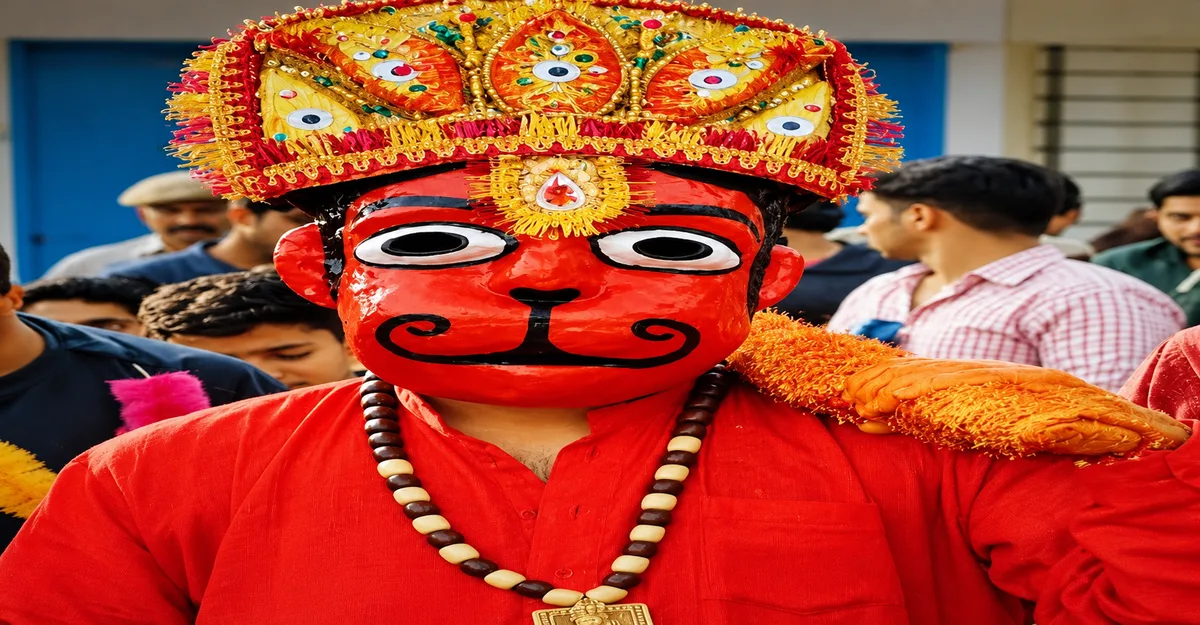
If we consider all these factors, the Shri Hanuman Jhanki (during Shardiya Navratri) is a colourful and profoundly moving devotional procession (sacred performance) held every year during the auspicious occasion of Shardiya Navratri in poonch. This Hanuman Jhanki stands out among the many jewels in its cultural crown as a testament to the enduring spirit and syncretic ethos of the panchaladeva (panchal Dev) region of Jammu and Kashmir.
As we move advance in a time of swift modernity, it is important to preserve these living customs and rituals as essential, living manifestation of our shared identity rather than just as artifact from the past which also promotes social harmony.
It is time for this performed cultural manifestation to be officially recognized and included to the India’s National Inventory of Intangible Cultural Heritage (ICH). The Cultural and spiritual landscape of Poonch must be appreciated before one can comprehend the significance of the Shri Hanuman Jhanki (sacred performance). It is a well known fact that the panchaladeva (panchal Dev) region has historically been a crossroads of cultures.
In the Union territory of Jammu and Kashmir, Poonch has created a special atmosphere where interfaith harmony is not only an ideal but a daily reality on the ground due to the history, the ancient influence of sages like Maharishi Pulastya, after whom the panchaladeva (panchal Dev) region is thought to be named, the profound impact of Sufi saints, and the patronage of Dogra rulers.
The festival of “Navratri” is celebrated throughout the world with a great religious fervor. This celebration signifies the victory of light over darkness and emergence of “Devi Shakti.” Hindu mythology, describes it as a period of both internal and external purification. In Poonch, one of the remote and bordering districts of the Union territory of Jammu and Kashmir this spiritual atmosphere reaches its peak during the period of “Shardiya Navratri” as the Shri Hanuman Jhanki which takes place at Poonch for about ten days and ends on the day of Dusshera evening.
The Shri Hanuman Jhanki characterized in Shardiya Navratri by its devotion, symbolic mask, artistic displays and large scale public participation,transcends mere religious observance. Everyone in the society, regardless of background, gathers to see and celebrate the divinity of Shri Hanumana at this social-fabric binding event. Shri Hanuman Jhanki (sacred performance) is more than a display; it is a living art form.
It carries the weight of rituals, devotion, tradition oral histories, traditional craftsmanship in the creation of symbolic mask (frontlet) and costumes and the collective memory of a people who have preserved their customs for their future generations through centuries of transition because it is a well known fact that we cannot turn back hands of the history. This ritual fosters unity, cultural transmission, cultural harmony and the preservation of traditional values from generation to generation. When the Shri Hanuman Jhanki starts from the Shri Geeta Bhawan Poonch, winds its way through the historic streets of poonch, it creates a sacred, devotional and spiritual space that links the present generation to their ancestors.
It embodies the value of dedication, righteousness (Dharma) and community service. The participation of local youth, the involvement of diverse community members and the shared excitement that permeates the poonch city during these almost ten days prove that the tradition remains vibrant and relevant. In panchaladeva (panchal Dev) region that has faced significant historical challenges, such traditions serves as the anchors of psychological and cultural stability.
They remind the local residents of their roots, their shared values and the continuity of their identity. To allow such traditions to remain unrecorded is to risk losing a vital thread in the complex, beautiful tapestry of Indian history as well as heritage. It is a well-known known fact that Bharat is known not only for its rich diversity but also for safeguarding the rights of the communities to preserve their distinct cultural identifies.
The national Inventory of intangible cultural heritage, maintained under the ministry of culture, serves as a crucial tool for the identification, promotion documentation and preservation of India’s vast diverse cultural heritage. The Ministry of Cultural putting all efforts to ensure that India’s diverse rich Cultural heritage is must be inclusive and sustainable.
Currently, the intangible cultural heritage inventory includes various traditions from fork, theatre and oral epics to ritualistic festivals.The Shri Hanuman Jhanki (religious procession) meets all the fundamental criterias for inclusion in the list of the intangible cultural heritage of the country. It is not only recognised by the people of Poonch as a central element of their local cultural identity but it also passed down through generation to generation, with elders mentoring the youth in the rituals and organizational aspects of the Shri Hanuman Jhanki.
It promotes social cohesion, cultural harmony, inter community participation and the transmission of ethical values. While the tradition is alive, formal recognition provides the necessary impetus for its documentation, preservation research, and protection, ensuring it remains robust against the pressures of modernization. It is urged upon the Central Government, Ministry of culture and the local administration of Jammu and Kashmir to prioritize the inclusion of the Shri Hanuman Jhanki of Poonch in the list of the national Inventory of intangible cultural heritage.
This submission is not Merely a formality; it is an urgent plea for institutional support as well as recognition of the national government. It will encourage researchers, historians and folklorists to document the history, evolution and nuances of this tradition, creating a permanent record for future generations to come. By highlighting such unique customs, traditions and rituals the panchaladeva (panchal Dev) region can benefit from sustainable cultural tourism, cultural harmony, bringing economic opportunities to the local artisans and organizers who keep this tradition alive.
With National recognition comes the possibility of grants and support programs aimed at revitalizing endangered art forms and providing platforms for local practitioners. Formal acknowledgement validates the pride of the local community, reaffirming that their local heritage is an indispensable part of the broader Indian national consciousness. The Shri Hanuman Jhanki of Poonch is more than just a religious, devotional procession; it is a manifestation of the soul of Poonch. It is a celebration of our shared resilience and our enduring connection to the divine and to each other.
With this step, by bringing this spiritual tradition into the fold of the national Intangible inventory, the Ministry of culture is preserving a ritual; we are honoring the people from generation to generation who have kept the lamp of this culture burning through every Storm. We call up on the authority is to act with vision and foresight. Let the central government particularly the Ministry of culture ensure that this radiant expression of faith and community, which has stood the test of time, receive the honour and protection it rightfully deserves.
By recognising the “Shri Hanuman Jhanki of Poonch” during Shardiya Navratri, we affirm our commitment to a nation where the local is cherished, the diverse is celebrated and our intangible Heritage continues to inspire our future generations.
