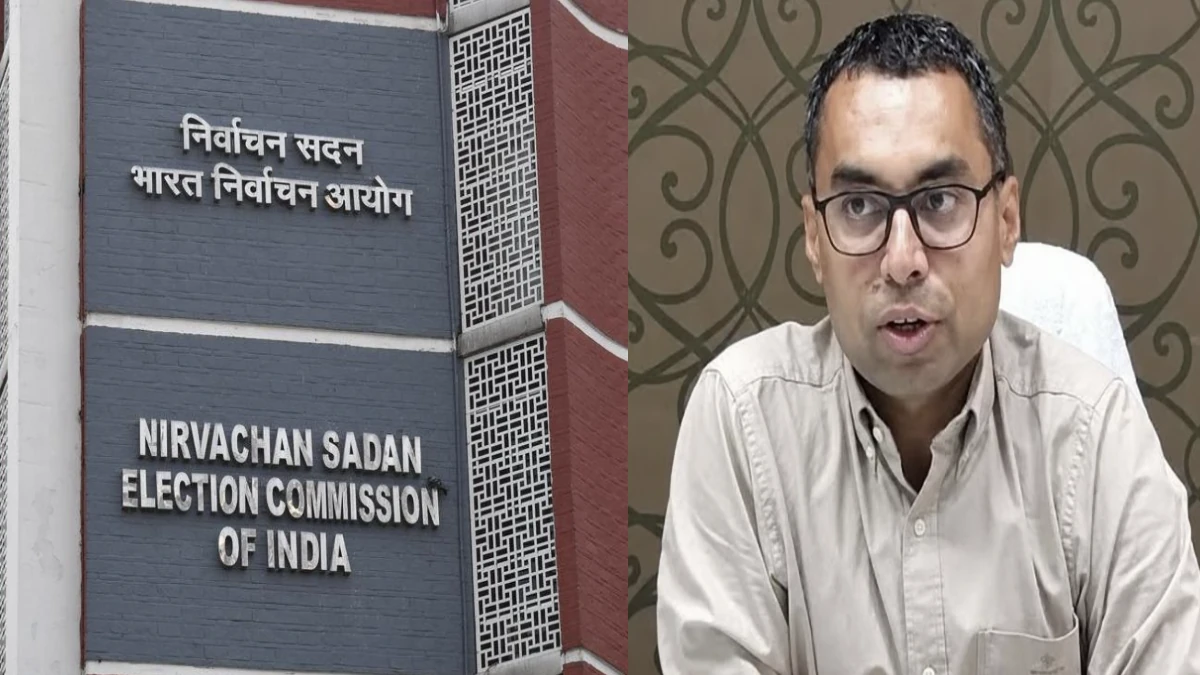
Prakash Rajpurohit takes charge as Deputy Election Commissioner
NEW DELHI: The Centre has ordered a major bureaucratic reshuffle, clearing 27 appointments of IAS, IRS and other officers to joint secretary-level and equivalent posts, including the appointment of senior IAS officer Prakash Rajpurohit as Deputy Election Commissioner. The sweeping exercise covers several crucial institutions, signalling a renewed administrative push across election management, competitive examinations, public health and governance.
A Personnel Ministry order confirmed that Rajpurohit, a 2010-batch IAS officer of the Rajasthan cadre, will replace Sanjay Kumar as Deputy Election Commissioner. His tenure will continue until April 8, 2030.
Rajpurohit was serving as Joint Secretary in the Department of Defence Production. His previous assignments include Director in the Department of Economic Affairs, where he handled international investment treaties, as well as key administrative positions in Rajasthan, including Collector of Ajmer and Commissioner of Commercial Taxes.
His appointment places an experienced administrator in a critical institution responsible for overseeing the country’s electoral machinery, where administrative efficiency, impartiality and public confidence remain essential.
The National Testing Agency (NTA), which conducts major national-level entrance and recruitment examinations, is another key focus of the reshuffle.
Vivek Khare, a 1996-batch Indian Telecom Service officer, has been appointed Joint Secretary at the NTA, with his overall tenure extending until December 2, 2029. With Khare’s appointment, four joint secretaries have been appointed to the agency since May 16. The others are Anshuman Sharma, Anuja Bapat and Ruchita Vij.
The appointments form part of the NTA’s restructuring following the recommendations of the Radhakrishnan committee in October 2024. The committee called for strengthening the agency’s permanent workforce to improve accountability, prompting the government to create 16 new posts.
The expansion comes amid heightened scrutiny of examination administration and the need for reliable, transparent systems that can manage large-scale competitive tests. Strengthening the agency’s staffing is an important administrative step, though its effectiveness will ultimately depend on improvements in examination security, coordination and accountability.
The Appointments Committee of the Cabinet cleared 27 appointments across ministries and major institutions, including the Election Commission, National Health Authority, NTA, NITI Aayog, Central Vigilance Commission and National Commission for Women.
Among the officers assigned to the Ministry of Home Affairs are Ravi Shankar, a 2007-batch IAS officer of the Gujarat cadre; Chittaranjan Dash, a 1999-batch Indian Revenue Service officer; P. Manoj Kumar, a 1998-batch Indian Statistical Service officer; and Abhishek Bhagotia, a 2007-batch IAS officer of the Assam-Meghalaya cadre.
Other notable appointments include:
The scale of the reshuffle underlines the Centre’s effort to fill senior administrative positions across institutions that play important roles in governance, public service delivery and national-level examinations.
Rajpurohit’s appointment at the Election Commission and the expanded senior-level presence at the NTA stand out because both institutions face demanding responsibilities that require administrative competence and public trust.
