Air campaign alone cannot replace boots on the ground
September 12, 2026
  • Read Ecopy
  • Circulation
  • Advertise
  • Careers
  • About Us
  • Contact Us
Android AppiPhone AppArattai
Organiser
  • ‌
  • Bharat
    • Assam
    • Bihar
    • Chhattisgarh
    • Jharkhand
    • Maharashtra
    • View All States
  • World
    • Asia
    • Europe
    • North America
    • South America
    • Africa
    • Australia
  • Editorial
  • International
  • Opinion
  • RSS @ 100
  • More
    • World Hindu Congress 2026
    • Op Sindoor
    • Analysis
    • Sports
    • Defence
    • Politics
    • Business
    • Economy
    • Culture
    • Special Report
    • Sci & Tech
    • Entertainment
    • G20
    • Azadi Ka Amrit Mahotsav
    • Vocal4Local
    • Web Stories
    • Education
    • Employment
    • Books
    • Interviews
    • Travel
    • Law
    • Health
    • Obituary
  • Subscribe
    • Subscribe Print Edition
    • Subscribe Ecopy
    • Read Ecopy
  • ‌
  • Bharat
    • Assam
    • Bihar
    • Chhattisgarh
    • Jharkhand
    • Maharashtra
    • View All States
  • World
    • Asia
    • Europe
    • North America
    • South America
    • Africa
    • Australia
  • Editorial
  • International
  • Opinion
  • RSS @ 100
  • More
    • World Hindu Congress 2026
    • Op Sindoor
    • Analysis
    • Sports
    • Defence
    • Politics
    • Business
    • Economy
    • Culture
    • Special Report
    • Sci & Tech
    • Entertainment
    • G20
    • Azadi Ka Amrit Mahotsav
    • Vocal4Local
    • Web Stories
    • Education
    • Employment
    • Books
    • Interviews
    • Travel
    • Law
    • Health
    • Obituary
  • Subscribe
    • Subscribe Print Edition
    • Subscribe Ecopy
    • Read Ecopy
Organiser
  • Home
  • Bharat
  • World
  • Operation Sindoor
  • Editorial
  • Analysis
  • Opinion
  • Culture
  • Defence
  • International Edition
  • RSS @ 100
  • Magazine
  • Read Ecopy
Home Bharat

India’s Emerging Military Challenge: Air campaign alone cannot replace boots on the ground

The air campaign may signal the start of war for the right optics. But the victory eventually is assured by boots on ground, through a rigourous land campaign, duly supported by the air power, in the Indian context. At the same time, no army can achieve worthwhile victory on ground, without the full support of its air force

Lt Gen (Retd) MK DasLt Gen (Retd) MK Das
Aug 23, 2026, 10:00 pm IST
inBharat, Opinion, Defence
Follow on Google News
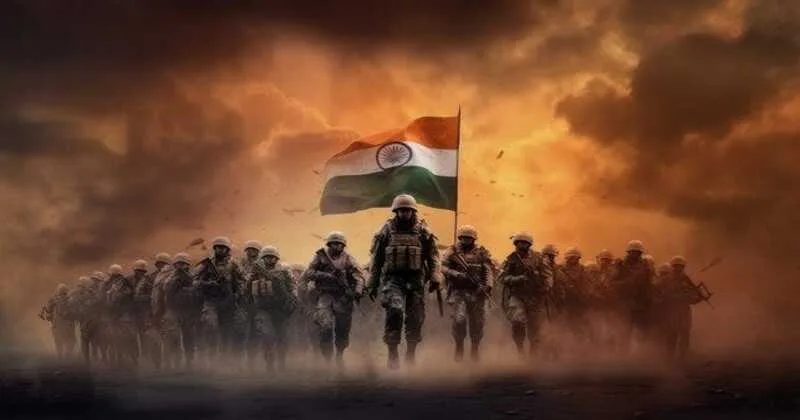
Representative Image

Representative Image

Facebook
Twitter
WhatsAppTelegramEmail

One of the common questions during my public interaction relates to the supremacy of air power in the ongoing conflicts. Some even feel that the wars can be won by the air force alone. This article is an attempt to put the issue in correct perspective. In the conventional war scenario, air strikes by the enemy is treated as the formal declaration of war. The Indian Air Force (IAF) has closely supported the land and maritime campaign in all the wars with Pakistan, be it 1947-48, 1965, 1971 and Kargil War of 1999.

During Operation Sindoor in May last year, the IAF demonstrated its precision strike capability against terrorist infrastructure, followed by destruction of Pakistan’s military targets at operational depth. Since no ground campaign was launched by the either side, India’s air campaign was a success in limiting the conflict to just under four days. But it would be premature to arrive at conclusions when full-scale war did not take place between India and Pakistan.

India shares a land border of 15,107 km with seven countries, with China and Pakistan accounting for 6811 km of contested frontier. If we add the coastline of 7517 km, the Indian Army has a formidable task of defending 22,234 km of frontage to defend the territorial integrity of India. For a country like India, where we cannot lose an inch of territory, we need a large conventional army, with adequate boots on ground for every conceivable contingency.

In addition, a large strength of the Indian Army is needed for counter-terrorism operations, in Jammu & Kashmir and India’s North East. Even when the security situation improves in such areas, a considerable ground force is needed for securing the lines of communication for the ground forces and the follow-up logistics. Under hybrid threat in grey zone warfare scenario, assured physical security of military establishments, particularly in the border areas, is another critical reality.

While the lessons from the ongoing Rusia-Ukraine war and West Asia conflict are relevant, the dynamics of war are so very different for India. With border disputes with Pakistan and China, both nuclear powers and uneasy relations with Nepal, Bangladesh and Myanmar, India has direct threat from the West, to its North and East. Ukraine has continued fighting Russia with the NATO support. In the West Asia conflict, no direct war has been fought between the US- Israel-Iran. Instead, it has been fought by the proxies Houthis, Hezbollah, Hamas and Iraqi militias.

Also Read: India-Japan ink pact for Indo-Pacific security; Affirms co-production of advanced military tech under Make-in-India

India fights its own wars and no country provides the financial backing to India. Thus, India has to remain prepared for long duration wars with its adversaries, with its own resources. While an effective air campaign provides initial success, the dividends from the air power in a long war diminish with passage of time, as evidenced after the combined might of the US-Israel air strikes against well-entrenched targets in Iran.

The last five years have also demonstrated that conventional air forces are facing massive threat from the precision missiles and armed drones. Cheap swarm drones and missiles are making air forces to waste expensive missiles on them, as Israel has realised in its conflict with Iran. Since the IAF is mandated for the air defence of the nation, having more fighter jets alone is not the answer. India and particularly the IAF has to be prepared for a long war of attrition, particularly with China.

With major indigenous production of air platforms some years away, India has to quickly fill in the gaps in its layered air defence. India’s ‘Sudarshan Chakra’ when fully developed by 2035 is going to be an effective air defence shield to protect India’s critical assets from the enemy threats. China still has some limitations in fighting an air battle over the Himalayas because of the altitude, logistics and less air bases. But China relies more on its missile power against India in the mountains. Thus, an air battle over the contested air spaces against Pakistan and China has inherent risks.

Iran experience has also shown that well-concealed missile bases and other military assets in the mountains are difficult to target and neutralise. Both China and Pakistan have the ability to continue to combat Indian positions from their concealed bases in mountains and valleys. Even the most lethal American B-2 bombers have caused only surface level damage against hardened targets in Iran. Pakistan also would have learnt their lessons from their defeat during Operation Sindoor in May last year.

In the times to come, the ability of the fighter jets against hardened objectives is going to be expensive, with temporary damage to the military assets like airfields and runways. Therefore, the air campaign may signal the start of war for the right optics. But the victory eventually is assured by boots on ground, through a rigourous land campaign, duly supported by the air power, in the Indian context. At the same time, no army can achieve worthwhile victory on ground, without the full support of its air force.

Topics: PakistanChinaIndian ArmyIndian Armed FOrcesIndian AirforceTerritorial WarAirborne War
Share
Tweet
SendShareSend
✮ Subscribe Organiser YouTube Channel. ✮
✮ Join Organiser's WhatsApp channel for Nationalist views beyond the news. ✮
Previous News

Decoding Northeast: Celebrating ‘shared values’

Next News

India’s Semiconductor Revolution: Building the ecosystem to lead the global chip race

Related News

‘Samuel Could Never Do This’: Mother Rejects Blasphemy Allegations Against Son in Lahore

Pakistan Blasphemy Case: Mother of Christian man Samuel Arif claims false implication, seeks justice

Chinese President Xi Jinping and Prime Minister Narendra Modi

BRICS Summit 2026: PM Modi hold talks with President Xi; Stresses border peace & tranquility as key to India-China ties

Bharat Mandapam emerges as India’s new diplomatic landmark as New Delhi prepares to host BRICS Summit 2026

BRICS Summit 2026: Bharat Mandapam set to welcome world as India’s diplomatic pride stands alongside US, Russia, China

UN Experts Flag Balochistan ‘Pattern’ of Alleged Disappearances and Extrajudicial Killings

Balochistan Under UN Lens: Experts raise alarm over alleged disappearances, torture and killings

(Left to Right): PM Modi with Russian President Vladimir Putin and PM Modi with Chinese President Xi Jinping(File Photo)

BRICS Summit 2026: PM Modi-Putin eyes BrahMos, S-400 push; Talks with Xi Jinping to stabilise India-China relations

The Map of India shown in Afghanistan Cricket Board's promotional video

Afghanistan cricket promo irks occupying Pakistan; Kabul highlights PoJK, Gilgit-Baltistan as Indian territories

Load More

Latest News

RSS Akhil Bharatiya Karyakarini Sadasya Dr Manmohan Vaidya at a Pramukh Jan Samvad Sangosthi organised by Kashi Mahanagar on the occasion of the RSS Centenary Year,

Entire society must unite with a sense of oneness; This Is the spirit of Sangh Work: Dr Manmohan Vaidya

‘Samuel Could Never Do This’: Mother Rejects Blasphemy Allegations Against Son in Lahore

Pakistan Blasphemy Case: Mother of Christian man Samuel Arif claims false implication, seeks justice

Prime Minister Narendra Modi, along with Chinese President Xi Jinping, Russian President Vladimir Putin and other world leaders, poses for a picture at a joint tree plantation initiative during the BRICS Summit

BRICS Summit 2026: India as the voice of Global South, shared responsibilities & scripting inclusive world order

Chinese President Xi Jinping and Prime Minister Narendra Modi

BRICS Summit 2026: PM Modi hold talks with President Xi; Stresses border peace & tranquility as key to India-China ties

Tamil Nadu: Hindu Munnani flags TVK govt’s restrictions on Vinayaka pandals, barring women, children from processions

Lashkar-e-Toiba founder Hafiz Saeed. (File image)

J&K Terror Case: Hafiz Saeed gets second NBW; NIA says he operates from Pakistan

Pakistan’s push for a place in the expanding BRICS bloc faces a difficult diplomatic road ahead, despite backing from key partners.

Pakistan knocking BRICS Door: Why Islamabad’s 2023 membership bid remains elusive despite Chinese and Russian support

BRICS Bazaar

BRICS Bazaar: Global traditions and cultural diplomacy take center stage at New Delhi’s National Crafts Museum

(From Left to Right): Russian President Vladimir Putin, PM Modi & Chinese President Xi Jinping

BRICS New Delhi Declaration | Key Takeaways: Cross-border payment, counter-terrorism to tech ties & supply resilience

New Delhi, Sep 12 (ANI): Prime Minister Narendra Modi, along with Chinese President Xi Jinping, Russian President Vladimir Putin and other world leaders, poses for a picture at a joint tree plantation initiative during the BRICS Summit at Bharat Mandapam, in New Delhi on Saturday. (Narendra Modi Photo Gallery/ANI Photo)

BRICS Summit 2026: Multilateralism through strategic partnership; Charting the roadmap for future

Load More
  • Privacy
  • Terms
  • Cookie Policy
  • Refund and Cancellation
  • Delivery and Shipping

© Bharat Prakashan (Delhi) Limited.
Tech-enabled by Ananthapuri Technologies

  • Home
  • Search Organiser
  • Bharat
    • Assam
    • Bihar
    • Chhattisgarh
    • Jharkhand
    • Maharashtra
    • View All States
  • World
    • Asia
    • Africa
    • North America
    • South America
    • Europe
    • Australia
  • Editorial
  • Operation Sindoor
  • Opinion
  • Analysis
  • Defence
  • Culture
  • Sports
  • Business
  • RSS @ 100
  • Entertainment
  • More ..
    • Sci & Tech
    • Vocal4Local
    • Special Report
    • Education
    • Employment
    • Books
    • Interviews
    • Travel
    • Health
    • Politics
    • Law
    • Economy
    • Obituary
  • Subscribe Magazine
  • Read Ecopy
  • Advertise
  • Circulation
  • Careers
  • About Us
  • Contact Us
  • Policies & Terms
    • Privacy Policy
    • Cookie Policy
    • Refund and Cancellation
    • Terms of Use

© Bharat Prakashan (Delhi) Limited.
Tech-enabled by Ananthapuri Technologies