Beijing: Indian professionals and the diaspora living and working in China have raised serious concerns over a stark rise in abusive anti-India content on Chinese social media platforms. The diaspora also mentionned about the declining work visas and restrictions preventing spouses from taking up employment in China. These concerns were expressed during the Indian Embassy’s first Open House interaction in recent years, as New Delhi and Beijing work to gradually rebuild ties after years of fractured diplomatic relations, post the Galwan clash in 2020.
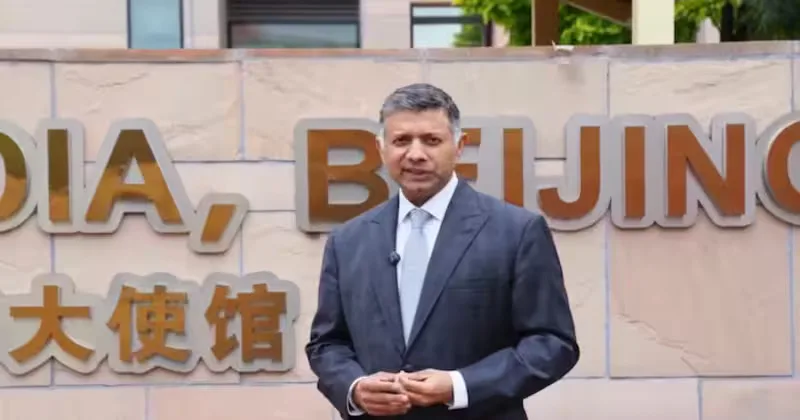
The outreach programme, held in Beijing on July 31, Friday, brought together a large number of Indian professionals from different sectors. Indian Ambassador Vikram Doraiswami, along with Counsellor (Consular, Education and Community Affairs) Nitinjeet Singh and Counsellor (Visa) Ramesh Singh, interacted with members of the Indian community and heard concerns related to their professional and personal lives in China.
The engagement assumes significance as India-China ties have entered a cautious phase of recovery following the military stand-off in eastern Ladakh. Since the October 2024 patrolling agreement, both sides have taken gradual steps towards restoring people-to-people exchanges, business links and travel after an intense period of military stand-off.
Indian diaspora flags online abuse and job concerns
Among the key issues raised at the Open House was the growing presence of abusive and negative content targeting Indians on Chinese social media platforms. Community members pointed to posts and comments attacking Indians over their food habits, culture and other aspects of the Indian society.
Restrictions on spouses taking up jobs in China were another major concern raised during the interaction. Responding to concerns over online abuse, India’s Ambassador to China Vikram Doraiswami said that the Chinese government was also aware of the rise in such content and was taking steps to address the issue.
He added that the Indian Embassy was working to counter misinformation by disseminating fact-based information through its official social media platforms.
Embassy to expand cultural outreach & legal assistance
The Indian embassy also announced measures aimed at strengthening people-to-people engagement between India and China. Doraiswami said documentation requirements for Chinese nationals applying for Indian visas would be further simplified from next week to facilitate greater travel to India. The move comes amid efforts by both countries to gradually restore travel and broader exchanges following years of strained relations.
The ambassador also announced plans to organise more cultural programmes in China. These initiatives will build on the strong response received by events such as the annual Vasant Mela, which provides a platform to showcase India’s cultural diversity, traditions and cuisine.
The embassy’s cultural outreach is expected to play a role in improving public understanding of India at a time when online narratives and misinformation have emerged as concerns among members of the Indian community.
The Indian mission is also working towards creating a support mechanism involving legal professionals to assist Indian nationals facing workplace-related difficulties in China. Such a mechanism could provide community members with greater access to professional guidance when dealing with employment-related disputes or other workplace issues.
To improve consular services further, Doraiswami said the embassy would hold Open House interactions periodically, allowing members of the Indian diaspora to directly raise concerns with embassy officials. The latest interaction comes against the backdrop of broader efforts by New Delhi and Beijing to normalise bilateral ties. The two countries have been gradually restoring direct flights, travel links and diplomatic engagement after relations remained largely frozen for nearly four years following the Galwan clash.