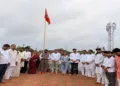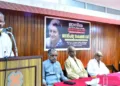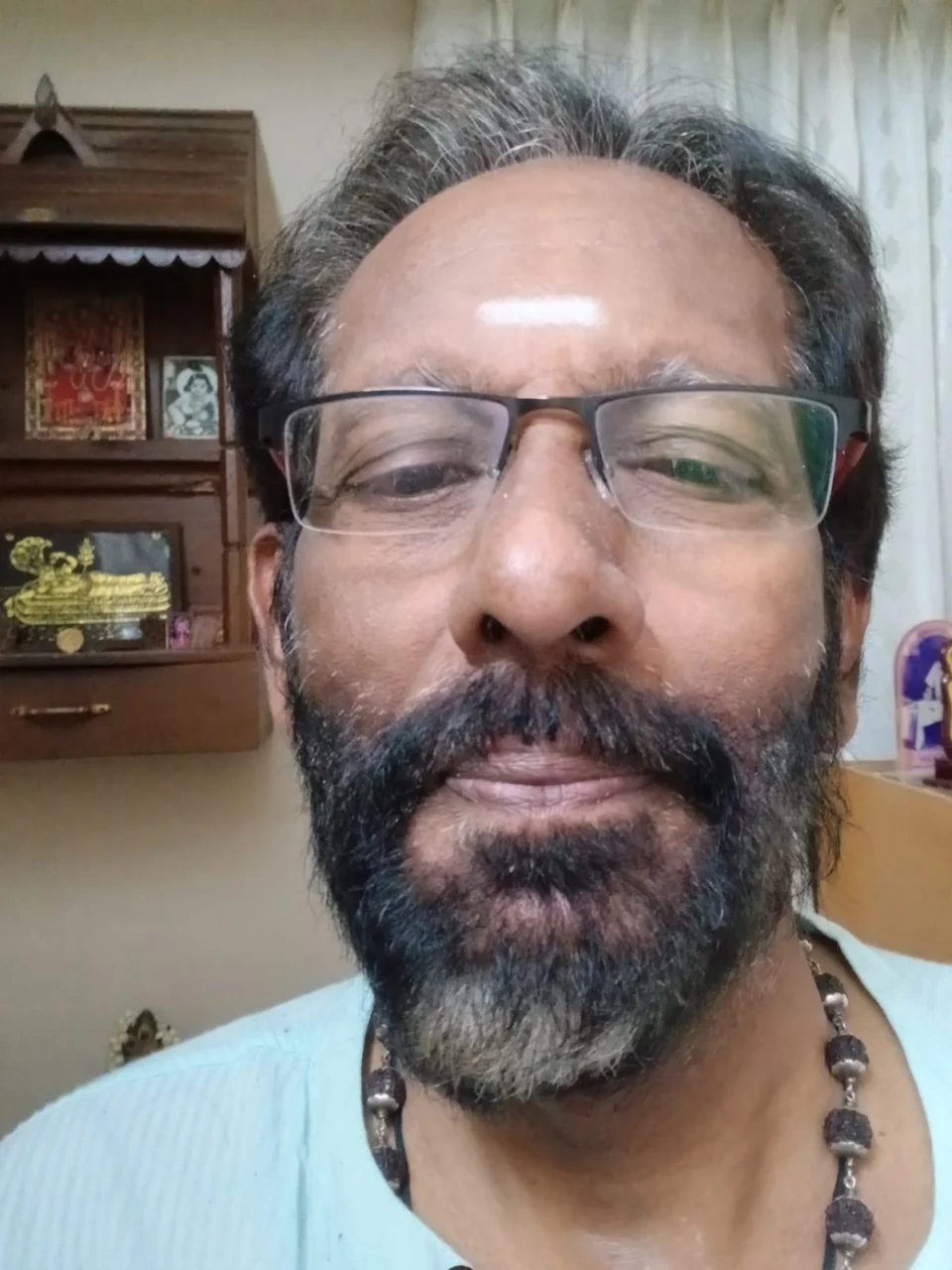

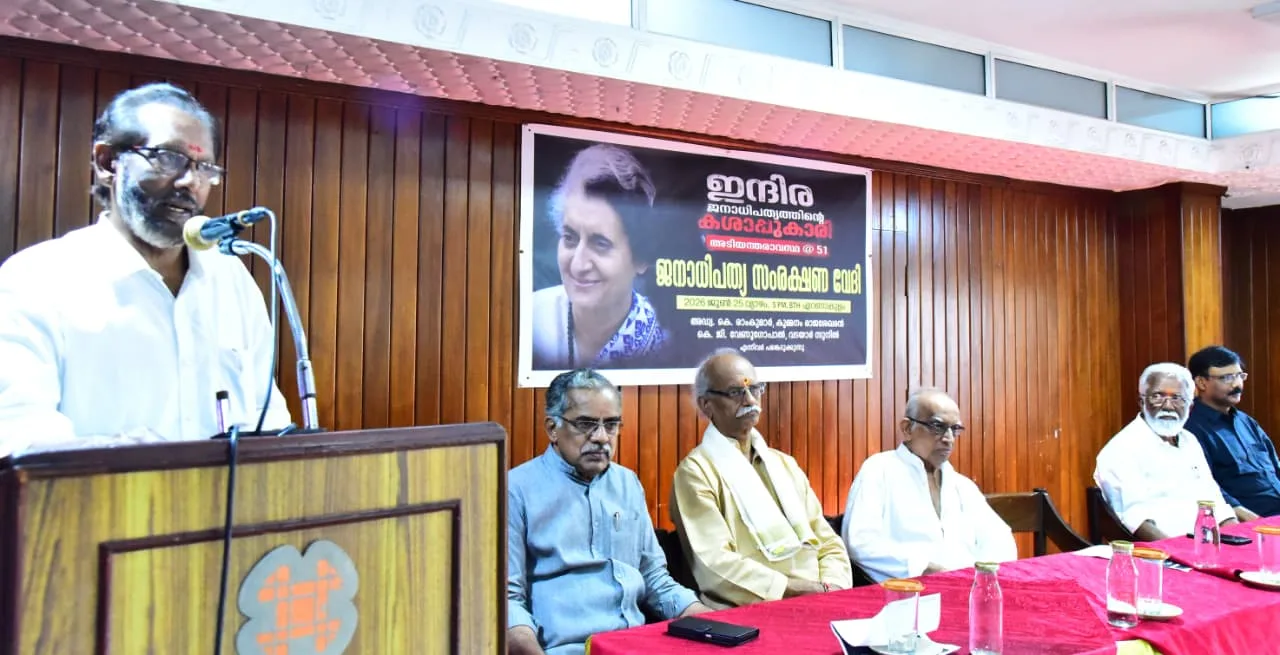
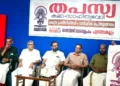
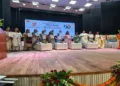
RSS workers in Kochi organised a programme on June 25 at Kochi to ‘remember’ the dark, fascist days of the Emergency declared by Indira Gandhi on June 25, 1975. Anti-Emergency struggle veterans Adv. K. Ramkumar, K.G. Venugopal, T. Satisan and E.N. Nandakumar, former Mizoram Governor and senior BJP leader Kummanam Rajasekharan, and senior journalist Vadayar Sunil addressed the gathering.
International Book Festival president E.N. Nandakumar welcomed the gathering and the guests. He introduced the guests and spoke about the involvement of some of them in the anti-Emergency struggle. He said the average age of lakhs of anti-Emergency fighters was 21.
Former Sangh Pracharak K.G. Venugopal presided over the programme. Venugopal was the State Organising Secretary of ABVP during the Emergency period. He reminisced about those days, when he had to tour the entire State to execute the Sangh missions underground. He remembered his post-Emergency visit to the Kakkayam Police torture camp in Kozhikode, where engineering college student P. Rajan was killed in police torture. (Rajan’s dead body was reported to have been burnt on a sugarcane pyre so that nothing would remain. Veteran Congress leader K. Karunakaran lost his chief ministership in 1977 due to legal proceedings in connection with Rajan’s disappearance.)
K. Ramkumar, senior lawyer designate and former Central Government Senior Standing Counsel, inaugurated the programme. He spoke about the brutal torture RSS workers suffered during the Emergency. He said several of them still suffer due to poor health and financial conditions. He added that such people should be taken care of. He quoted the names of several of them. (Adv. Ramkumar was arrested and remained in police custody for several days in February 1976. It was a preventive arrest in connection with Smt. Gandhi’s visit to Kochi.)
Senior journalist and consultant contributor to Organiser Weekly, T. Satisan, described the methods adopted by the Emergency regime to execute State terror. He quoted the statement made by Niran Dey, the then Attorney General of Bharat. Dey had reportedly told the Supreme Court of Bharat that, ‘when the Emergency was declared, fundamental rights enshrined in the Constitution were suspended; hence the Government of Bharat could arrest anyone and put them in jail’. Satisan explained the nationwide satyagraha launched by the Lok Sangharsh Samiti from November 14, 1975, to January 14, 1976.
Satisan said the satyagrahis were groomed by being told that they should not expect to return to normal life and that even death could occur. Still, more than 7,000 valiant workers came forward to participate in the satyagraha and court arrest. Several of them lost their health, and some of them died.
He spoke about the underground journal Lok Sangharsh Samiti, which was distributed to defeat the stringent censorship imposed by the government. Ministers, police officers, bureaucrats and ordinary people depended on those journals to obtain the actual news and facts. He explained the hardships the organisation faced in finding trustworthy printing presses.
The speakers expressed pleasure at NCERT’s decision to include lessons on the Emergency in school textbooks. They all hoped that the Union Government would soon declare the anti-Emergency struggle as the Second Freedom Movement.
Former Mizoram Governor and senior BJP leader Kummanam Rajasekharan spoke about the fascist days of the Emergency. He explained how the Emergency regime killed press freedom. He also described the atrocities Sangh workers had undergone during the Emergency. He recounted his journalistic trajectory during the Emergency and the closure of several publications, including the Jan Sangh-inspired Rashtravartha, an evening daily.
Senior journalist and the chief of the India Live channel spoke about the need to teach Gen Z about the dark days of the Emergency. He said they do not know that history. Many of them even believe that Congress is a democratic party as Rahul flaunts a copy of the Constitution while addressing public meetings.
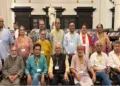
A large number of satyagrahis participated in the programme. The audience also included many of Kochi’s elite citizens.

![Melbourne [Australia], Jul 09 (ANI): Prime Minister Narendra Modi and Australian Prime Minister Anthony Albanese exchange a handshake, in Melbourne on Thursday. (@narendramodi X/ANI Photo)](https://organiser.org/wp-content/uploads/2026/07/20260709084l-2-120x86.webp)