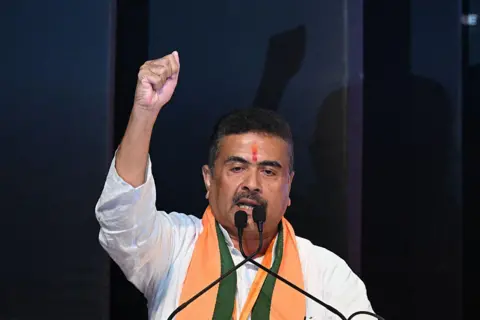
The West Bengal government is set to embark on a series of major legal and policy reforms, including the implementation of a Uniform Civil Code (UCC), the introduction of an anti-conversion law and new legislation targeting what Chief Minister Suvendu Adhikari described as “love jihad” and “land jihad”.
The announcements, made by Adhikari on Friday, represent some of the most significant ideological and legislative commitments undertaken by the Bharatiya Janata Party (BJP) government since coming to power in the state. The proposed measures were key promises in the BJP’s 2026 Assembly election manifesto and are expected to trigger intense political debate both inside and outside the Assembly.
Addressing party workers and supporters, Adhikari urged patience while assuring that the government remained committed to fulfilling its promises.
“Keep the faith. Please allow us some time,” the Chief Minister said, indicating that the government was already working on the legal framework required to bring the proposed laws into effect.
UCC, Anti-conversion law and new measures on agenda
The Chief Minister said the government would simultaneously pursue several reforms that it believes are necessary to strengthen governance, ensure legal uniformity and address concerns related to religious conversions and land encroachments.
Among the most significant proposals is the implementation of a Uniform Civil Code, which seeks to establish a common set of civil laws governing matters such as marriage, divorce, inheritance, succession and adoption, irrespective of religion.
Alongside the UCC, the government plans to introduce an anti-conversion law aimed at preventing what it describes as illegal, fraudulent, deceptive or forced religious conversions.
The government also intends to introduce measures targeting alleged cases of “love jihad” and “land jihad”, terms used by several BJP leaders to describe alleged instances of religious conversion through marriage and illegal occupation of land, respectively.
While details of the proposed laws have not yet been made public, the Chief Minister’s announcement indicates that the government intends to pursue a broad legislative agenda touching upon religion, personal laws and land administration.
What is the government’s plan for UCC?
Adhikari said the West Bengal government would adopt a process similar to that followed by BJP-ruled states such as Uttarakhand, Gujarat and Assam.
According to him, a committee headed by a retired judge will be constituted to examine the issue and prepare recommendations.
The committee will also seek public opinion and consult stakeholders before a final draft of the legislation is prepared.
“There is a prescribed procedure for the implementation of UCC. A committee will be set up under a retired judge. The process will be the same as that adopted in Gujarat, Uttarakhand and Assam,” Adhikari said.
The government maintains that following an established model will help ensure legal scrutiny and wider consultation before the Bill is introduced in the Assembly.
BJP manifesto commitments
The proposals are closely linked to commitments made by the BJP during the 2026 Assembly elections.
The party’s manifesto had promised to implement the Uniform Civil Code within six months of assuming office.
It had also pledged to enact legislation against illegal and forced religious conversions and to remove alleged illegal encroachments from government land, wetlands and forest reserves within 200 days of forming the government.
With Friday’s announcement, the government appears to have formally initiated the process of delivering on these promises.
Party leaders have repeatedly argued that these measures are necessary to ensure equality before the law, strengthen governance and prevent unlawful activities.
Vande Mataram remarks draw attention
During his address, Adhikari also referred to the government’s recent decision to make the singing of Vande Mataram compulsory in educational institutions.
The Chief Minister remarked that while many people now stand when the song is played, not everyone actively sings it.
“Now, everybody is standing but their lips are not moving. It will take time and soon their lips will also start moving,” he said.
He added that the government would not permit what he described as anti-national activities in the state.
“No anti-national activity will be allowed in the land of Rishi Aurobindo, Netaji and Syama Prasad Mookerjee,” Adhikari said.
The comments quickly became part of the broader political debate surrounding the government’s cultural and ideological agenda.
Parliamentary affairs minister confirms process underway
Parliamentary Affairs Minister Shankar Ghosh confirmed that work on the proposed Uniform Civil Code legislation is already underway.
According to Ghosh, the process of preparing the West Bengal Uniform Civil Code Bill, 2026, has begun and the government is moving forward with the necessary procedural requirements.
Officials have not yet announced a timeline for introducing the legislation in the Assembly, though government sources indicate that the process is expected to advance in the coming months.
The administration is likely to study experiences from other BJP-ruled states that have either implemented or initiated steps toward a Uniform Civil Code framework.
What is the debate around UCC?
The Uniform Civil Code remains one of the most debated legal and political issues in India.
Supporters argue that a common civil code would ensure equality before the law by replacing religion-specific personal laws with a uniform legal framework applicable to all citizens.
They contend that different personal laws create unequal legal standards in matters such as marriage, divorce and inheritance and that a common code would strengthen constitutional principles of equality and gender justice.
Critics, however, argue that personal laws are closely linked to religious and cultural identities and that imposing a uniform framework could affect the rights and traditions of different communities.
The debate has intensified in states where governments have initiated steps toward implementing UCC-related reforms.
Opposition raises concerns
The proposed legislation has already drawn criticism from opposition parties in West Bengal.
Trinamool Congress MP Mahua Moitra questioned the intent behind the government’s move and accused it of pursuing a politically motivated agenda.
“We are very concerned about the intent of the bill. We believe it is being brought only for polarisation,” she said.
Moitra also expressed concerns regarding the possible impact of the proposed legislation on minority communities, tribal groups and existing personal law systems.
The Trinamool Congress is expected to oppose the legislation if it is introduced in the Assembly.
Congress also opposes proposal
The Congress has similarly indicated that it will oppose the proposed UCC.
West Bengal Congress president Shubhankar Sarkar argued that legislation affecting personal laws and social customs should only be enacted after extensive consultation with all communities.
“We will certainly oppose UCC. India is a diverse country and its diversity must be respected,” Sarkar said.
He acknowledged that the idea of a single law might appear attractive in principle but argued that broad consensus and social acceptance were necessary before such a measure could be implemented.
According to Sarkar, healthy public debate and dialogue are essential when dealing with issues that affect multiple communities.
Land encroachment and conversion issues
Apart from the Uniform Civil Code, the government’s proposed measures concerning alleged “land jihad” and illegal conversions are also likely to generate significant discussion.
The BJP has frequently accused previous administrations of failing to act against alleged encroachments on government land, wetlands and forest areas.
Party leaders have also advocated stricter action against conversions that they claim are carried out through coercion, inducement or deception.
Supporters of such laws argue that they are necessary to protect vulnerable individuals and preserve public resources.
Critics, however, contend that terms such as “love jihad” and “land jihad” are politically charged and often lack clear legal definitions, raising concerns about potential misuse.
What remains clear is that West Bengal is preparing for one of the most consequential legal and political discussions in its recent history, with the proposed UCC, anti-conversion law and measures targeting alleged “love jihad” and “land jihad” set to become defining issues in the state’s legislative agenda.