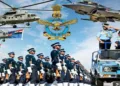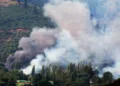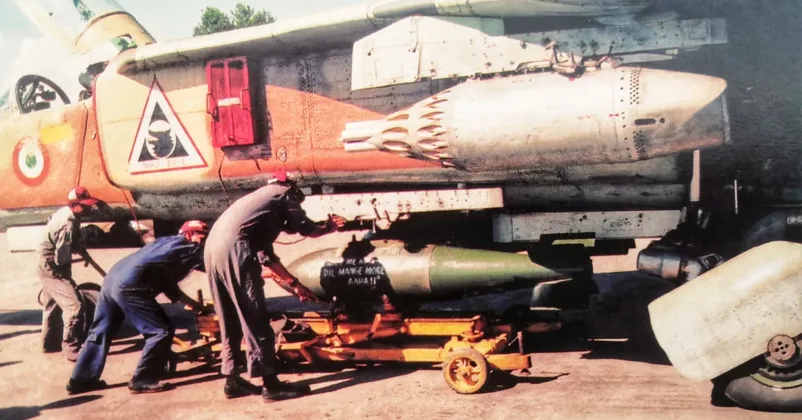
Twenty-seven years ago, on May 26, 1999, the Indian Air Force (IAF) launched Operation Safed Sagar to support the Indian Army’s Operation Vijay during the Kargil War. The mission was aimed at targeting Pakistani regulars and armed intruders who had occupied strategic heights along the Line of Control (LoC) in Jammu and Kashmir.
The operation marked a major turning point in India’s military history. For the first time, the IAF was tasked with conducting air operations in extremely high-altitude warfare conditions while operating under strict political restrictions. Indian fighter aircraft were allowed to strike enemy positions but were not permitted to cross the Line of Control.
The challenge before the IAF was unprecedented. Unlike conventional wars fought in plains or deserts, Indian pilots had to target deeply entrenched enemy positions located between 14,000 and 18,000 feet above sea level. The terrain was steep, narrow, and unforgiving. Even a slight deviation in bombing accuracy could result in complete mission failure.
At such heights, aircraft performance was severely affected. Thin air reduced engine thrust, while weapon systems behaved differently because of changes in air density and temperature. Computerised targeting systems that worked effectively in normal conditions became unreliable in the mountains.
The situation became even more dangerous because Pakistani positions were equipped with portable surface-to-air missiles, including Stinger missiles. In the early phase of the operation, India lost a MiG-21 fighter aircraft and an Mi-17 helicopter.
Flight Lieutenant K Nachiketa was captured after ejecting from his aircraft and was later repatriated. Squadron Leader Ajay Ahuja, who flew in support during the mission, was shot down and killed. The Mi-17 helicopter crew, Squadron Leader Rajiv Pundir, Flight Lieutenant S Muhnot, Sergeant Raj Kishore Sahu, and Sergeant PVNR Prasad, also lost their lives during combat operations.
These losses forced the IAF to rapidly change its strategy. Armed helicopters were withdrawn from offensive roles, and fighter aircraft began operating from higher altitudes to stay outside the range of enemy missiles.
A major turning point came with the deployment of Mirage 2000 fighter aircraft. Equipped with laser-guided bombs and advanced targeting systems, the Mirage jets carried out highly accurate strikes on Pakistani supply bases and command positions. The precision bombing campaign disrupted enemy logistics and command structures in the Kargil sector.
Operation Safed Sagar also changed India’s understanding of air power. Instead of using fighter aircraft only for close support to ground troops, the IAF focused on cutting enemy supply lines, destroying logistics routes, and weakening command centres. This approach later became central to India’s precision strike doctrine.
Military experts believe the lessons of Safed Sagar directly influenced later Indian air operations, including the 2019 Balakot air strike. On February 26, 2019, Mirage 2000 aircraft crossed into Pakistani territory and struck a Jaish-e-Mohammed terror facility in Balakot, marking the first Indian air strike across the international boundary since 1971.
The Balakot operation reflected many principles first tested during Kargil, precision targeting, limited escalation, intelligence-based strikes, and the use of advanced air power under political constraints.
The same doctrine evolved further during Operation Sindoor, where the Indian Air Force reportedly carried out deep precision strikes on terror infrastructure in Pakistan and Pakistan-occupied Kashmir using advanced platforms and long-range weapons.
Unlike 1999, today’s Indian Air Force possesses far more advanced capabilities. Rafale fighter jets equipped with SCALP cruise missiles, integrated targeting systems, improved surveillance, and air defence platforms such as the S-400 have significantly expanded India’s strike capability.
Despite these advancements, the core doctrine remains rooted in the lessons of Operation Safed Sagar, using precision strikes to impose military costs while avoiding uncontrolled escalation.
Before the Kargil War, many military strategists believed the use of air power in a limited conflict could easily trigger a full-scale war. Operation Safed Sagar changed that perception. It demonstrated that India could use calibrated and precise air power effectively while keeping the conflict contained.
More than two decades later, Operation Safed Sagar continues to be seen as the blueprint for India’s modern precision warfare strategy. From Kargil to Balakot and later Operation Sindoor, the evolution of India’s air strike doctrine can be traced back to the mountains of Kargil in the summer of 1999.