Kolkata. Within just a few days of assuming power, the new Bharatiya Janata Party (BJP) government in West Bengal has begun taking decisions that are being viewed as signals of a major ideological shift in the state’s politics.
Specifically, during the second cabinet meeting held on Monday under the leadership of Chief Minister Suvendu Adhikari, the government took the historic decision to discontinue religion-based government allowances and assistance schemes. Concurrently, a decision was taken to put a stop to the government salaries currently being received by Maulvis, Imams and Muezzins in the state.
West Bengal’s new BJP government, led by Suvendu Adhikari, has scrapped the 14-year-old scheme that paid monthly honorariums to Imams and Muezzins.
The cabinet decided to end these religion-specific payouts from public funds starting June. pic.twitter.com/4KDUVHc949
— Dr RK Singh (@DrRupak) May 18, 2026
The government has sent a clear signal that Bengal’s politics will now move forward not on a model of “appeasement,” but rather on one of “equal benefits and administrative reforms.” However, alongside these measures, several major public welfare decisions have also been taken for women and government employees; prominent among these are a monthly assistance of ₹3,000 for women and the approval of the 7th Pay Commission.
Ban on Religion-Based Schemes: A Major Message from the Government
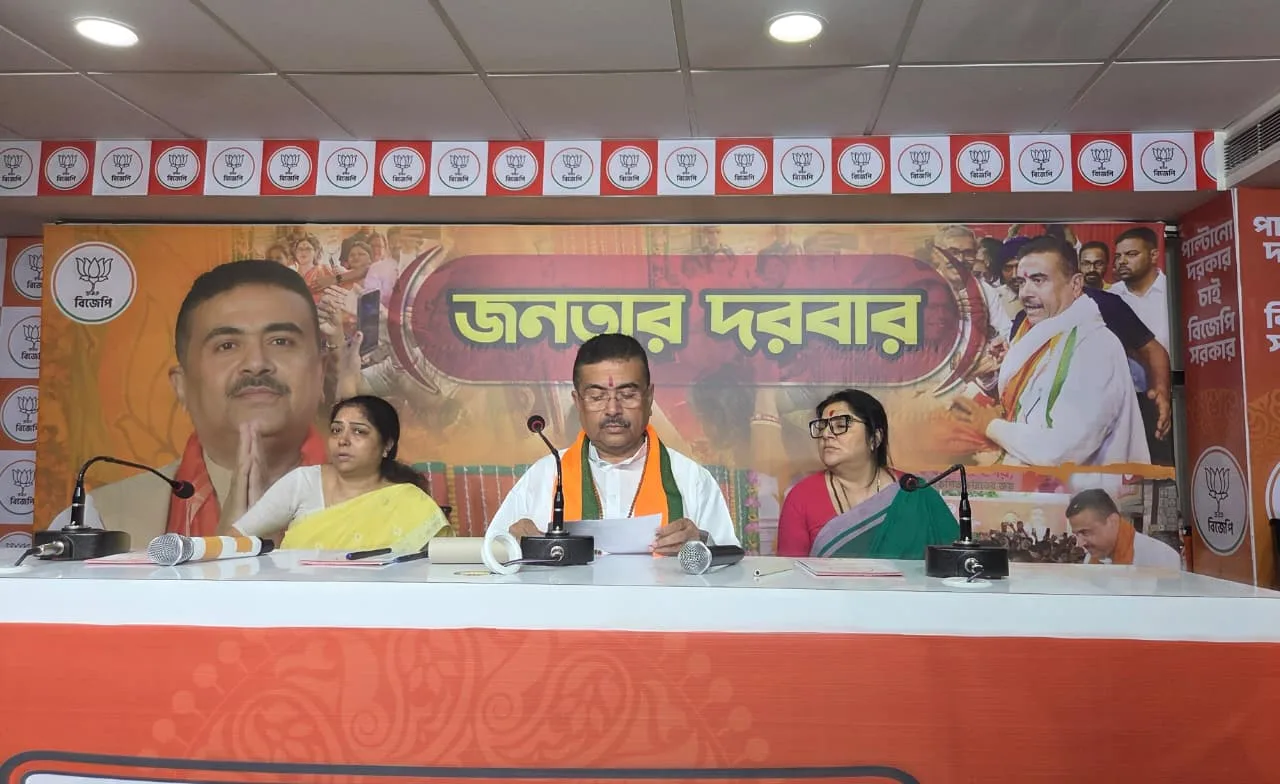
Following the cabinet meeting, Women and Child Development Minister Agnimitra Paul stated in a press conference that all assistance schemes currently being operated on the basis of religion, under the aegis of the Information and Cultural Affairs Department and the Department of Minority Affairs and Madrasa Education, will be completely discontinued starting next month.
She clarified that the benefits of existing schemes would continue to be disbursed until the end of May, but from June 1st onwards, all allowances and scholarship schemes would be halted. The government is expected to issue a detailed notification regarding this matter shortly. It is noteworthy that the BJP has long accused the Mamata Banerjee government of engaging in the “politics of appeasement.” During the election campaign as well, the party had asserted that the state’s economic health had been undermined by a “freebie culture” (Revdi Sanskriti). Now, having ascended to power, the Suvendu-led government has begun taking rapid strides to implement that very agenda.
No MORE MONTHLY STIPEND TO IMAMS IN BENGAL⚡
BJP Bengal Cabinet has approved to DISCONTINUE IMAM BHATT.
Waah @SuvenduWB Dada 🔥🗿 pic.twitter.com/eSsJZcG07v
— Sunny Raj (@SunnyRajBJP) May 18, 2026
Maulvi Allowance Introduced During the Mamata Regime
The previous Trinamool Congress government had introduced a monthly allowance for Imams and Muezzins as part of a social development scheme. Initially, this amount stood at ₹1,500 per month, which was subsequently increased to ₹2,000 earlier this year. This scheme had been a subject of political controversy for a considerable period. The BJP had alleged that the distribution of public funds on religious grounds ran contrary to the spirit of the Constitution. Now, by deciding to dismantle this entire system, the new government has sent a clear signal that it intends to prioritize a uniform administrative policy over religious identity.
Announcement of the ‘Annapurna’ Scheme for Women
While, on one hand, the government has discontinued schemes operating on religious lines, it has, on the other, announced a major financial assistance scheme for women. Approving the “Annapurna Bhandar Scheme,” the Cabinet has decided to provide ₹3,000 per month to women across the state. This scheme was a key component of the BJP’s manifesto for the Assembly elections. The government asserts that this initiative will provide financial empowerment to millions of women and enhance their participation at the household level.
The government has clarified that women who are already beneficiaries of the “Lakshmi Bhandar Scheme” will be automatically enrolled in the new scheme. The funds will be transferred directly into their bank accounts. Meanwhile, an online portal will soon be launched for new eligible women applicants.
A new promise of security and dignity for every household. 🇮🇳
Policy approval for the Annapurna Yojana marks a major step towards empowering women and strengthening families across Bengal.
Beneficiaries of Lakshmir Bhandar will now be covered under Annapurna Bhandar, ensuring… pic.twitter.com/8f9MYcOfxq
— BJP West Bengal (@BJP4Bengal) May 18, 2026
Free Travel for Women in Government Buses
Providing yet another significant relief to women, the government led by Suvendu has decided to implement a free travel facility for women across all state-run buses, effective June 1st. The government believes that this measure will offer financial relief to working women, female students and women commuting from rural areas. The Chief Minister has indicated that new electric buses will also be inducted into the state’s public transport fleet in the near future.
Mamata Banerjee built Bengal on appeasement, corruption and vote-bank politics.
BJP is rebuilding Bengal with equal rights, women’s welfare, 7th Pay Commission, free bus travel and governance without discrimination.
From syndicate raj to development raj — Bengal’s change has… pic.twitter.com/OPMd6b8zuT
— Pradeep Bhandari(प्रदीप भंडारी)🇮🇳 (@pradip103) May 18, 2026
Approval of the 7th Pay Commission: Jubilation Among Employees
The Cabinet has also approved the constitution of the 7th Pay Commission for state government employees and staff of affiliated institutions. Employee unions had been pressing for this demand for a long time. Agnimitra Paul stated that the government is committed to safeguarding the interests of its employees and that a detailed process regarding the new pay structure will be initiated shortly. Following this decision, millions of employees and teachers are anticipating a hike in their salaries and allowances. Major Decision Regarding the OBC List
The Cabinet has decided to scrap the state’s existing OBC list, in accordance with the ruling of the Calcutta High Court. A new inquiry committee will be constituted for this purpose, which will provide fresh recommendations regarding eligibility for reservation.
A major step towards justice for Bengal’s workforce.
The 7th State Pay Commission will be constituted, ensuring fair pay, revised DA, and long-overdue benefits for all state government employees.
BJP is committed to dignity, transparency, and rightful earnings for every… pic.twitter.com/ai4Nx8REX6
— BJP West Bengal (@BJP4Bengal) May 18, 2026
In this context, senior journalist and political analyst Santosh Madhup opines that the initial decisions taken by the Suvendu Adhikari-led administration signal that the BJP is attempting to steer both the administrative framework and the political discourse in Bengal in a new direction. The debate pitting appeasement against the principle of equal policy could well emerge as the most significant issue in Bengal’s politics in the days to come.