As the Bharatiya Janata Party (BJP) marked its 47th foundation day on April 6, 2026, its political journey stands out as one of the most remarkable transformations in modern democratic history. What began as a marginal force with a limited presence in Parliament has today evolved into the most dominant political party in India, also being the world’s largest political organisation. This rise has not been linear. It has been shaped by ideological conviction, organisational discipline, electoral setbacks, and strategic reinvention across decades.
Prime Minister Narendra Modi, in his message on the occasion, credited the party’s growth to the tireless efforts of its karyakartas. He emphasised that the BJP has consistently functioned with the guiding principle of “India First”. The party today frames its evolution as a journey from “struggle to service”, linking its past struggles to a future-oriented vision of transforming India into a developed nation by 2047 under the banner of “Viksit Bharat”.
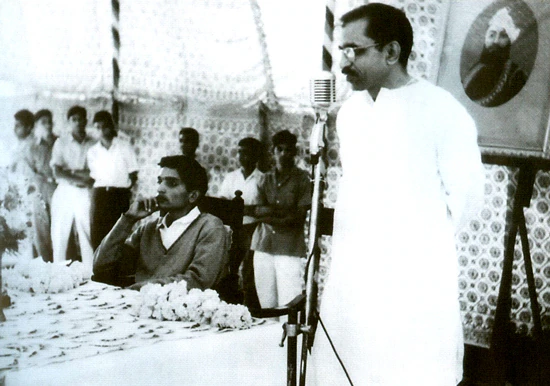
To fully understand the BJP’s rise, one must revisit its ideological roots in the Bharatiya Jana Sangh, established in 1951 by Syama Prasad Mookerjee. The Jana Sangh provided both the intellectual framework and organisational base for what would later become the BJP. Its ideological foundation rested on cultural nationalism and the philosophy of Integral Humanism, articulated by Deendayal Upadhyaya. These principles continue to influence the BJP’s political and governance approach even today.
Leaders like Yogi Adityanath have often described the BJP as a living ideological tradition rather than just a political party. This continuity of thought has played a key role in maintaining coherence within the organisation despite changing political contexts.
A defining moment in this early phase came during the Emergency in India, when opposition parties came together to challenge the dominance of the Congress. The Jana Sangh merged into the Janata Party as part of this broader effort. However, internal contradictions soon surfaced, particularly over the issue of links with the Rashtriya Swayamsevak Sangh. The disagreement over dual membership led to a split, paving the way for the formal establishment of the BJP in 1980 under the leadership of Atal Bihari Vajpayee.
The BJP’s early electoral years were marked by significant challenges. Its performance reached a low point in 1984 when it managed to secure just two seats in the Lok Sabha following the assassination of Indira Gandhi. Yet, this setback became a turning point. It forced the party to reassess its strategy and reconnect with its ideological core.
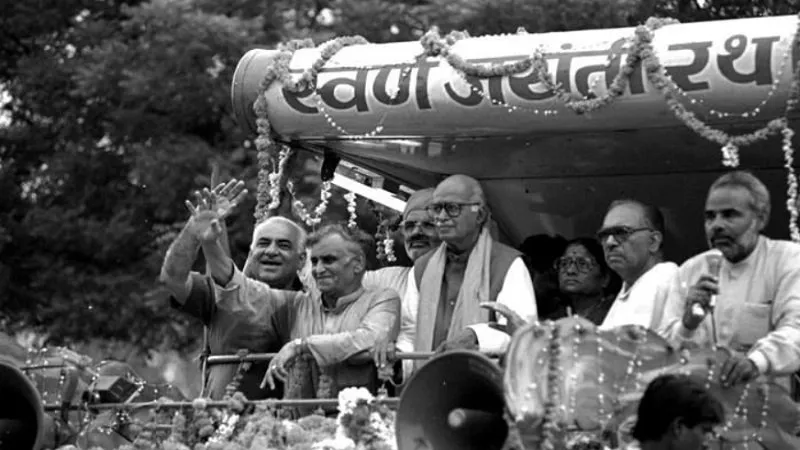
Under the leadership of L. K. Advani, the BJP adopted a more assertive stance in the late 1980s, foregrounding issues linked to identity and cultural politics. The 1990 Rath Yatra from Somnath to Ayodhya became a watershed moment, galvanising support at the grassroots level and expanding the party’s base across northern and western India.
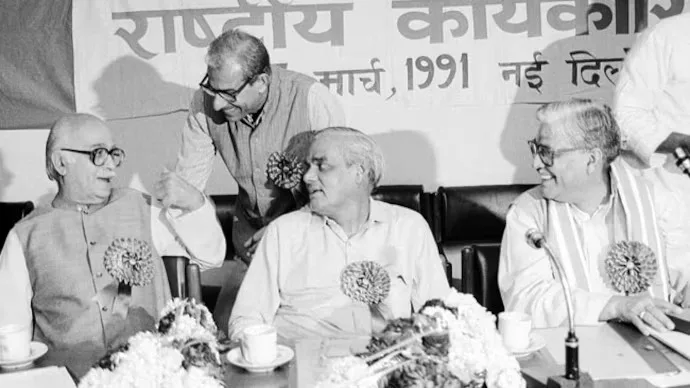
The electoral impact was immediate. The BJP’s tally rose from two seats to 85 in 1989 and further to 120 in 1991. By 1996, it had emerged as the single largest party in Parliament. However, the limitations of its reach were evident when the government formed under Vajpayee lasted only 13 days. This phase highlighted the gap between electoral success and the ability to build durable governing coalitions.
The late 1990s marked the BJP’s transition into a more mature political force capable of navigating coalition politics. Through the National Democratic Alliance, the party managed to bring together a diverse set of regional partners. Under Vajpayee’s leadership, the BJP-led government not only completed a full term but also set new benchmarks in governance.
This period saw many national developments. The Pokhran-II nuclear tests signalled India’s assertion on the global stage. The Kargil conflict tested the government’s strategic and military resolve. Infrastructure development emerged as a key priority, with the Golden Quadrilateral project aiming to transform connectivity across major cities. These initiatives helped reshape the BJP’s image from a party of agitation to one capable of governance.
Despite these achievements, the BJP faced a setback in 2004 when the “India Shining” campaign failed to resonate with a large section of voters. The party moved into opposition for the next decade. This period proved crucial for internal consolidation, leadership transition, and organisational strengthening.
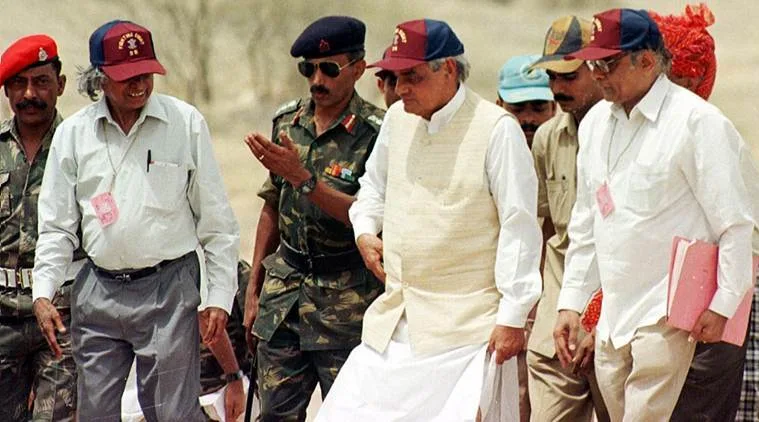
The BJP’s return to power in 2014 under Narendra Modi marked a decisive shift in Indian politics. For the first time in three decades, a single party secured a full majority in the Lok Sabha with 282 seats. This mandate was expanded in 2019 when the BJP won 303 seats, reinforcing its dominant position. The party continued to remain central to national politics after the 2024 elections.
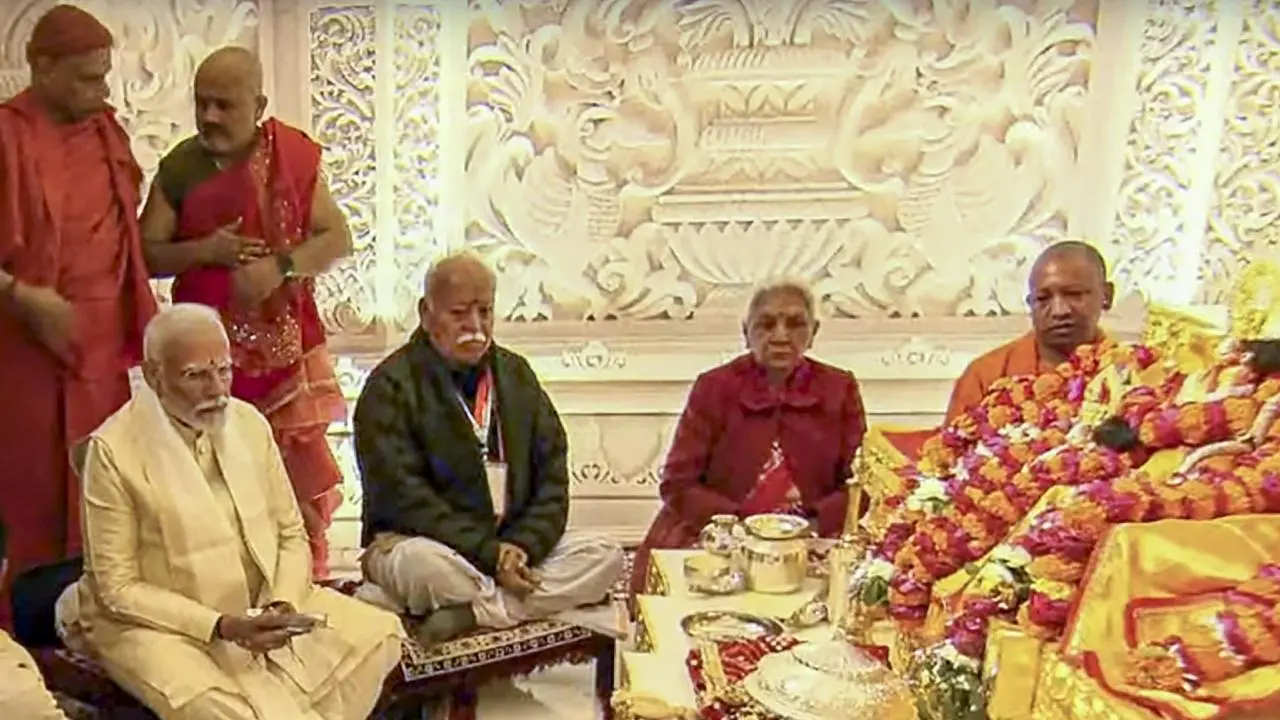
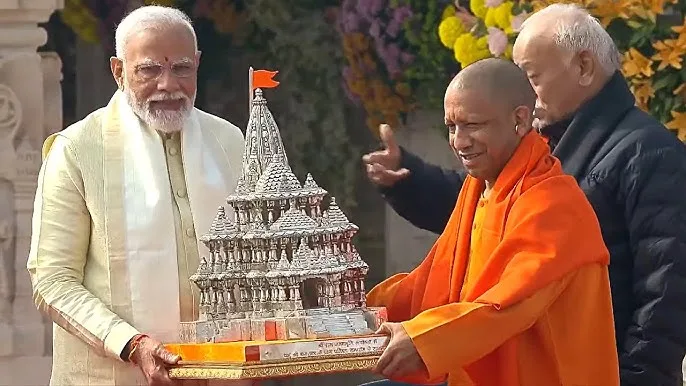
This phase has been defined by the implementation of key policy and ideological commitments. The abrogation of Article 370 marked a significant constitutional change in Jammu and Kashmir. The introduction of the Goods and Services Tax aimed to unify India’s indirect tax regime. The construction of the Ram Mandir in Ayodhya represented the culmination of a long-standing socio-political movement.
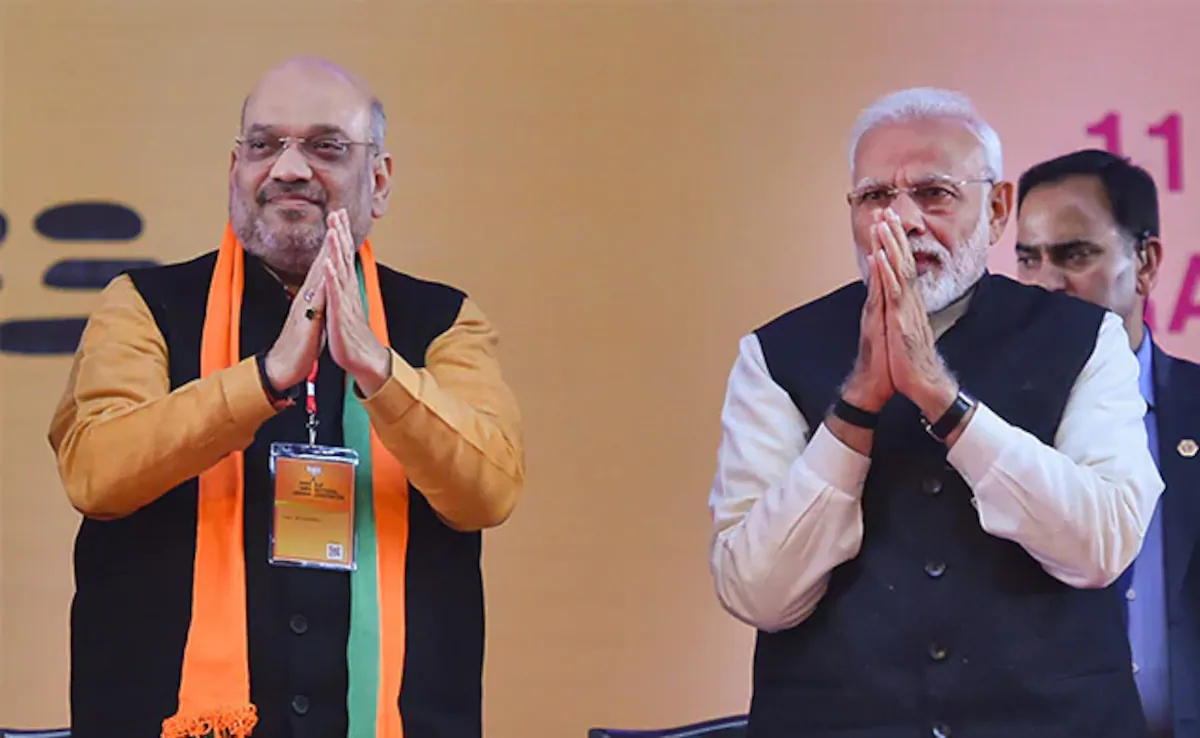
Union Home Minister Amit Shah described the BJP as a “colossal banyan tree”, emphasising the depth of its organisational roots and the sacrifices of its workers. Defence Minister Rajnath Singh highlighted that the party has firmly established itself at the centre of Indian politics.
At the core of the BJP’s governance philosophy lies the concept of antyodaya, which focuses on the upliftment of the last person in society. Rooted in Deendayal Upadhyaya’s thought, this idea has been expanded into a broader vision linking social welfare with national development. The phrase “antyodaya to rashtra udaya” reflects this progression from individual empowerment to national rise.
The party continues to emphasise a value system captured in the slogan “Nation First, Party Next, Self Last”. This framework is intended to project the BJP as more than a political organisation, positioning it as a movement driven by a larger national purpose.
Looking ahead, the BJP has set its sights on 2047, the centenary of India’s independence. The vision of “Viksit Bharat” has become central to its political messaging. It represents an aspiration to transform India into a fully developed nation across economic, social, and institutional dimensions.
Party leaders, including national president Nitin Nabin, have called for deeper grassroots engagement and organisational expansion from the panchayat level to Parliament. The focus is not only on maintaining electoral dominance but also on ensuring effective governance and delivery.
The BJP’s 47-year journey shows a rare combination of ideological continuity and strategic adaptation. From its origins in the Jana Sangh to its current status as India’s most powerful political party, it has continuously evolved in response to changing political realities. Its rise has reshaped electoral politics, altered governance priorities, and influenced the broader national discourse.
As the party moves forward, its biggest challenge lies in translating its long-term vision into measurable outcomes. Political dominance alone will not define its legacy. The real test will be whether it can deliver on the promise of a developed India by 2047. The answer to that question will ultimately determine how this extraordinary political journey is remembered in the history of Indian democracy.