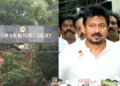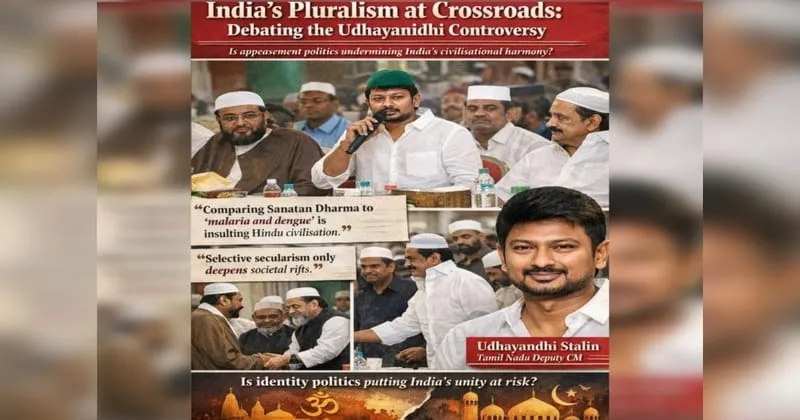
The recent remarks by Tamil Nadu Deputy Chief Minister at an Iftar gathering in Chennai, where he equated Dravidian ideology with Islam, are not isolated or accidental. They reflect a deeper and more deliberate attempt to shape a political narrative that risks unsettling India’s civilisational balance.
At one level, such statements are presented as an endorsement of equality and inclusivity. However, viewed in continuity with his earlier remarks against ,where it was compared to diseases like “malaria and dengue”, a consistent pattern emerges. It raises a serious concern: is this merely an ideological articulation, or a calculated effort to delegitimise one civilisational identity while politically consolidating another?
India’s foundational strength lies in its pluralism, where diverse traditions coexist without enforced homogenisation. Any attempt to selectively elevate one belief system while demeaning another does not advance social justice; rather, it deepens fault lines within society.
It is also pertinent that such remarks come from a constitutional functionary. Public office demands restraint, balance, and a commitment to uphold the dignity of all faiths. When those in authority engage in comparative religious commentary, especially in a manner perceived as dismissive or derogatory, it risks normalising division in public discourse.
The judicial observations on his earlier statements, reportedly terming them within the realm of “hate speech,” further underline the seriousness of the issue. The matter, therefore, is not just political; it touches upon constitutional morality and societal harmony.
The larger concern is the gradual shift in political discourse where identity-based mobilisation is increasingly normalised under the guise of ideological expression. Such trends, if left unchecked, could erode the spirit of mutual respect that has sustained India’s unity despite its immense diversity.
The question, therefore, is not about one speech or one leader. It is about the direction in which public discourse is being steered. Is India to remain a civilisation rooted in mutual respect and dialogue, or will it be drawn into avoidable polarisation for short-term political gains? The answer to this will define not only the quality of our politics, but the character of our national unity.