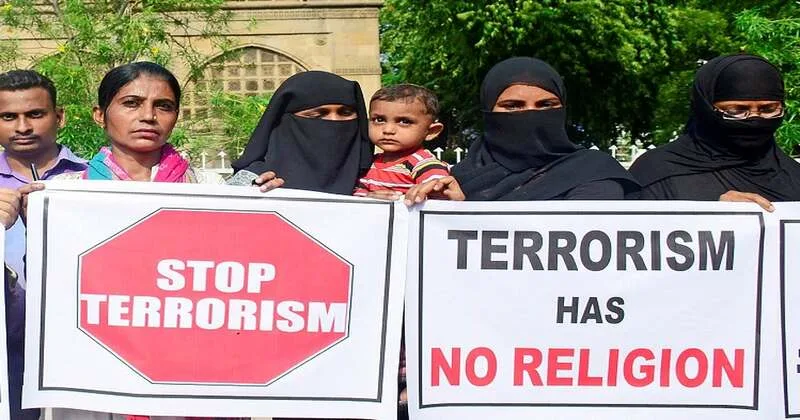
The commonly repeated argument that terrorism has no religion is increasingly being questioned in light of two major global reports released in 2026, the Global Happiness Index and the Global Terrorism Index. When examined together, these reports appear to present a stark and uncomfortable contrast about the nature of peace, stability and violence across the world.
The Global Happiness Index 2026, released on March 20, places Finland at the top for the ninth consecutive year, followed by Iceland. Other countries in the top ten include Denmark, Costa Rica, Sweden, Norway, the Netherlands, Israel, Luxembourg and Switzerland. At the opposite end, Afghanistan ranks last at 147th. In parallel, the Global Terrorism Index(GTI) 2026 identifies the countries most affected by terrorism and ranks the world’s deadliest terrorist organisations. A comparison of these two reports reveals patterns that raise serious questions about the widely accepted notion that terrorism is detached from religious motivations.
Happiest nations vs most terror-affected regions
A closer look at the Global Happiness Index shows that most of the top-ranking countries are secular, liberal democracies with relatively low levels of religious extremism. These nations consistently score high on indicators such as social trust, governance, economic stability and quality of life.
In contrast, the Global Terrorism Index highlights that the countries most affected by terrorism are largely those experiencing deep religious radicalisation, political instability, and conflict. The top ten countries most impacted by terrorism in 2026 are Islamic countries, namely Pakistan, Burkina Faso, Niger, Nigeria, Mali, Syria, Somalia, the Democratic Republic of Congo, Colombia and Israel. Notably, Pakistan has moved to the top position for the first time, overtaking Burkina Faso, which held the top rank in 2024 and 2025 but now stands second. This geographical and political contrast between the happiest and most terror-affected countries forms the basis of a growing argument that religion, particularly in its extremist forms, plays a significant role in global terrorism patterns.
Pakistan tops terrorism index amid rising violence
Pakistan’s rise to the top of the Global Terrorism Index reflects a worsening internal security situation. In 2025 alone, the country recorded 1,139 deaths and 1,045 terrorist attacks, marking a 6 per cent increase compared to the previous year. This represents the highest level of terrorist activity in Pakistan since 2013. The surge in violence is largely attributed to groups such as Tehreek-e-Taliban Pakistan(TTP) and the Balochistan Liberation Army(BLA). Among these, the TTP has emerged as the third deadliest terrorist organisation globally. The situation has further deteriorated following the Taliban’s return to power in Afghanistan, which has emboldened cross-border militancy. A significant concentration of attacks, around 74 per cent, has occurred in the provinces of Khyber Pakhtunkhwa and Balochistan. These regions have become epicentres of insurgency and violence, highlighting the fragile security environment within the country.
Deadliest Terror Groups: Dominance of Islamist organisations
The Global Terrorism Index 2026 also ranks the world’s deadliest terrorist organisations based on the number of attacks and fatalities. Of the top ten groups listed, nine are identified as Islamist organisations. The Islamic State(ISIS) continues to hold the top position as the deadliest terrorist group globally, despite the collapse of its territorial “caliphate” in Iraq and Syria. It is followed by Jamaat Nusrat al-Islam wal Muslimeen(JNIM), which is highly active in West Africa. Tehreek-e-Taliban Pakistan ranks third, reflecting its intensified operations within Pakistan. Al-Shabaab, based in Somalia, is fourth, while the Balochistan Liberation Army occupies the fifth position.
Other groups in the top ten include Islamic State Khorasan Province (ISKP), Hamas, Boko Haram, and the Islamic State West Africa Province (ISWAP). The only non-Islamist organisation in this list is the Communist Party of the Philippines, which operates through its armed wing, the New People’s Army (NPA). This overwhelming presence of Islamist groups in the rankings has led many analysts to argue that religious extremism, particularly in its militant interpretations, is a central driver of global terrorism today.
One of the most striking findings of recent GTI reports (2024–2026) is the continued dominance of the Islamic State, even after its apparent decline in West Asia. While its territorial control has diminished, the organisation has successfully adapted by decentralising its operations. ISIS has expanded its presence significantly in Africa, particularly in the Sahel region. Affiliates such as ISWAP and ISGS are responsible for widespread violence in countries like Nigeria, Mali, and Burkina Faso. Similarly, ISKP operates actively in Afghanistan and Pakistan. Rather than functioning as a centralised entity, ISIS now operates as a network of semi-autonomous groups spread across multiple regions. This strategic shift has allowed it to sustain its global influence and remain the deadliest terrorist organisation in the world.
The Sahel Region: New epicentre of global terrorism
Beyond South Asia, the Sahel region of Africa has emerged as the new global hotspot for terrorism. Countries such as Burkina Faso, Mali, and Niger are witnessing escalating violence driven by extremist groups linked to global jihadist networks. In Burkina Faso, the al-Qaeda-affiliated group Jamaat Nusrat al-Islam wal Muslimeen (JNIM) poses a major threat, alongside the Islamic State in the Greater Sahara (ISGS). These organisations have carried out large-scale attacks, destabilising governments and displacing populations.
Mali faces a similar crisis, with multiple factions of both al-Qaeda and the Islamic State operating within its borders. The spread of these groups has weakened state control and created a cycle of violence that continues to expand across the region. Among the top ten countries affected by terrorism, Colombia stands as the only exception where Islamic extremism is not the primary driver. Instead, violence there stems from long-standing conflicts involving guerrilla groups, drug cartels, and left-wing insurgencies. In nearly all other cases, religious extremism, particularly Islamist militancy, remains the dominant factor.
India’s Position: Declining violence but persistent threats
India is ranked 13th in the Global Terrorism Index 2026, a slight improvement from its 14th position in 2025. More importantly, the country has witnessed a significant 43 per cent reduction in terrorist attacks, indicating improved counter-terrorism measures and stronger security mechanisms.
Despite this progress, challenges remain. The report identifies Pakistan-based groups operating in Jammu and Kashmir as the primary source of terrorism in India. Organisations such as Hizbul Mujahideen, Lashkar-e-Taiba, and Jaish-e-Mohammed continue to pose serious threats, having been responsible for major attacks, including the Pulwama incident. Additionally, global terrorist networks such as the Islamic State and al-Qaeda are increasingly attempting to radicalise Indian youth through online platforms. The use of gaming environments and social media memes for recruitment marks a new and evolving dimension of terrorism.
Emerging groups like The Resistance Front, believed to be linked to Lashkar-e-Taiba, have added to the complexity of the threat landscape in Kashmir. At the same time, India has made notable progress in curbing left-wing extremism. Maoist insurgencies in states like Chhattisgarh, Jharkhand and Odisha have been significantly weakened, although remnants still persist. Similarly, separatist movements in northeastern states such as Manipur and Nagaland continue to pose localised challenges.
Rethinking the narrative on terrorism
The combined insights from the Global Happiness Index and the Global Terrorism Index challenge simplistic narratives about terrorism. While it may be politically convenient to assert that terrorism has no religion, empirical data from these reports suggest otherwise.
The concentration of terrorism in regions marked by religious extremism, along with the dominance of Islamist groups in global terror rankings, indicates a strong correlation that cannot be easily dismissed. These global patterns of violence observed today are not random but deeply rooted in specific ideological and geopolitical contexts.
As the world continues to grapple with evolving security threats, these findings call for a more honest and nuanced discussion on the causes of terrorism and the pathways to achieving lasting peace.