A decline in child mortality in India: UN Report
June 7, 2026
  • Read Ecopy
  • Circulation
  • Advertise
  • Careers
  • About Us
  • Contact Us
Android AppiPhone AppArattai
Organiser
  • ‌
  • Bharat
    • Assam
    • Bihar
    • Chhattisgarh
    • Jharkhand
    • Maharashtra
    • View All States
  • World
    • Asia
    • Europe
    • North America
    • South America
    • Africa
    • Australia
  • Editorial
  • International
  • Opinion
  • RSS @ 100
  • More
    • Op Sindoor
    • Analysis
    • Sports
    • Defence
    • Politics
    • Business
    • Economy
    • Culture
    • Special Report
    • Sci & Tech
    • Entertainment
    • G20
    • Azadi Ka Amrit Mahotsav
    • Vocal4Local
    • Web Stories
    • Education
    • Employment
    • Books
    • Interviews
    • Travel
    • Law
    • Health
    • Obituary
  • Subscribe
    • Subscribe Print Edition
    • Subscribe Ecopy
    • Read Ecopy
  • ‌
  • Bharat
    • Assam
    • Bihar
    • Chhattisgarh
    • Jharkhand
    • Maharashtra
    • View All States
  • World
    • Asia
    • Europe
    • North America
    • South America
    • Africa
    • Australia
  • Editorial
  • International
  • Opinion
  • RSS @ 100
  • More
    • Op Sindoor
    • Analysis
    • Sports
    • Defence
    • Politics
    • Business
    • Economy
    • Culture
    • Special Report
    • Sci & Tech
    • Entertainment
    • G20
    • Azadi Ka Amrit Mahotsav
    • Vocal4Local
    • Web Stories
    • Education
    • Employment
    • Books
    • Interviews
    • Travel
    • Law
    • Health
    • Obituary
  • Subscribe
    • Subscribe Print Edition
    • Subscribe Ecopy
    • Read Ecopy
Organiser
  • Home
  • Bharat
  • World
  • Operation Sindoor
  • Editorial
  • Analysis
  • Opinion
  • Culture
  • Defence
  • International Edition
  • RSS @ 100
  • Magazine
  • Read Ecopy
Home Bharat

A Decline in Child Mortality in India: A nation moving in the right direction for children’s welfare

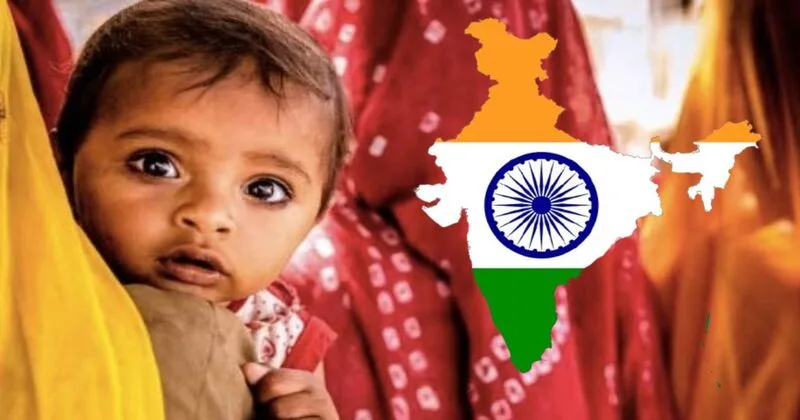
The decline in child mortality rates witnessed in India today is an achievement that undoubtedly serves as a source of national pride. It also stands as an inspiration for other developing nations across the globe. This United Nations report has made it abundantly clear that when backed by sound policies, strong political will and effective implementation, no challenge; however daunting- can persist indefinitely

Dr Nivedita SharmaDr Nivedita Sharma
Mar 22, 2026, 04:00 pm IST
in Bharat, Analysis, Health
Follow on Google News
FacebookTwitterWhatsAppTelegramEmail

The United Nations has profusely praised India for the decline in its child mortality rate. In fact, a significant report recently released by the United Nations has highlighted the achievements of India’s public health system on the global stage. According to the 2025 report by UNIGME, India has presented an inspiring example to the world by achieving a remarkable reduction in child mortality. Reacting to this achievement, Prime Minister Narendra Modi termed it as a collective success for the nation and lauded the sustained efforts undertaken in the healthcare sector.

A historic success reflected in statistics

According to the report, while the neonatal mortality rate stood at 57 per 1,000 live births in 1990, it declined to 17 in 2024-marking a reduction of approximately 70 per cent. Similarly, the mortality rate for children under the age of five dropped from 127 to 27 per 1,000, representing a decline of approximately 79 per cent. These figures serve as proof that India has not only expanded the scope of its healthcare services but has also implemented them effectively.

Policy interventions and the role of the central government

Prioritizing child and maternal health, the Government of India launched several ambitious schemes, the direct impact of which manifested as a reduction in mortality rates. The National Health Mission ensured access to healthcare services even in the country’s remote regions, while the Janani Suraksha Yojana reduced complications during childbirth by promoting institutional deliveries. The Pradhan Mantri Surakshit Matritva Abhiyan provided pregnant women with regular health check-ups and expert consultations. Collectively, these schemes established a healthcare ecosystem capable of identifying risks in a timely manner and ensuring the immediate availability of treatment.

The impact of vaccination campaigns and public awareness

The Universal Immunization Programme has played a pivotal role in India’s success. Campaigns such as ‘Mission Indradhanush’ have ensured that life-saving vaccines reach every child. Through vaccination, diseases such as measles, diarrhea and pneumonia—which were previously leading causes of child mortality; have been brought under control. Furthermore, ASHA workers and Anganwadi services went from village to village to raise public awareness; this fostered greater trust in health services and led to their increased utilization. This public participation has emerged as a strong pillar of India’s success.

Improvements in institutional deliveries and neonatal care

The rise in the rate of institutional deliveries in India has played a pivotal role in reducing the neonatal mortality rate. The availability of safe delivery facilities in hospitals, coupled with the presence of trained healthcare professionals, has significantly mitigated the risks associated with childbirth. Additionally, the expansion of Neonatal Intensive Care Units (NICUs) has proven to be a major stride forward. These units provide specialized care to premature or ailing infants, thereby enhancing their chances of survival. These Indian initiatives have contributed significantly to the decline in neonatal mortality rates across South Asia.

Combating diseases through targeted strategies

India has focused particular attention on those diseases that constituted the primary causes of child mortality. The use of ORS and zinc for the treatment of diarrhea was actively promoted, while comprehensive campaigns were launched for the treatment and prevention of pneumonia. Malaria control programs achieved remarkable success in affected regions. These targeted efforts have demonstrated that, with planned action executed in the right direction, deaths caused by preventable diseases can be substantially reduced.

Centre-state coordination and effective implementation

Strong coordination between the Central and State governments has been another key factor behind India’s success in this domain. Policies formulated by the Central Government were implemented by the States in accordance with local conditions, thereby rendering the schemes more comprehensive and effective in their impact. This stands as an excellent example of cooperative federalism, maintaining a harmonious balance between policy formulation and implementation. This coordination has played a crucial role in extending health services down to the grassroots level.

Technology and data-driven health management

The utilization of digital technology has given a new direction to India’s healthcare sector. Digital platforms and data-driven systems have been employed to monitor maternal and child health, thereby enabling the evaluation of the impact of various schemes. This has not only led to an improvement in the quality of services but has also ensured a more efficient utilization of resources. This process of data-driven decision-making renders India’s healthcare system more transparent and accountable.

Also Read: Why Maharashtra’s freedom of religion bill strengthens & not restricts liberty

India’s role in the South Asian and global context

According to the report, India has played a pivotal role in the decline of child mortality rates across South Asia. While in 2000, the region witnessed 92 child deaths per 1,000 live births, this figure dropped to approximately 32 in 2024. This transformation signals that the impact of India’s efforts extends beyond the national level to manifest as a global influence. Although India has achieved remarkable success, several challenges still lie ahead.

Issues such as disparities in healthcare services between rural and urban areas, the problem of malnutrition, and the universal availability of quality healthcare facilities still demand effective solutions. South Asia continues to account for approximately 25 per cent of the world’s child mortality cases, underscoring the need for sustained efforts in this direction. India must now address these new challenges while simultaneously sustaining its existing achievements.

India as an inspiring model

The decline in child mortality rates witnessed in India today is an achievement that undoubtedly serves as a source of national pride. It also stands as an inspiration for other developing nations across the globe. This United Nations report has made it abundantly clear that when backed by sound policies, strong political will and effective implementation, no challenge; however daunting- can persist indefinitely. Under such circumstances, even the most ambitious goals can be successfully attained. The confidence expressed today by Prime Minister Narendra Modi serves as a catalyst for further progress in this direction. If India continues to work with this same level of commitment in the times to come, it is certain to emerge as a global leader in the healthcare sector.


Topics: IndiaHealthUnited NationsChild Mortality
ShareTweetSendShareSend
✮ Subscribe Organiser YouTube Channel. ✮
✮ Join Organiser's WhatsApp channel for Nationalist views beyond the news. ✮
Previous News

Thiruparankundram Row: Court questions Tamil Nadu State govt’s interpretation of ‘Stay Order’ Karthigai Deepam case

Next News

Did US seek India’s nod for Iran strikes? Ministry of External Affairs debunks ‘Fake and fabricated’ claims

Related News

Editors of the HAF Wikipedia page run propaganda and disinformation campaign against the organisation, India and Hindu cultural ethos

Wikipedia fuels propaganda against Hindu American Foundation: How anonymous writers demonise Hindu rights group?

The Green Realignment: Why the US-India trade pact is a battle for climate and supply chain security

Indian Army to train 5 lakh personnel in drone operations; Scripting strategic edge in next gen battlefield tactics

Indian surgeon conducts world’s longest cardiac telesurgery; Made-in-India robot echoes indigenous medical prowess

India’s Permanent Representative to the United Nations Ambassador Harish Parvathaneni

India slams Pakistan at UNSC for peddling false narratives on Jammu & Kashmir

Union Home Minister Amit Shah addressing BSF personnel at the Lankamura Border Outpost along the India-Bangladesh border in West Tripura district on June 5, 2026

Amit Shah at Bangladesh Border: “India will have an impregnable security grid soon”

Load More

Latest News

(Left) Victorious Indian Men-s hockey team who who won Gold in U-18 Asia Cup (Right) U-18 Women's hockey team who won bronze medal in the Asia Cup

U18 Asia Cup 2026: Indian Men’s hockey wins gold, women secure bronze medal; PM Modi & Amit Shah hail the teams

India’s semiconductor roadmap shifts from import dependence to silicon sovereignty, aiming for a self-reliant ecosystem by Viksit Bharat 2047

From Import Dependence to Silicon Sovereignty: India’s bold semiconductor roadmap for Viksit Bharat 2047

Keralam Chief Minister V.D. Satheeshan

Jamaat-e-Islami Hind Team Meets CM Satheeshan, Senior Ministers, fuel debate over influence in UDF government

Singapore acts against China-linked posts targeting Indian community, cites threat to social harmony

Singapore Invokes OCHA: Facebook, YouTube and X ordered to block anti-Indian content originating from China

Editors of the HAF Wikipedia page run propaganda and disinformation campaign against the organisation, India and Hindu cultural ethos

Wikipedia fuels propaganda against Hindu American Foundation: How anonymous writers demonise Hindu rights group?

Israel to Install Statue of Chhatrapati Shivaji Maharaj; Israel’s Consul General in Mumbai, Yaniv Revach, met Maharashtra Chief Minister Devendra Fadnavis and sough his support in this regard

Chhatrapati Shivaji Maharaj’s legacy to reach Israel; Statue to be installed as symbol of India-Israel friendship

IIGH Public Policy Seminar: Women’s dignity, safety & equal opportunity discussed

Representative Image

Decoding Hezbollah: How the terror group built a massive arsenal against Israel

Representative Image

Plastic, Traffic and Landslides: How rising tourist footfall is posing threat to the mountainous region

The Green Realignment: Why the US-India trade pact is a battle for climate and supply chain security

Load More
  • Privacy
  • Terms
  • Cookie Policy
  • Refund and Cancellation
  • Delivery and Shipping

© Bharat Prakashan (Delhi) Limited.
Tech-enabled by Ananthapuri Technologies

  • Home
  • Search Organiser
  • Bharat
    • Assam
    • Bihar
    • Chhattisgarh
    • Jharkhand
    • Maharashtra
    • View All States
  • World
    • Asia
    • Africa
    • North America
    • South America
    • Europe
    • Australia
  • Editorial
  • Operation Sindoor
  • Opinion
  • Analysis
  • Defence
  • Culture
  • Sports
  • Business
  • RSS @ 100
  • Entertainment
  • More ..
    • Sci & Tech
    • Vocal4Local
    • Special Report
    • Education
    • Employment
    • Books
    • Interviews
    • Travel
    • Health
    • Politics
    • Law
    • Economy
    • Obituary
  • Subscribe Magazine
  • Read Ecopy
  • Advertise
  • Circulation
  • Careers
  • About Us
  • Contact Us
  • Policies & Terms
    • Privacy Policy
    • Cookie Policy
    • Refund and Cancellation
    • Terms of Use

© Bharat Prakashan (Delhi) Limited.
Tech-enabled by Ananthapuri Technologies