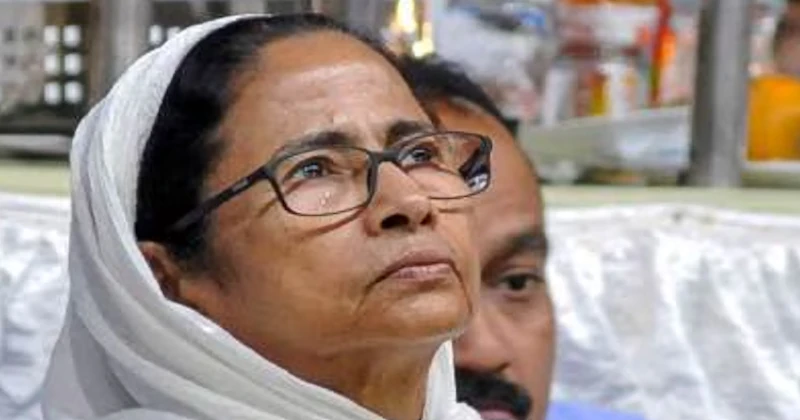
In a move that came just ahead of the anticipated election announcement, Mamata Banerjee declared that pending Dearness Allowance (DA) dues for West Bengal government employees would be released starting March 2026. The announcement, made via social media, was initially seen as a significant relief measure for lakhs of employees who have been agitating for years over unpaid dues.
However, as the state’s Finance Department released the detailed notification outlining the modalities of payment, the initial optimism has given way to growing dissatisfaction and skepticism among various employee groups. Several associations have now termed the move as “cosmetic” and politically timed rather than a genuine attempt to resolve long-standing grievances.
What the Government announced
According to the official statement, the state government will begin disbursing arrears under ROPA 2009, following a structured mechanism laid out by the Finance Department. The move comes in the backdrop of sustained protests, including a one-day strike by sections of government employees demanding full DA parity with central government staff.
The announcement was widely interpreted by political observers as an attempt to ease tensions and consolidate support among government employees before elections.
Why are employees calling it an ‘Eye-wash’?
Despite the announcement, several employee unions have raised serious concerns about the actual benefits and implementation process. Speaking on the issue, Swapan Mondal, General Secretary of the Bangiya Shikshak O Shikshakarmi Samiti, described the decision as an “eye-wash,” pointing out multiple shortcomings in the notification.
One of the primary concerns relates to the structure of payments. A significant portion of the DA arrears is set to be deposited into Provident Fund (PF) accounts, with a mandatory two-year lock-in period. This means employees will not have immediate access to a large part of their dues.
Adding to the frustration, advance tax deductions are expected to be applied on these PF deposits. In effect, employees may have to pay taxes on money they cannot even withdraw immediately, an issue that has triggered strong resentment.
Unequal distribution and institutional concerns
Another contentious aspect of the notification is the differential treatment of employee groups. While cash payments are proposed for Group D employees, others are expected to receive a substantial portion of their dues through PF deposits. Critics argue that such a policy could create divisions within institutions and foster dissatisfaction among different categories of staff.
Moreover, employees have raised questions about the “monitoring committee” cited by the state government as the basis for its decision. There is little clarity regarding the composition of this committee, and whether it aligns with directives issued by the Supreme Court of India in previous rulings on DA-related matters.
Some associations have also alleged that the recommendations of the Indu Malhotra Committee, which was expected to guide the resolution of the DA issue, have not been adequately followed.
Lack of clarity and timeline concerns
One of the most significant criticisms of the announcement is the absence of a clear and comprehensive timeline. While the government has stated that disbursement will begin in March 2026, there is no detailed schedule for payments to key categories such as teachers, non-teaching staff, and employees of panchayats, municipal bodies, and aided institutions.
This lack of clarity has led to concerns that the process could stretch into April or beyond, coinciding closely with the election period. For many observers, this timing raises questions about whether the move is more political than administrative.
Further complicating matters is the fact that the period with the highest arrears, April 2008 to December 2015 has not been clearly addressed in the notification. Employees argue that without clarity on this crucial period, the announcement remains incomplete and potentially misleading.
The DA issue has been one of the most contentious points between the West Bengal government and its employees over the past few years. Multiple protests, demonstrations, and legal battles have underscored the depth of dissatisfaction.
The latest announcement, rather than settling the issue, appears to have intensified the debate. Several employee associations have indicated that they will continue their agitation and may push for a revised notification that fully complies with judicial directives and ensures equitable distribution.
As the controversy unfolds, the Mamata Banerjee government faces the dual challenge of addressing employee concerns while maintaining administrative credibility. With protests likely to continue and legal scrutiny still a possibility, the DA issue remains far from resolved.