In a move that has sparked political debate ahead of crucial elections, Mamata Banerjee, Chief Minister of West Bengal, announced that her government will begin clearing long-pending Dearness Allowance (DA) arrears for state employees and pensioners starting March 2026.
The announcement came just hours before the Election Commission of India was scheduled to declare the dates for Assembly elections in multiple states, including West Bengal. Once the poll schedule is announced, the Model Code of Conduct comes into force, preventing governments from making fresh policy decisions that could influence voters.
The timing of the decision has therefore drawn attention from political observers and opposition parties alike.
According to the announcement, the payment of arrears will cover a wide range of beneficiaries, including state government employees, pensioners, teachers, non-teaching staff, and employees of grant-in-aid institutions.
These include personnel associated with local government bodies such as panchayats, municipal institutions and other public organisations.
In a message posted on social media, Mamata Banerjee said the move fulfils a commitment made by her government.
“I am happy to announce that our Ma-Mati-Manush government has delivered on its promise to all its employees and pensioners, and to lakhs of teachers and non-teaching staff of our educational institutions,” she said.
She further clarified that the arrears relate to the ROPA 2009 pay revision framework.
“They will start receiving their ROPA 2009 DA arrears from March 2026 onwards as per the modalities detailed out in the notifications issued by our Finance Department,” Banerjee added.
In another announcement made the same day, Mamata Banerjee said the state government would also increase the monthly honorarium for priests (purohits) and muezzins by Rs 500.
With the revision, the monthly payment for both groups will rise to Rs 2,000.
“I am pleased to announce an increase of ₹500 in the monthly honorariums extended to our purohits and muezzins, whose service sustains the spiritual and social life of our communities,” Banerjee wrote.
The chief minister also stated that the government had approved all new applications submitted by priests and muezzins seeking the honorarium.
“At the same time, all fresh applications that have been duly submitted by purohits and muezzins have also been approved by the state government,” she added.
According to the chief minister, the decision reflects the government’s intention to recognise the role of religious functionaries in maintaining the spiritual traditions of society.
“We take pride in nurturing an environment where every community and every tradition is valued and strengthened,” she said.
The announcements came just before the Election Commission was scheduled to reveal the dates for the upcoming Assembly elections.
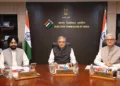
The poll panel, led by Gyanesh Kumar, along with Election Commissioners Sukbir Singh Sandhu and Vivek Joshi, was set to announce the election schedule during a press conference in New Delhi.
The elections will be held in several regions, including Tamil Nadu, Kerala, Assam, West Bengal, and the Union Territory of Puducherry.
Once the schedule is announced, the Model Code of Conduct will immediately come into effect, restricting governments from announcing new schemes or financial benefits.
The opposition Bharatiya Janata Party (BJP) sharply criticised the timing of the announcements, accusing the state government of making last-minute promises to influence voters.
Leader of Opposition Suvendu Adhikari alleged that the announcement was politically motivated.
“What a joke! Mamata Banerjee suddenly remembers lakhs of employees, pensioners, teachers and non-teaching staff just minutes before the Election Commission announces poll dates?” Adhikari said.
He further accused the government of making empty promises.
“After years of looting the state treasury and cheating them, this is your desperate last-minute poll gimmick. Not a single paisa will actually be released,” he claimed.
The twin announcements, clearing DA arrears and increasing honorariums, have come at a politically sensitive moment, just before the enforcement of election rules.
While the state government maintains that the move fulfils earlier commitments and recognises community service, opposition parties argue that the decisions are strategically timed ahead of the elections.