


When a team wins once, it is called success. When it wins repeatedly on the biggest stages, it becomes dominance. The victory of Indian national cricket team in the ICC Men’s T20 World Cup 2026 is not just another trophy in the cabinet; it is a powerful statement to the cricketing world that a new golden era of Indian cricket has truly begun.
In the last few years, Indian cricket has achieved something remarkable. After the historic triumph in the ICC Men’s T20 World Cup 2024 and the prestigious ICC Champions Trophy 2025, India has once again lifted a major ICC title by winning the 2026 T20 World Cup. Three global trophies in such a short period show that this Indian side is currently the most dominant force in world cricket. Not only this, India went on top win women’s World Cup, U-19 World Cup and Blind Cricket World Cup all in the same time span.
For many cricket lovers, this phase reminds them of the era when the Australian cricket team ruled international cricket in the early 2000s. Back then, Australia was unbeatable and ruthless. Today, Team India seems to be walking the same path confident, fearless, and hungry for victory. This was a young Indian side with no stalwart except Jasprit Bumrah, yet it entered the tournament as one of the favourites. The start was not very convincing, India kept winning but wasn’t playing to its full potential; however, as the crucial matches arrived, the team rose to its true ability and delivered when it mattered most. The defeat against South Africa came as a shock, but it also became a moment for the team to regroup. That loss helped the players correct their mistakes and return stronger in the crucial matches.
Fearless leadership
Every successful team needs a strong leader, and in this tournament, that role was played brilliantly by Suryakumar Yadav. Known for his innovative batting and fearless attitude, Surya also proved that he is a sharp cricketing mind. Throughout the tournament, his captaincy stood out. He understood how to use each player according to the situation. His confidence spread across the dressing room, and every player looked clear about his role.
With this historic victory, Suryakumar Yadav has now entered an elite club of World Cup-winning Indian captains alongside legends like Kapil Dev, MS Dhoni, and Rohit Sharma. Each of these leaders defined an era in Indian cricket, and Surya’s achievement has placed him firmly in that league. In the press conference after winning the trophy, Surya has also set his sights on winning a gold medal at the 2028 Los Angeles Olympics.
Batting Line-Up Full of Character
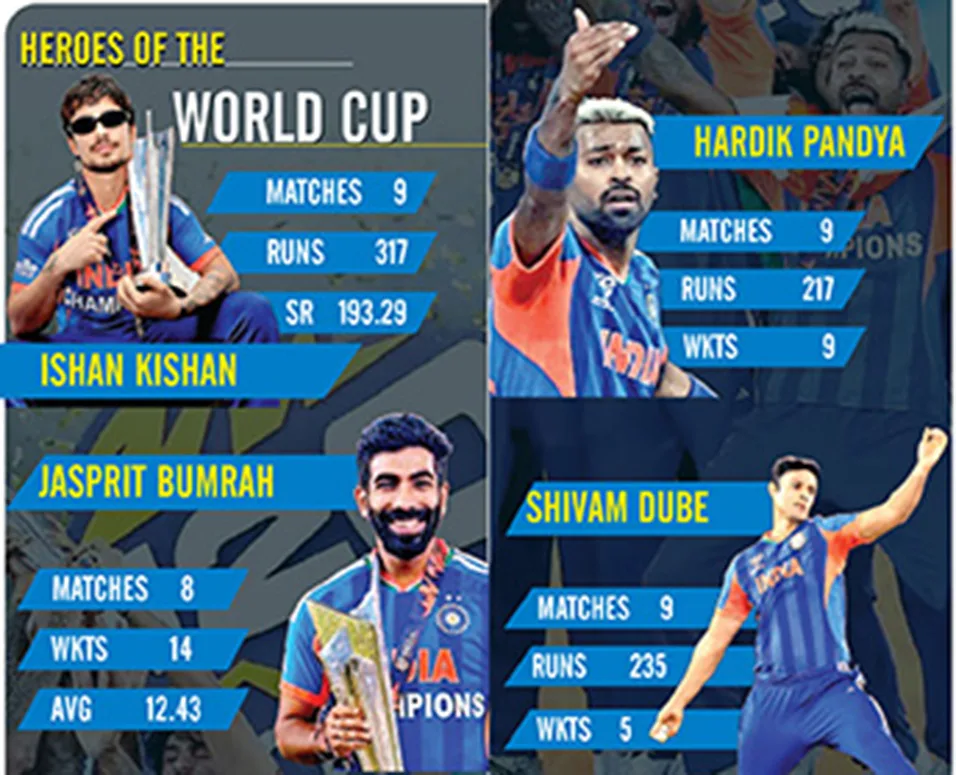
India’s success in the tournament was built on a strong and flexible batting unit where every player stepped up when needed. One of the biggest stories of the tournament was the performance of Ishan Kishan. Initially selected as an opener, the team later pushed him down to number three due to team combination requirements. Many players struggle when their batting position changes, but Ishan adapted beautifully. Whether attacking the bowlers or stabilising the innings, he delivered exactly what the team needed.Then came the fearless young opener Abhishek Sharma. His World Cup journey was not smooth at the start. In fact, for a large part of the tournament, his form looked uncertain and criticism started to grow. But the team management showed faith in him and gave him backing. That belief paid off. When the crucial moment arrived, Abhishek clicked and played important innings in the final that changed the momentum for India.
Another inspiring story of this tournament was Sanju Samson. At the beginning of the World Cup, Sanju was not even a regular member of the playing XI. But when the team required stability and class, he got his opportunity and he grabbed it with both hands. Samson went on to play three consecutive match-winning knocks, guiding India to victory under pressure. His calm presence at the crease reminded many fans of the reliability once provided by legends like Rohit Sharma and Virat Kohli, players who had so often taken India to the finishing line in big matches. Such was Samson’s impact that he eventually became the player of the tournament, a remarkable achievement for someone who started the competition outside the playing XI.
Tilak Varma showed tremendous flexibility and maturity throughout the tournament. No matter where the team asked him to bat, he delivered. Whether stabilising the innings or accelerating the scoring rate, Tilak played fearless cricket and scored quick runs, proving himself to be one of India’s most dependable young batters. Hardik Pandya once again proved his value as a true all-rounder, delivering with both bat and ball. His batting attack, powerful sixes, and ability to provide early breakthroughs made him a key player for India. The finishing duties were handled powerfully by Shivam Dube. Known for his ability to clear boundaries with ease, Dube provided the final push in several matches. His aggressive batting ensured that India consistently posted strong totals or chased targets with confidence.
Bowlers Delivered Under Pressure
While the batting unit shined, India’s bowling attack also played a crucial role in lifting the trophy. Left-arm pacer Arshdeep Singh once again proved his value in pressure situations. Throughout the tournament, he delivered important breakthroughs exactly when the team needed them. Whether it was the powerplay or the death overs, Arshdeep showed composure and accuracy.
But the backbone of India’s bowling attack remained the ever-reliable Jasprit Bumrah. Widely regarded as one of the finest fast bowlers of modern cricket, Bumrah once again demonstrated why he is considered India’s national treasure. His ability to control the game in the toughest situations, deliver unplayable yorkers, and maintain calm under pressure makes him one of the greatest match-winners in the history of Indian cricket.
Along with them, Varun Chakravarthy and Axar Patel strengthened India’s bowling attack. Although Axar did not get many opportunities with the bat in this tournament, his disciplined bowling and control remained extremely valuable for the team.
The Gambhir Effect
Behind the scenes, the fearless approach of the team also reflects the influence of head coach Gautam Gambhir. Known for his intense competitive spirit as a player, Gambhir has brought the same mentality into the dressing room. Under his guidance, this Indian side has adopted an aggressive and fearless mindset. The focus is clear: play bold cricket, trust your abilities, and aim only for victory. This approach is slowly shaping what could become a new golden era for Indian cricket.
Secret of Success
The biggest secret behind India’s success was that the team was not dependent on one individual genius. Instead, the strength of every player was used in the best possible way. Each cricketer had a clear role, and together they formed a balanced side. Each player stepped up at the right moment to guide India to victory. More than individual brilliance, it was the unity and collective spirit of the team that truly defined this World Cup triumph.
When stalwarts like Virat, Rohit and Jadeja retired from T20 cricket in 2024, many wondered what the future of the team would be. But from that very moment, a new generation of young players began shaping this side, rising to every challenge and proving themselves at every opportunity. From 2024 to 2026, the message to the cricketing world has become clear, the Indian team is not just winning tournaments, it is building a lasting legacy. If this momentum continues, the coming years could witness even greater achievements for Indian cricket.
A Unique Celebration
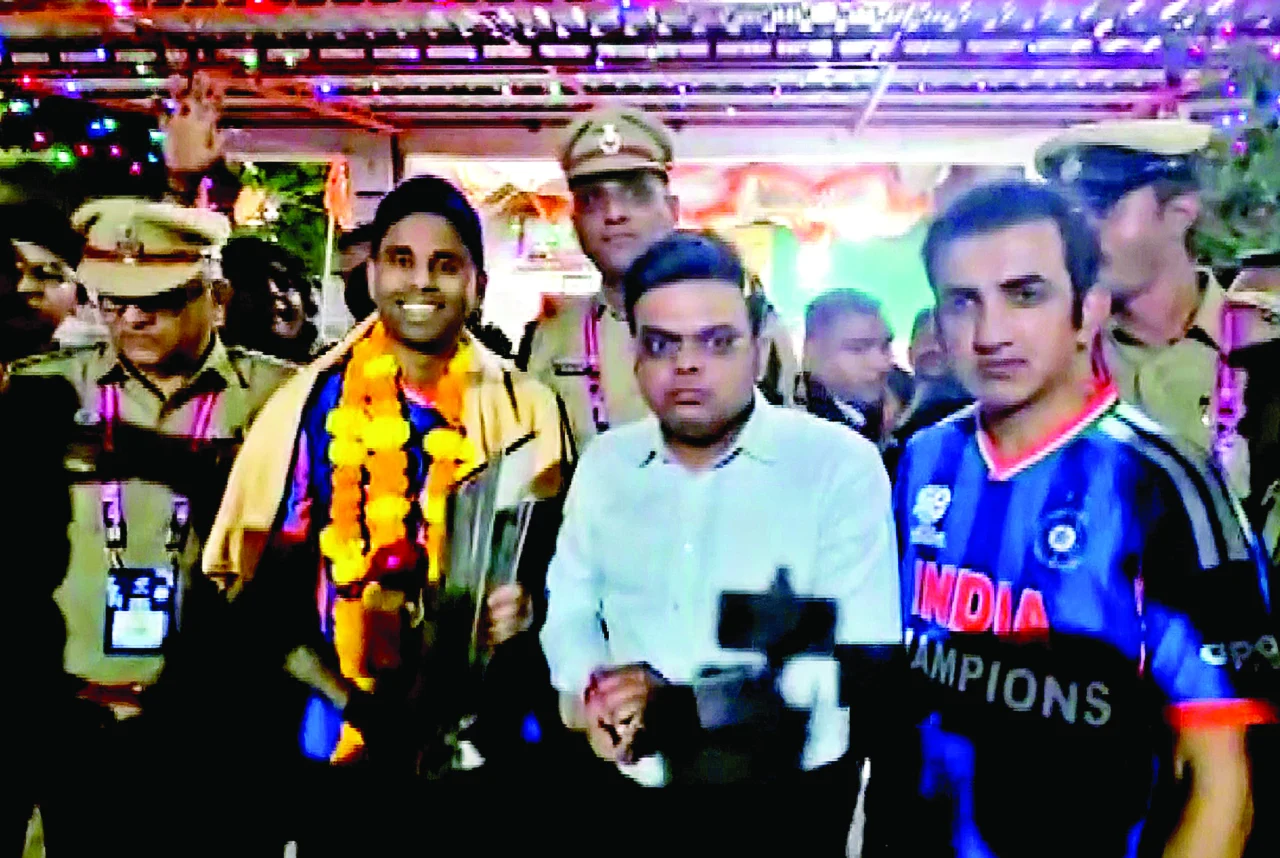
Interestingly, this World Cup victory also presented a different and inspiring picture of celebration. In many international tournaments, victories are followed by grand parties, champagne celebrations, and late-night club events. But this time, something different happened. After lifting the World Cup, captain Suryakumar Yadav chose a different path. Instead of heading to such celebration, he along with Gautam Gambhir and Jay Shah, ICC President went straight to Hanuman temple to seek blessings.
From Struggles to Fame
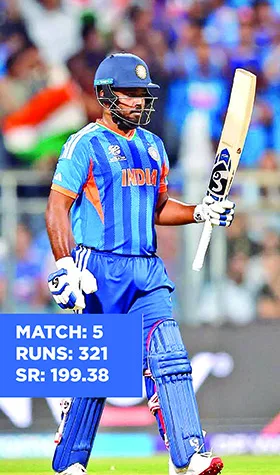
Sanju Samson: Sanju’s path was paved by his family’s unwavering support. His father, a police constable in Delhi, made the life-altering decision to resign from his stable job and relocate the entire family to Kerala to nurture Sanju’s cricketing dreams. His journey is a powerful testament to perseverance, defined by years of rejection, quiet dedication, and ultimate redemption. After facing repeated setbacks and being in and out of the Indian team, he remained focused on his preparation. His success culminated in a standout performance at the 2026 ICC Men’s T20 World Cup.
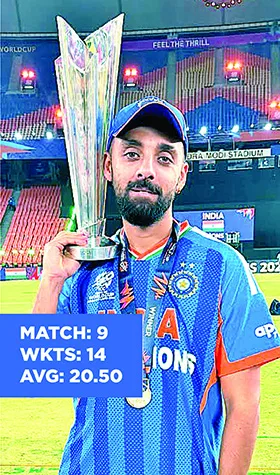 Varun Chakaravarthy:Initially a wicket-keeper, he quit cricket for academics, earning a degree in architecture. He returned to the sport later, starting as a pace bowler before switching to spin after a knee injury. He faced immense financial hardship, even telling his wife, Neha, not to rely on him. She supported him with her own salary, enabling him to pursue cricket full-time. After overcoming rejections, his breakthrough came through intense, focused effort. He was selected by KKR in the IPL and today he is a World Cup winner.

Rinku Singh:Rinku was raised in a two-room home. His father delivered LPG cylinders. He once considered becoming a sweeper to support his family. His father became his biggest cheerleader after witnessing his talent. His family made significant sacrifices, with siblings working various jobs to keep the household afloat. During the tournament, he faced a personal tragedy with the passing of his father. For any individual, such a loss is heartbreaking. Yet, despite the pain, Rinku chose to remain with the team and continue representing the nation.
The image of the Indian captain offering prayers after winning the World Cup became symbol of humility and gratitude. It reflected a deeper cultural value remembering faith and grounding even in moments of great success.