
After spearheading an all-out campaign against Sabarimala’s centuries-old tradition that bars women between the ages of 10 and 50 from entering the shrine, and amid allegations of Emergency-like suppression of protests against the entry of young women, the Kerala government, the CPM-led Left Democratic Front (LDF), and the government-controlled Travancore Devaswom Board have now taken a U-turn on the issue. The Devaswom Board had earlier indicated such a shift. A special Cabinet meeting held on March 13 endorsed the Board’s decision, reportedly after consultations with the LDF and the CPM state secretariat. With this revised stand, the ruling establishment appears to acknowledge that its earlier position went against the sentiments of many devotees. The government is now set to submit a fresh affidavit before the Supreme Court on March 14.
The Supreme Court had directed the Kerala government and the Devaswom Board to present their revised arguments before March 14, with the hearing scheduled to begin on April 7. The state government’s earlier stand had supported allowing women of all ages to enter the temple, citing the Supreme Court’s September 2018 verdict. In a 4:1 majority ruling, the court held that the prohibition on women aged 10 to 50 entering the Sabarimala temple was unconstitutional, stating that the custom violated fundamental rights, particularly the right to equality and freedom of worship.
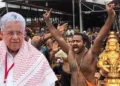
Following the verdict, the Kerala government moved to implement the ruling, which triggered widespread protests by devotees who opposed the move. Many women devotees stated that they were willing to wait until they turned 50 rather than enter the temple in violation of the long-standing tradition. Thousands of women participated in peaceful protests known as the “Nama Japa Yatra,” chanting Ayyappa bhajans and slogans such as “Swamiye Ayyappa, Ayyappa Swamiye.” However, several confrontations were reported in different places, with protesters alleging police action and attacks by CPM workers. One devotee reportedly died during stone pelting amid the clashes.
Women devotees also gathered along the hilly routes leading to the temple to prevent young women from entering the shrine, chanting devotional songs. Supporters of the tradition maintained that their resistance was peaceful, even as the government continued its efforts to enforce the court’s ruling.
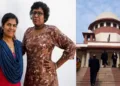
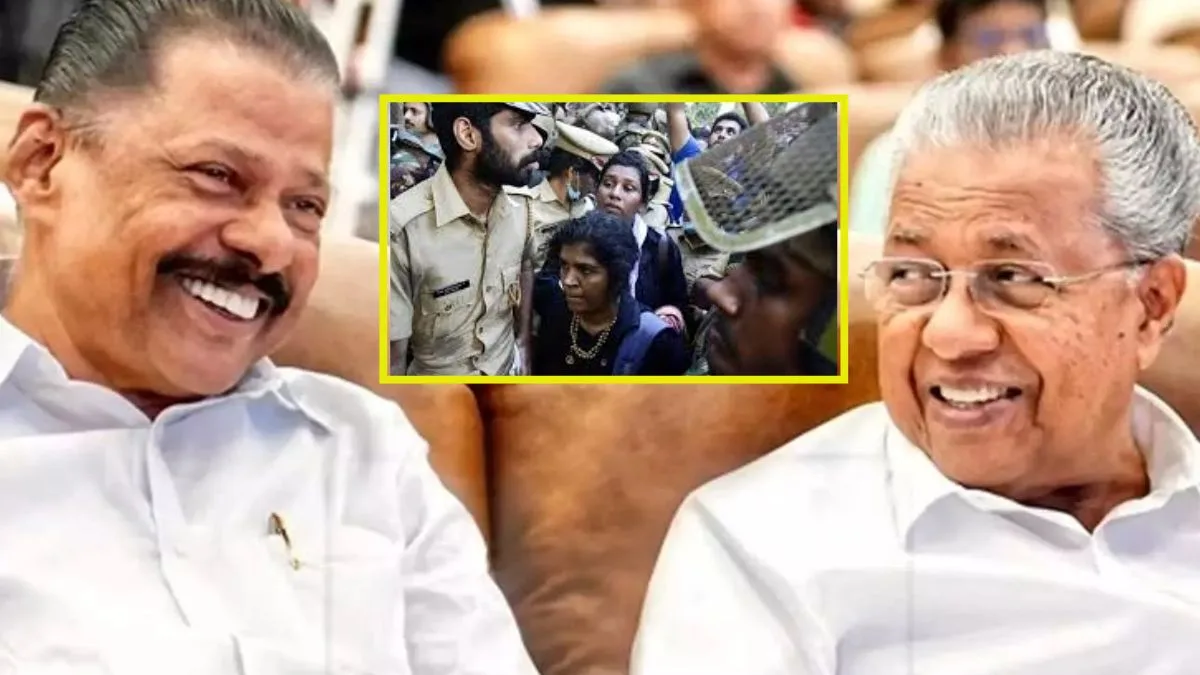
During the height of the protests in October 2018, two activists, Rahana Fathima and Kavita Jackal, attempted to reach the temple under police protection but could not proceed due to resistance from devotees. However, in the early hours of January 2, 2019, Bindu Ammini and Kanaka Durga entered the shrine with police escort through a rear entrance, an incident that sparked intense political and social reactions across Kerala. The following day, Chief Minister Pinarayi Vijayan defended the police action and the government’s stance.
According to reports, the Travancore Devaswom Board is also expected to submit a similar affidavit before the Supreme Court. Earlier, the Board had passed a resolution stating that the temple’s traditional customs should be protected.
Political observers see the latest shift as a possible attempt to address public sentiment ahead of the upcoming Assembly elections. Hindu organisations have demanded an apology from the government over the incidents of 2018 and 2019. They have also called for the withdrawal of cases filed against thousands of devotees who participated in the protests, including former Governor and senior BJP leader P. S. Sreedharan Pillai, former State Police Chief T. P. Senkumar, Hindu Aikyavedi leader K. P. Sasikala, Sabarimala Karma Samiti leader S. J. R. Kumar, and academician K. S. Radhakrishnan.
With the government and the Devaswom Board preparing to submit their affidavits before the Supreme Court on March 14, many in Kerala are waiting to see what stand the state will formally place before the court in the long-running Sabarimala case.