The geopolitical wildfire espousing across West Asia triggered by the conflict between the US-Israel axis and Iran has indeed intensely manipulated across the Strait of Hormuz. This strategic and sensitive waterway is a narrow sea passage between Persian Gulf and the Gulf of Oman, which is critical to the cross-continental transportation of more than 25 per cent of global oil. The waterway is controlled by Iran and Oman. However, as the Israel-Iran conflict escalated, Iran shut this strategic energy that is acting as a gridlock for the passage of the oil tankers.
Apart from blocking the critical energy chokepoint, Iran also is bombing the vessels passing through the waterway. Days ago, Thailand flagged crude oil tanker that was bound to arrive at the Kandla port in Gujarat was bombed. Iran has also attacked US and Europe based vessels. As per the latest data, almost 16 vessels sailing through the Strait of Hormuz have been attacked by the Iranian Revolutionary Guards Force(IRGC) thus causing severe disruption in the global oil supply chain.
Strategic smartness of India: Going off the maritime tracking system
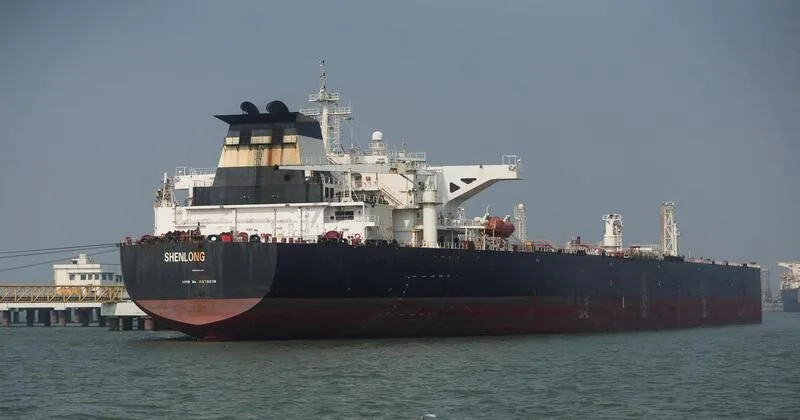
At such a precarious juncture, India has ensured its energy security and the safe passage of the oil tanker via the conflict-hit Strait of Hormuz. The Shenlong oil tanker which is Liberia flagged was carrying Saudi crude to India via the strategic energy chokepoint. The oil tanker was expected to be docked at Mumbai. Like every other vessel sailing through the Strait of Hormuz currently, even Shenlong was under the radar of Iran and was prone to bomb or drone strikes. However, the strategic smartness and timely action by the crew saved the vessel, the seafarers and the energy security of the 1.4 billion Indians. The vessel carrying the Saudi crude successfully reached Mumbai on March 12 via the conflict-hit water passage.
Shenlong is the maiden India bound oil tanker to safely reach the destination through the Strait of Hormuz since the conflict broke out between the US-Israel and Iran on February 28. India could achieve this feat amidst a ruptured geopolitical landscape due to a strategic masterstroke. Apparently, the oil tanker while sailing via the Strait of Hormuz, went away from the sight of the global maritime tracking system. The tanker began its voyage on March 1 from the Ras Tanura port in Saudi Arabia and was bound to reach India.
For several days, the maritime tracking networks kept vigilance of the movement and location of the vessel. The last location of the vessel that was recorded in the maritime tracking system was on March 8 as the oil tanker entered the Strait of Hormuz. As the crude tanker began to pass through the sensitive strait it vanished away from the vigilance of the tracking system. It was able to track and locate the vessel later on, when it came out of the Strait. This brief disappearance helped to save the vessel from Iranian radar and strikes.
As per the sources, the crew of the oil tanker switched off the Automatic Identification System(AIS) while passing through the conflict-hit water passage. Thus the location, speed and identity of the ship could not be tracked. As per the International Maritime Protocols, it is mandatory for the vessels to keep the AIS active, which helps the maritime authorities to gauge the traffic at sea. However, during these vulnerable situations and while sailing through the conflict prone passages, vessels usually turn off their tracking systems to conceal the risk of detection and attack.
Thus, the Shenlong crude tanker as well turned off its AIS to avoid the risk of detection and attack by Iran. Hence, it could not be tracked and bombarded. The tanker resurfaced on the maritime tracking databases after coming out of the Strait of Hormuz and as it continued its journey towards India without any risk. The vessel was carrying 1,35, 335 metric tonnes of oil and is currently harboured at the Mumbai port as the unloading has commenced. As per the reports all the 29 crew members in the vessel are safe. This safe passage of the vessel testifies the strategic smartness of India. The timely and swift action saved the crew and the energy security of India from a conflict-ridden, sensitive strategic water passage.