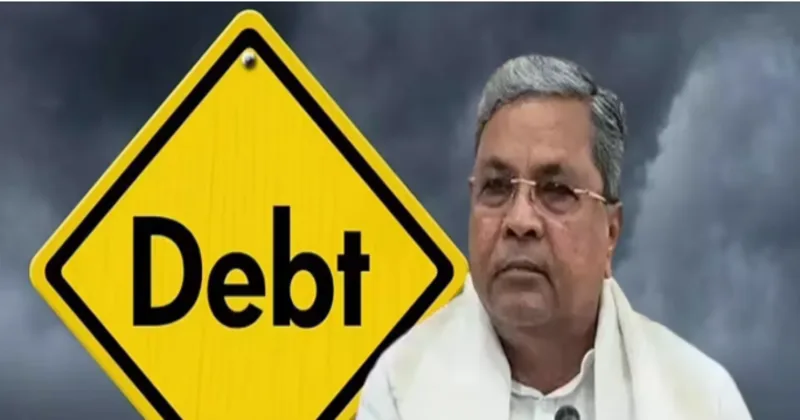
BENGALURU: Karnataka’s financial position is once again under intense scrutiny as the state’s total outstanding debt is set to cross Rs 8.14 lakh crore by the end of this month. What was projected as a controlled and disciplined borrowing strategy is now appearing increasingly unsustainable, with rising deficits, swelling interest payments and weakening revenue streams putting enormous pressure on the exchequer.
When Chief Minister Siddaramaiah presented the 2025–26 Budget, he asserted that the state was adhering to fiscal discipline, keeping total debt within 24.91 per cent of the Gross State Domestic Product (GSDP), marginally below the 25% benchmark. However, fresh projections indicate that the debt-to-GSDP ratio could climb to nearly 26.5% by the end of the financial year — breaching the very limit the government had cited as proof of prudence.
The total debt, estimated earlier at Rs 7.64 lakh crore by March-end, is now expected to touch Rs 8.14 lakh crore. This sharp increase has triggered concerns that the government’s fiscal calculations may have been overly optimistic, if not flawed. Even more alarming is the fact that Karnataka is expected to spend around Rs 48,000 crore in 2025–26 solely on interest payments. In simple terms, a massive portion of taxpayers’ money will go towards servicing past loans rather than building new infrastructure, improving healthcare or strengthening education systems.
The widening fiscal deficit is another red flag. The Budget projected a deficit of Rs 90,428 crore for 2025–26. However, revenue shortfalls in commercial taxes, stamp duty and registration collections have widened the gap between income and expenditure. Changes in GST slabs have further impacted revenue inflows, leaving the government scrambling to manage its commitments.
Critics argue that the state’s aggressive welfare spending model, including large-scale guarantee schemes, has significantly strained finances. While welfare initiatives are politically popular, the sustainability of funding them through continuous borrowing is being questioned. With salaries, pensions and other committed expenditures rising annually, the government’s room for fiscal manoeuvre is shrinking.
The medium-term fiscal projections paint an even more concerning picture. Karnataka’s total debt is likely to surge to Rs 10.17 lakh crore by 2028–29. This means that within just a few years, the state could add nearly Rs 2 lakh crore more to its liabilities. Such a trajectory raises serious questions about long-term financial planning and intergenerational equity — whether future taxpayers will bear the burden of today’s spending.
Though the Reserve Bank of India (RBI), in its ‘State Finances: A Study of Budgets’ report, notes that Karnataka’s debt-to-GSDP ratio remains better than some southern states, that comparison offers little comfort. Being marginally better than heavily indebted peers does not equate to fiscal health. The real issue is whether the state is creating productive assets and sustainable growth pathways to justify its borrowings.
Economic observers warn that if revenue growth does not accelerate and expenditure reforms are not undertaken, Karnataka could face tightening liquidity conditions in the coming years. Rising interest obligations will crowd out capital expenditure, slowing development projects and potentially affecting investor confidence.
The government continues to defend its borrowing strategy, arguing that welfare spending stimulates economic activity and boosts consumption. However, critics counter that without a corresponding increase in productive sectors, such stimulus may be temporary, and debt-fuelled expansion cannot continue indefinitely.