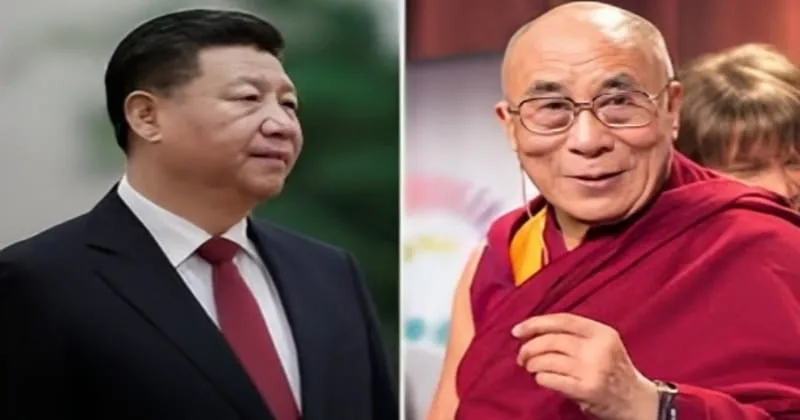
A recent report has alleged that Chinese authorities have engaged in a campaign of “sexual insinuation and reputational manipulation” against the Tibetan spiritual leader, describing it as part of a broader pattern of tactics used by authoritarian regimes to counter symbolic challenges to their authority.
The report argues that when globally recognised figures pose moral or symbolic challenges that cannot be easily suppressed through conventional political or military means, authoritarian systems often resort to reputational disruption to maintain political control.
According to an editorial report published in the Taipei Times, the controversy intensified after the Dalai Lama made history on February 1 by winning his first Grammy Award for his spoken-word album Meditations.
The Chinese government reportedly criticised the award soon after it was announced, accusing organisers of using the platform for what it described as “anti-China manipulation.” Following the recognition, the report claimed that a coordinated online smear campaign began circulating allegations linking the Dalai Lama to convicted sex offender Jeffrey Epstein.
Online campaigns and information manipulation
According to the report, the rumour initially appeared on the Russian state-controlled broadcaster RT. The claims were then rapidly amplified by several pro-China media platforms, which presented the allegations as part of a broader effort to undermine the spiritual leader’s moral authority. However, the report noted that Grok, an artificial intelligence-based fact-checking tool, flagged the claims as false due to a lack of credible evidence supporting the accusations.
The report also referred to earlier incidents, including a controversy in 2023 when pro-China internet activists, often referred to as the “50 Cent Army”, circulated a selectively edited video clip from a public event held in Dharamsala, the headquarters of the Tibetan government-in-exile. The video attempted to portray the Dalai Lama in an inappropriate light, though Tibetan representatives later stated that the footage had been taken out of context and misrepresented the situation.
According to the report, these incidents illustrate a recurring strategy in which reputational attacks are used instead of direct political engagement. The Dalai Lama’s influence, it argues, presents a unique challenge because his authority is largely symbolic and moral rather than political or military. “First, he wields no material power, neither economically nor militarily, but commands moral and symbolic authority, which is inherently resistant to coercion,” the report stated.
It further noted that his global recognition stems not only from his role as a spiritual leader but also from his earlier position as the political leader of Tibet and a central figure in the Tibetan exile movement. The report concluded that international recognition, particularly cultural honours such as a Grammy Award, carries significant symbolic value. Such recognition, it said, offers validation for alternative sources of legitimacy that contrast with official state narratives. In authoritarian political systems where legitimacy often depends on controlling public narratives rather than electoral approval, even symbolic global events can carry disproportionate importance. When regimes cannot control or influence international cultural institutions, the report argued, they may shift strategies from suppression to distortion in order to maintain narrative dominance.