On one side stands what is often described as the radical Shia axis led by Iran. On the other hand is the radical Sunni axis linked to ISIS. Against these two rival streams of Islamic extremism, Israeli Prime Minister Benjamin Netanyahu has proposed the creation of a new strategic framework, a so-called “Hexagon Alliance”, which he presents as a regional security and economic partnership designed to counter both axes.
Moving beyond the traditional architecture of global institutions such as the United Nations, NATO and BRICS, Netanyahu has spoken of a world order shaped by multiple, overlapping alliances. In this emerging framework, the Hexagon Alliance would unite like-minded countries that share Israel’s perspective on counter-terrorism, intelligence sharing and advanced technological cooperation. He has described it as a “six-sided” initiative in concept, though its actual scope may extend far beyond six states.
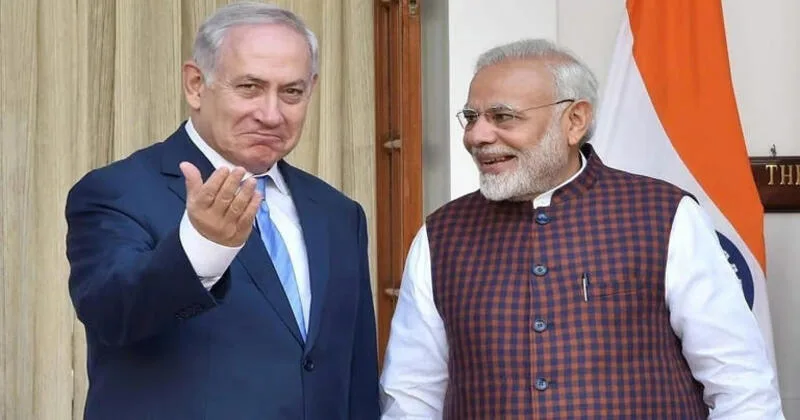
Netanyahu outlined the idea ahead of Prime Minister Narendra Modi’s visit to Israel, openly stating that the alliance is meant to counter what he termed extremist Shia and Sunni axes. According to him, the initiative would bring together countries that agree with Israel on the need for coordinated security measures and deeper collaboration in defence technologies.
India at the core of the proposed alliance
In Netanyahu’s description of the Hexagon framework, Israel would serve as the centrepiece, with India identified as the most important partner. He referred to India as a rising global power and a crucial strategic actor linking Asia with the Mediterranean region. Alongside Israel and India, the initiative envisions participation from Mediterranean states such as Greece and Cyprus.
Although termed a “Hexagon,” the alliance may in fact involve around twenty countries. Netanyahu indicated that moderate Arab states, certain African powers, and several unspecified Asian countries are being considered. While he did not name these Asian partners directly, media reports, including those by the BBC, have suggested that South Korea could be among them, citing its strong diplomatic and defence ties with Israel and its own security concerns regarding North Korea.
South Korea maintains close technological and economic cooperation with Israel, and both countries share concerns about regional security threats. Japan is also viewed as a potential future partner, given its alignment with Israel on strategic and technological matters. Singapore, one of Israel’s oldest defence partners in Asia, and Vietnam, which has shown growing interest in Israeli arms imports and defence cooperation, are also seen as countries with compatible strategic interests. The Philippines maintains close defence ties with Israel, though its inclusion in a formal alliance structure appears less likely.
Netanyahu also mentioned that moderate Arab countries are under consideration. Though he did not reveal names, the United Arab Emirates is widely cited due to its deepening ties with Israel following normalisation. Bahrain, which established diplomatic relations with Israel through the Abraham Accords, is another possible candidate. Egypt and Jordan, both of which already have peace treaties with Israel, may also find a place in such a framework in the future. Saudi Arabia, however, is widely viewed as unlikely to join at this stage. Despite improvements in Israel-Saudi relations, Riyadh has recently signed a separate defence agreement with Pakistan. Moreover, Saudi Arabia and other regional players have issued statements criticising the Hexagon concept, reflecting broader apprehension in parts of the Islamic world.
African outreach and strategic depth
Israel’s outreach under the proposed alliance extends prominently into Africa. Ethiopia has drawn attention following Israeli President Isaac Herzog’s visit shortly after Netanyahu announced the initiative. Ethiopia’s strategic location along the Red Sea corridor makes it significant for regional security calculations. Morocco, already engaged in extensive defence and intelligence cooperation with Israel under normalisation agreements, is another likely partner. Israel has reportedly signed new military cooperation plans with Morocco for 2026, further deepening ties.
Other African countries with established relations with Israel include Kenya, Rwanda, Uganda and South Sudan. Kenya has long cooperated with Israel in counter-terrorism and cybersecurity. Rwanda maintains strong links with Israel in security, agriculture and technology. Uganda has signed memoranda of understanding with Israel to enhance defence collaboration.
South Sudan occupies a particularly symbolic and strategic position. Israel recognised South Sudan within 24 hours of its independence. Public celebrations reportedly featured Israeli flags, and Israel is widely respected there for its perceived support during the independence struggle. Observers have noted that Israeli support for South Sudan’s rebels against North Sudan was part of a long-term strategic approach aimed at counterbalancing hostile Arab states. By strengthening ties with South Sudan, Israel has sought to limit weapons flows to Gaza via Sudan and expand its influence in the Red Sea region. The broader strategy has often been described as forming alliances with non-Arab states surrounding Arab adversaries, thereby creating strategic encirclement.
The emerging Saudi-Pakistan-Turkey axis
Parallel to Israel’s proposed Hexagon initiative, a separate strategic alignment appears to be taking shape among Saudi Arabia, Pakistan and Turkey. Though not formally structured like NATO, this grouping is often described as operating on a collective defence principle reminiscent of NATO’s Article 5, where an attack on one is treated as an attack on all. Each country is seen as contributing distinct capabilities. Saudi Arabia provides financial strength. Pakistan offers military depth and nuclear deterrence. Turkey contributes advanced military technology and drone systems. The early stages of this alignment reportedly began with a “strategic joint defense agreement” signed between Saudi Arabia and Pakistan in September 2025. By January 2026, Turkey was said to be finalising negotiations to join.
Discussions of a broader Islamic security architecture have also surfaced in forums such as the Islamic Military Counter-Terrorism Coalition (IMCTC). Egypt previously proposed a NATO-style joint task force at a summit hosted by the Arab League and the Organisation of Islamic Cooperation. The six Gulf Cooperation Council states reaffirmed commitments under their mutual defence agreement. Iraqi Prime Minister Mohammed Shia al-Sudani supported a collective approach to regional security at that summit. Pakistan called for a joint task force to monitor Israeli actions in the region, particularly after Israel conducted a surprise strike in Doha targeting senior Hamas figures. That same month, Saudi Arabia announced its strategic defence agreement with Pakistan.
However, this emerging Islamic alignment does not command unanimous support across the Muslim world. Iran, which sees itself as a leader in the Islamic sphere, remains at odds with Saudi Arabia, and tensions persist between Iran and Pakistan over border security issues. Given these divisions, Iran is unlikely to participate in any Saudi-led bloc. For now, the arrangement remains informal rather than institutionalised.
Opposition, diplomacy and India’s balancing act
Netanyahu has described India as a global power and a central pillar of his proposed alliance. He has emphasised that Israel views India as a bridge linking Central Asia and the Mediterranean with the broader Asian region. India is one of Israel’s largest defence customers, and expanded joint production and technology transfer in areas such as artificial intelligence, quantum computing and cybersecurity are seen as potential outcomes of deeper cooperation. The alliance is also viewed as supportive of the India-West Asia-Europe Economic Corridor, which seeks to connect India with Europe through West Asia. Israel hopes India will collaborate in countering regional terrorist threats and what it describes as the Shia axis centred on Iran.
At the same time, experts note that India is likely to proceed cautiously. New Delhi maintains long-standing relationships with Iran and various Arab states and traditionally seeks to balance competing interests in West Asia.
Opposition to the Hexagon proposal has been vocal among several Islamic countries. Following Pakistan’s condemnation, around thirteen countries reportedly expressed protest through a joint statement. Egypt, Jordan, Saudi Arabia, the United Arab Emirates, Qatar, Turkey, Indonesia, Kuwait, Oman, Bahrain, Lebanon and Syria voiced concerns. Organisations, including the Organisation of Islamic Cooperation, the Arab League and the Gulf Cooperation Council, also expressed apprehension.
Egypt, Saudi Arabia and Jordan criticised what they described as ideas of a “unified Israel,” alleging that such concepts could threaten their territorial interests. The Pakistani Senate unanimously passed a resolution condemning the Hexagon initiative, introducing it as an anti-Muslim alliance that undermines the sovereignty of Islamic countries. The resolution, introduced by Palwasha Muhammad Sai Khan of the Pakistan People’s Party, cited issues ranging from Gaza ceasefire violations to Israel’s recognition of Somaliland.
Pakistan has argued that the alliance aims to divide the Muslim Ummah politically and ideologically. It has also expressed concern about India’s potential participation, framing it as a destabilising factor. Israeli officials, however, maintain that the Hexagon concept is about cooperation among states that share similar security assessments and counter-terrorism priorities. Political observers suggest that the sharp reaction from Pakistan reflects broader anxieties about shifting regional alignments and India’s growing strategic partnership with Israel. Whether the Hexagon Alliance materialises as a formal bloc or remains an aspirational framework, it has already reshaped conversations about emerging security architectures in West Asia and beyond.