New Delhi/Paris: Defence cooperation between India and France is entering a phase, marked by expanding two-way arms trade and strategic alignment. As India moves ahead with plans to acquire 114 Rafale fighter jets from French manufacturer Dassault Aviation, Paris is preparing to purchase Indian-made weapon systems, signalling a shift from a traditional buyer–seller relationship to a more balanced partnership.
Pinaka emerges as frontrunner
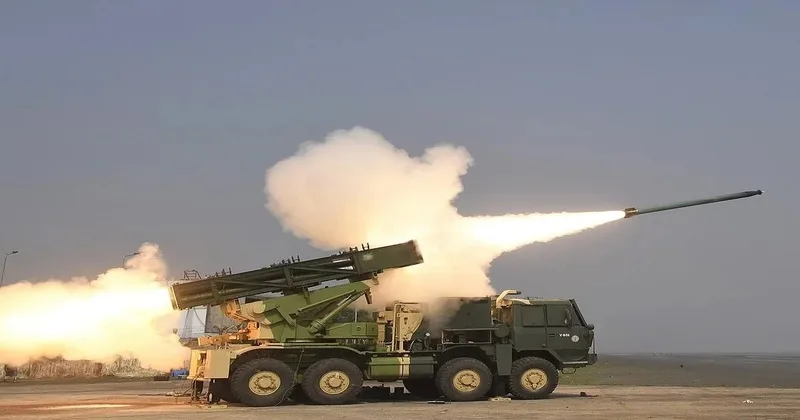
According to reports carried by Le Monde, France is considering India’s indigenous Pinaka multi-barrel rocket launcher system as a leading candidate for procurement. The move reflects a “give-and-take” approach, with France seeking to reciprocate India’s long-standing purchases of French aircraft by sourcing defence equipment from New Delhi. For decades, France has counted India among its most important defence customers. What makes the current engagement notable is France’s willingness to treat India not merely as a market, but as an equal defence partner with growing technological capabilities and manufacturing depth.
Beyond Pinaka, French defence planners are also closely tracking developments in India’s artillery platforms, missile programmes, and electronic warfare systems. Officials in Paris are said to be keen on building resilient global supply chains, and India is increasingly viewed as a dependable partner in that effort. Pinaka, developed using indigenous technology, has already demonstrated its effectiveness in combat conditions. The rocket system is recognised for its high accuracy, rapid salvo-firing capability, and operational flexibility across varied terrains. India has been actively integrating Pinaka into its armed forces as part of a broader drive to replace ageing rocket launcher systems with modern, locally developed alternatives.
Expanding cooperation beyond trade
Recently, India successfully tested guided versions of the Pinaka rockets, further enhancing the system’s strike precision. These guided munitions allow forces to engage targets with greater accuracy, enabling concentrated firepower against hostile positions while reducing collateral impact. Defence analysts say this capability significantly increases Pinaka’s attractiveness for overseas buyers seeking cost-effective yet advanced artillery solutions. French interest also extends to the wider ecosystem surrounding Indian defence manufacturing.
Officials believe the evolving partnership could move beyond simple equipment sales to include co-development, technology sharing, and industrial collaboration. Such cooperation is expected to generate employment opportunities and spur innovation among engineers and technicians in both countries. Taken together, the prospective Rafale acquisition and France’s consideration of Indian weapons underscore a maturing strategic relationship. As India strengthens its indigenous defence base and France looks for reliable partners, both sides appear poised to reshape their military cooperation into a more reciprocal and forward-looking alliance.