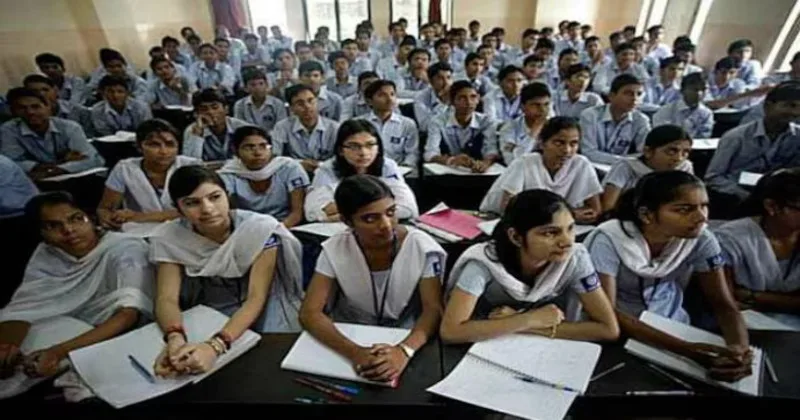
Central Board of Secondary Education(CBSE) has revised its Affiliation Bye Laws to make it mandatory for schools to appoint a career counsellor, distinct from the wellness and counselling teacher. This decision in India’s educational landscape acknowledges career guidance as a specialised, professional domain rather than an extension of emotional or academic support. India’s engagement with educational guidance dates back nearly a century. From the Acharya Narendra Dev Committee Report of 1939 to the National Education Policy, policymakers have consistently emphasised the importance of structured guidance for students to navigate academic, personal and career decisions. Yet, despite this historical acknowledgment, implementation has remained fragmented.
Until now, career guidance in Indian schools has been largely informal often provided by teachers, unregulated private agencies or self-styled experts. The new CBSE directive is therefore a long-awaited step that transforms what was once an optional support system into a core institutional responsibility. In 2025, the Supreme Court of India issued two key rulings stressing the significance of mental health in educational environments. One of these landmark judgments laid down 21 guidelines, explicitly recommending that both students and parents receive professional career guidance.
CBSE’s new rule, therefore, is not merely administrative. It aligns with both the spirit of the NEP 2020 and judicial directions. It acknowledges that academic stress and career uncertainty often feed into one another and that professional intervention is essential for prevention rather than cure.
Moving beyond the “Wellness Teacher”
Previously, CBSE’s guidelines required schools to appoint a “counselling and wellness teacher”, implying that emotional support alone was sufficient to address career-related dilemmas. The revised clause clearly distinguishes career counselling as a separate function requiring a different skill set including labour market analysis, psychometric evaluation, higher education mapping and coordination with parents, universities and industry partners.
While the intent behind the directive is commendable, its implementation reveals India’s chronic shortage of trained career counsellors. The CBSE circular itself acknowledges this gap, allowing schools to appoint a “trained teacher” provisionally if a certified counsellor is unavailable. Such teachers must, however, obtain the necessary qualifications within two years.
The reality is sobering: India has fewer than a handful of formal academic programs dedicated exclusively to career counselling. Most practitioners come from unrelated fields like teaching, human resources, IT or psychology and many operate through private consultancies with minimal regulation or standardisation. The National Council of Educational Research and Training (NCERT) offers an International Diploma in Guidance and Counselling (IDGC), but only a small portion of its syllabus focuses specifically on career development. Other programs are limited in scope and reach, inadequate for a country with over 15 lakh schools and millions of students seeking guidance.
CBSE has proposed a minimum qualification framework and a 50-hour capacity-building module to train counsellors. However, many crucial questions remain unanswered:
- Who will design and deliver these training programs?
- How will the effectiveness of counsellors be assessed and certified?
- What ethical codes will govern their practice?
- Who will ensure regular skill upgrades and compliance?
Currently, India lacks a national competency framework or accreditation system for career guidance professionals. Without such a system, there is a real risk that schools may treat the directive as a bureaucratic formality; hiring untrained personnel just to meet compliance requirements.
The greatest danger is in superficial implementation. In under-resourced schools, particularly in rural areas, teachers already shoulder multiple roles. Adding “career counselling” to their list without structured training or institutional support could dilute the initiative’s purpose. Furthermore, uninformed guidance can be damaging. Students making critical decisions about subjects or careers based on outdated, biased or incomplete advice may face long-term consequences. The difference between offering “career information” and providing “career counselling” is vital, the former is transactional, while the latter is developmental and personalised.
For CBSE’s bold vision to succeed, India must urgently focus on four core areas:
- Academic Reinforcement: Expand postgraduate and diploma programs in career guidance across universities, with special emphasis on research and practical training.
- National Accreditation Framework: Develop a centralised certification and licensing system to ensure counsellors meet defined professional standards.
- Integration in Teacher Education: Introduce career counselling modules in National Council for Teacher Education (NCTE)-approved teacher training programs, ensuring every educator is at least familiar with basic guidance principles.
- Collaborative Delivery Models: Establish regional “career guidance hubs” where trained professionals support clusters of schools.
In India, career choices are often influenced more by parental aspirations or societal expectations than by individual aptitude or interest. Institutionalising professional counselling could gradually shift this mindset and encourage the students to explore diverse pathways beyond conventional careers in engineering or medicine.
To unlock its true potential, India must treat career guidance as both an educational right and a professional discipline. Establishing national standards, empowering teachers through structured training, and nurturing professional networks will be critical. In the long run, this could become one of the most consequential reforms in Indian education, not because it adds another rule, but because it restores a long-neglected truth: that helping students find direction is as important as helping them score marks.