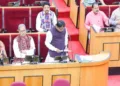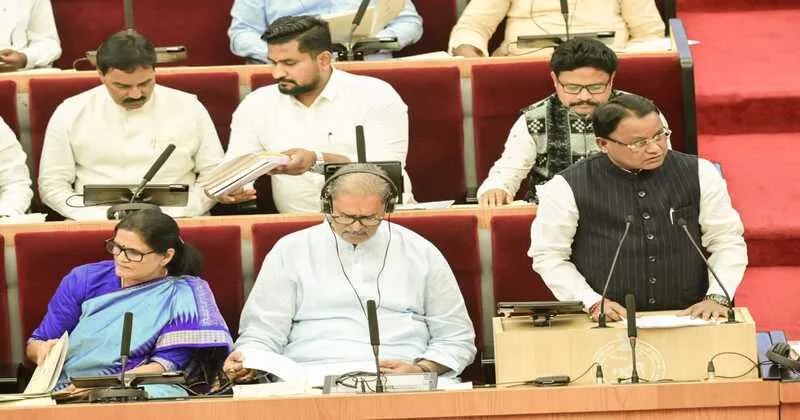
BHUBANESWAR: In a significant statement of fiscal intent aimed at accelerating economic expansion while reinforcing social welfare and cultural preservation, Chief Minister and Finance Minister Mohan Charan Majhi on February 20 presented Odisha’s annual budget for 2026–27 in the Odisha Legislative Assembly at Bhubaneswar. The budget, with a total outlay of Rs 3.10 lakh crore compared to ₹2.90 lakh crore in the previous fiscal year, has been framed as a development-oriented roadmap combining infrastructure expansion, agricultural strengthening, social protection and technological modernisation, while preserving the state’s deep cultural identity.
Ambitious Growth Vision
The government projected that Odisha’s Gross State Domestic Product will exceed ₹11 lakh crore during 2026–27 with an ambitious targeted growth rate of 12 per cent, among the highest growth projections made by the state in recent years. Revenue receipts have been estimated at Rs 2,48,500 crore, substantially higher than the revised estimate of Rs 2,31,000 crore for 2025–26, reflecting confidence in tax buoyancy and improved economic activity. Tax revenue is expected to contribute over Rs 1.37 lakh crore, while non-tax revenue is estimated at approximately Rs 1.11 lakh crore. Capital receipts have been placed at Rs 48,500 crore, primarily sourced through borrowings intended to support infrastructure-led growth. On the expenditure side, revenue expenditure stands at Rs 2,15,500 crore while capital expenditure has been projected at Rs 94,500 crore. Of this capital outlay, Rs 72,100 crore will be spent on roads, irrigation, industrial corridors and major connectivity projects.
ମାନ୍ୟବର ମୁଖ୍ୟମନ୍ତ୍ରୀ ଶ୍ରୀ @MohanMOdisha ଆର୍ଥିକ ବର୍ଷ ୨୦୨୬-୨୭ ସାଧାରଣ ବଜେଟ୍ ଉପସ୍ଥାପନ କରୁଛନ୍ତି। #OdishaBudget2026 pic.twitter.com/KPDmEnQVE4
— CMO Odisha (@CMO_Odisha) February 20, 2026
Major Boost to Agriculture and Rural Economy
Agriculture and rural economy remain central to the fiscal plan, reflecting Odisha’s demographic and economic structure where rural livelihoods still dominate consumption patterns. A new agriculture college will be established in Mayurbhanj district, while additional institutions, including a veterinary science college at Chipilima, an agriculture college at Bolangir and a fisheries science college at Sonepur, aim to strengthen agricultural education and research infrastructure. The government also announced a ₹5,000-crore revolving fund to ensure timely payment of procurement to farmers, a recurring demand in agrarian districts. Farmer welfare schemes received major allocations, including Rs 2,030 crore under the Chief Minister Farmer Scheme and ₹400 crore for the millet promotion programme, reinforcing the state’s push toward nutrition-based agriculture and climate-resilient crops. Flood management received Rs 530 cror,e while Rs 10 crore has been allocated for river-linking feasibility initiatives to improve irrigation and water availability.
Blue Economy and Fisheries Development
The fisheries and animal resources sector has been placed within a broader Blue Economy framework with a departmental allocation of Rs 2,019 crore. A major ecological and economic intervention involves restoration and conservation of Chilika Lake, focusing on biodiversity protection, sustainable fishing and eco-tourism expansion. Officials believe strengthening water-based livelihoods will diversify rural income sources and reduce climate vulnerability among coastal communities.
Cultural Heritage and Religious Infrastructure
Cultural and religious heritage received prominent emphasis in the budget. A digital hundi system will be introduced at Jagannath Temple, Puri, to enhance transparency and management of donations. The government also announced a ₹1,000-crore Jagannath Museum and Library Complex to preserve religious manuscripts and historical records, along with ₹5 crore for inventory and audit of the temple treasury known as Ratna Bhandar. Promotion of traditional performing arts will be strengthened through the establishment of a Mayurbhanj Chhau academy at Baripada dedicated to safeguarding Mayurbhanj Chhau heritage and encouraging younger practitioners. A Jagannath Interpretation Centre in Puri will also be developed to promote religious tourism and improve visitor awareness.
Infrastructure Expansion and Urban Development
Infrastructure expansion forms a major pillar of the budget strategy. Five landmark government structures, including a new Assembly building, Secretariat complex, museum, convention centre and Jana Ashraya Bhavan, are planned in the capital region. The state earmarked Rs 1,000 crore for improving connectivity in remote areas and Rs 100 crore to establish 100 model agricultural markets to improve farm-gate price realisation. Urban development initiatives include ₹100 crore under the Smart City Mission and Rs 240 crore for the creation of a massive grain storage facility designed to strengthen food security and procurement efficiency.
Rail connectivity expansion also received attention, with two new routes proposed. The Namo Express will connect Paralakhemundi to Ambabhona while the Atal Express will link Motu to Tiring, integrating remote tribal districts into the broader economic network and improving market access, healthcare mobility and education access.
Social Welfare and Child Development
Social welfare programmes also received major allocations. The VBG Ram Ji Scheme was allotted Rs 5,575 crore, while Rs 635 crore was sanctioned for the Samruddha Anganwadi initiative aimed at improving child nutrition, maternal health and early childhood education infrastructure across rural and tribal regions. Officials emphasised that long-term human capital development remains critical for sustaining economic growth.
Technology, Tourism and Sports
The state also took steps toward digital modernisation through a State AI Mission with Rs 23 crore funding intended to promote data-driven governance, startup innovation and public service efficiency. Tourism received Rs 150 crore under the Tourism Land Bank Scheme to facilitate private investment and employment generation, while the Fit Odisha Mission was allocated ₹10 crore to encourage sports participation and healthy lifestyles among youth.
Riverfront and Environmental Development
Environmental and urban quality-of-life improvements form another component of the fiscal strategy, with ₹80 crore earmarked for development along the Mahanadi River riverfront, including recreational spaces, beautification and tourism zones. Officials stated that flood control, conservation and eco-tourism are being integrated into broader urban planning initiatives to ensure sustainable growth.
A Budget Balancing Growth and Heritage
Presenting the budget, Majhi emphasised that Odisha’s development must integrate economic modernisation with cultural continuity. The fiscal blueprint seeks to increase farmer income, strengthen procurement institutions, expand transport networks, preserve religious heritage and encourage technological innovation simultaneously. Economists noted that higher capital expenditure, if executed effectively, could crowd-in private investment and generate employment across construction, manufacturing and service sectors, while welfare spending may stabilise rural consumption demand. With projected GSDP growth beyond Rs 11 lakh crore and sustained public investment, Odisha is positioning itself as an emerging growth engine in eastern India while balancing infrastructure expansion with social inclusion and cultural preservation.