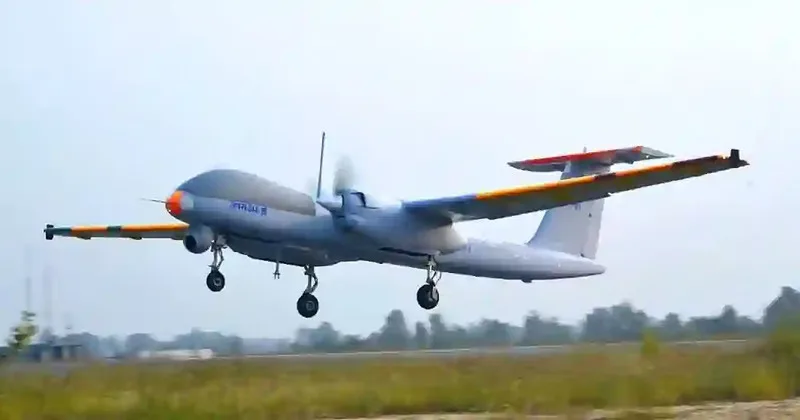
The Indian Institute of Technology Kanpur(IIT Kanpur) has unveiled “Shatakshi,” a cutting-edge anti-drone system designed to detect, track and neutralise unauthorised unmanned aerial vehicles(UAVs). This innovation is a significant step in the nation’s pursuit of indigenous solutions to counter emerging aerial threats. In recent years, drones have evolved from simple aerial gadgets to complex tools capable of surveillance, smuggling and even hostile operations.
Across the world, incidents involving rogue drones near airports, military zones and critical infrastructures have underscored the urgent need for reliable anti-drone mechanisms. Recognising this growing concern, researchers at IIT Kanpur embarked on developing a comprehensive system that not only identifies and tracks suspicious drones but also neutralises them safely without endangering surrounding areas or civilian aircraft. The result of this research effort is Shatakshi, a technology-driven defence innovation that strengthens India’s preparedness against modern aerial challenges.
In a boost to indigenous defence innovation, IIT Kanpur has developed “Shatakshi,” an advanced anti-drone system capable of detecting, tracking and neutralising rogue UAVs. Combining radar, RF analysis and visual tracking, the platform uses intelligent algorithms to distinguish… pic.twitter.com/dm2IS8NGMd
— INVEST UP (@_InvestUP) February 18, 2026
Shatakshi combines radar-based detection, radio-frequency (RF) analysis, and visual tracking to provide multiple layers of security monitoring. The system employs intelligent algorithms capable of distinguishing between friendly and hostile drones in real time. This capability is vital for preventing false alarms in high-traffic airspaces such as airports, defence establishments, and public event venues. Once a drone is detected, Shatakshi instantly analyses its flight pattern, communication signals and visual characteristics. The system then correlates this information using machine learning models to determine whether the UAV poses a potential threat.
In doing so, Shatakshi enables security agencies to make rapid and informed decisions, a critical advantage in fast-evolving security scenarios. Unlike conventional counter-drone technologies that rely solely on physical interception or destruction, Shatakshi incorporates a safe neutralisation protocol. Upon confirming a rogue UAV, the system can deploy signal jamming techniques or initiate controlled deactivation to safely disable the drone without causing collateral damage. This flexibility allows the system to adapt to various operational environments, from open military zones to crowded urban areas.
The multi-layered approach significantly enhances situational awareness and response accuracy. By neutralising drones through electronic countermeasures, Shatakshi minimises risks associated with debris or unintended interference with civilian communication networks. The introduction of Shatakshi is expected to bolster security at airports, defence installations, government buildings, border areas and large-scale public gatherings. These locations are often prime targets for surveillance or sabotage attempts using small, low-flying drones. With its real-time monitoring and autonomous decision-making capabilities, Shatakshi provides a dependable shield for such sensitive zones. The system’s adaptability also makes it suitable for protecting industrial plants, power stations and transportation hubs, where even minor disruptions can lead to large-scale operational or economic consequences.
A leap toward Atmanirbhar Bharat in defence technology
Developed entirely by Indian researchers and engineers, Shatakshi reflects the spirit of Atmanirbhar Bharat, India’s vision for technological self-reliance. By reducing dependence on imported surveillance and counter-drone systems, IIT Kanpur’s innovation strengthens the domestic defence manufacturing ecosystem. It also opens opportunities for collaborations between academic institutions, defence organisations and private manufacturers to produce cost-effective, scalable security solutions.
According to experts, the growing affordability and accessibility of drones have introduced new challenges for law enforcement and security agencies. Systems like Shatakshi fill a crucial gap by offering an indigenous alternative that aligns with India’s strategic goals of digital sovereignty and technological independence. Defence analysts have praised IIT Kanpur’s initiative, describing it as a “timely and forward-looking” step in addressing unconventional security threats. With the global proliferation of small UAVs capable of carrying payloads or conducting surveillance, anti-drone technologies have become a vital component of modern defence strategies.
The system’s ability to operate autonomously and respond within seconds to aerial intrusions can significantly reduce vulnerabilities around critical infrastructure and strategic assets. The team has emphasised that Shatakshi will continue to evolve through iterative testing and integration with emerging AI models, enabling faster response times and enhanced threat classification accuracy. Such initiatives also reinforce IIT Kanpur’s growing role as a hub for defence technology innovation in India.
Beyond defence and internal security, the Shatakshi system holds promise for commercial and civil applications as well. Airports, seaports, oil refineries and even major sporting events could benefit from its rapid detection and neutralisation features. With appropriate customisation, the technology can also be extended to protect wildlife sanctuaries, government offices, and private enterprises against drone-related risks.
Given its indigenous design and modular architecture, Shatakshi also has potential for export to other countries facing similar security challenges. This would not only contribute to India’s economic growth but also enhance its global reputation as a developer of advanced defence solutions. As drones continue to redefine modern warfare and civilian operations, innovations like Shatakshi symbolise the future of smart defence systems. They bridge the gap between automation, intelligence, and security. This will enable faster, more precise, and less destructive responses to emerging threats.
With its unveiling, IIT Kanpur has once again showcased how academic research can drive national security innovation. The project demonstrates that homegrown technologies can meet and even exceed global standards when supported by the right blend of expertise, vision and government collaboration. The introduction of Shatakshi arrives at a pivotal time when drone-related security concerns are escalating worldwide. By integrating radar, RF and visual tracking into a unified platform, the system represents a transformative leap in India’s counter-drone capabilities. It embodies the nation’s commitment to safeguarding critical infrastructure while promoting indigenous technological advancement. This innovation is more than a technical breakthrough and shows India’s evolving defence ecosystem and its unwavering resolve to protect the nation’s skies with homegrown intelligence.