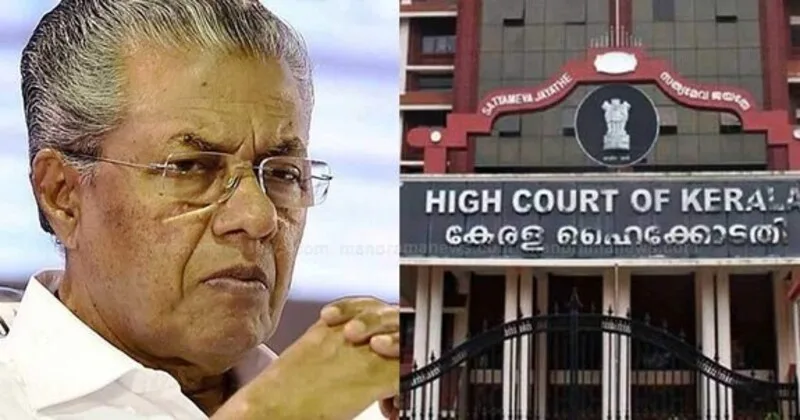
Kochi: The government’s controversial ‘Nava Kerala Survey’ has suffered a major setback after the High Court quashed the exercise, expressing serious concerns over the manner in which it was conducted and funded. The court, unconvinced by the explanations offered by the government, raised strong doubts about the utilisation of public funds for the survey.
The decisive ruling came amid allegations from the Opposition parties that the state machinery was being used to prepare the ruling LDF’s election manifesto using money from the public exchequer. During the hearings, the court had directed the government to produce accurate and detailed documents relating to the source and use of funds for the survey. It had also strictly instructed the government to file a comprehensive counter-affidavit addressing the allegations. The final decision was delivered after considering these submissions.
Although the court had earlier observed that conducting a survey to understand the needs and aspirations of the people was not inherently objectionable, it questioned whether political objectives were being pursued under the guise of a public exercise. The bench expressed doubts about the real intent behind the initiative, indicating that the concerns raised were not without substance. These observations appeared to lend weight to the serious allegations.
The court took a stern view of the petitioners’ argument that government systems and resources were being misused to gather data for the preparation of the LDF’s manifesto. It was in this context that the bench concluded that the continuation of the survey could not be justified. The judges made it clear that transparency regarding the funding and execution of such an exercise was non-negotiable.
The High Court had categorically directed the government to disclose the exact source of funding for the survey and to ensure complete clarity in its financial arrangements. The matter was considered in detail based on two petitions filed seeking an immediate halt to the survey. After reviewing the materials placed before it, the court held that proceeding with the survey in the manner it was being conducted was illegal.
The verdict effectively reinforces the Opposition’s charge that taxpayers’ money was being diverted for partisan political purposes. The court was not satisfied with the government’s explanation regarding how the survey was financed, and it found the counter-affidavit inadequate in addressing the concerns raised earlier. The inability of the government to convincingly clarify the funding source became a critical factor in the court’s decision.
The judgment was delivered by a bench headed by the Chief Justice while hearing the two petitions challenging the survey. The bench unequivocally stated that allowing the exercise to continue would amount to endorsing an unlawful process. Consequently, the survey was cancelled in its entirety.
With elections on the horizon, the ruling has significant political implications. What the Opposition had described as a politically motivated exercise has now been struck down by judicial intervention. The government finds itself on the defensive, facing renewed scrutiny over the misuse of state machinery and public funds. The High Court’s order has effectively brought to an end what critics termed an attempt to collect citizens’ information for party advantage under the cover of governance.