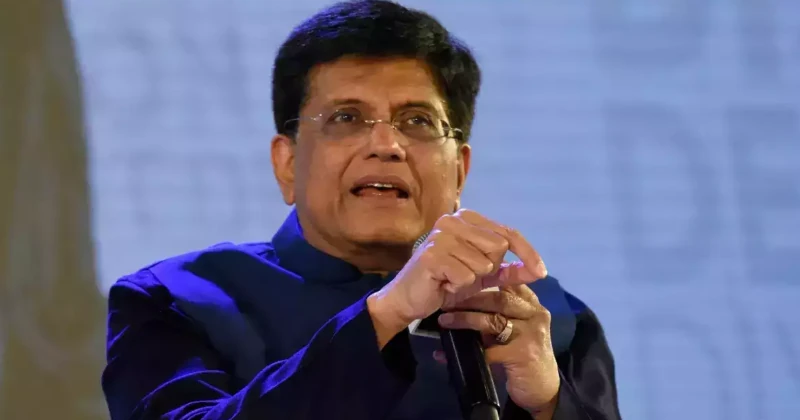
Union Commerce and Industry Minister Piyush Goyal on Feb 7, attributed the successful conclusion of the interim India-US trade deal to what he described as Prime Minister Narendra Modi’s “masterclass” in leadership and negotiations, underlining that purity of intent and respect for national interests were central to the agreement.
Speaking in an exclusive interview with CNN-News18, Goyal said the personal leadership of Prime Minister Modi and US President Donald Trump played a decisive role in breaking logjams and giving momentum to the deal after months of intense negotiations, particularly amid global tariff tensions.
“If your intent is pure, if you believe in fair play on both sides, respect each other’s sensitivities, and remain committed to the well-being of your nation while recognising each other’s strengths, it naturally leads to mutual understanding,” Goyal said, summing up the philosophy that guided the negotiations.
A ‘win-win’ trade framework
Describing the agreement as a powerful “win-win” framework, the Commerce Minister said the deal positions both economies as complementary rather than competitive forces in the global trade ecosystem. He highlighted the scale and potential of the partnership by pointing to the economic trajectories of both nations.
“When we look at the $30 trillion US economy and the $4 trillion Indian economy that is rapidly growing and aiming to become a $30 trillion economy by 2047, together we provide a force multiplier,” Goyal said. He added that this synergy could help both sides achieve ambitious trade targets, including $500 billion worth of purchases over the next five years.
The interim deal announced, provides for a reduction in reciprocal US tariffs on Indian goods to 18 per cent, offering immediate relief to several export sectors while keeping the door open for further reductions in the future.
Navigating sensitive sectors
Addressing concerns raised by opposition parties and critics over the possible impact of the trade deal on Indian farmers and MSMEs, Goyal categorically rejected claims that domestic interests had been compromised.
He stressed that India remains self-sufficient in key agricultural commodities such as rice, wheat, sugar, soyabean, corn, millets, poultry products, certain fruits, green peas, groundnuts, and non-alcoholic beverages. These sectors, he said, were treated as sensitive and adequately protected under the agreement.
“Products that are critical for our farmers have been safeguarded. On other items, there has been a calibrated and phased opening. In many cases, tariff rate quotas and transition periods have been provided to ensure domestic stability,” Goyal explained.
PM Modi’s ‘Pragmatic’ approach
The Commerce Minister repeatedly returned to Prime Minister Modi’s role, describing him as a “pragmatic leader” with a rare ability to balance ambition with caution. According to Goyal, PM Modi’s deep understanding of India’s comparative strengths, as well as its vulnerable sectors such as agriculture and fisheries, proved crucial in guiding negotiators.
“This unique clarity of Prime Minister Modi helped us navigate the entire process. Over the last 12 years of working with him, we have grown in our understanding of negotiation principles and how to consistently place national interest first,” Goyal said.
He likened the Prime Minister’s approach to a “masterclass,” noting that Modi focuses on real-life, implementable solutions rather than theoretical frameworks. “Most important is his holistic thinking,” he added.
Strategic and technological cooperation
Beyond tariffs, Goyal indicated that the trade deal opens significant avenues for strategic and technological collaboration. India, he said, is keen on strengthening its capabilities in advanced sectors by acquiring ICT products, data centres, and quantum computing equipment from the United States.
Such cooperation, he argued, would help India emerge as a serious global player in cutting-edge technological domains while deepening economic interdependence between the two democracies.
Reiterating that India shares a strong and respectful relationship with the United States, Goyal said both sides demonstrated maturity by acknowledging each other’s sensitivities throughout the negotiations. He dismissed fears of future friction, stating that months of dialogue had helped resolve most contentious issues.
“We are not far apart in our abilities to conclude a good deal. We are not competitors; we complement each other. Both leaderships guided their teams with clarity and purpose,” he said.
Expressing optimism about the road ahead, Goyal concluded that the interim agreement is only the beginning and could unlock multiple opportunities for deeper collaboration across trade, technology, and strategic sectors, reinforcing the long-term India–US partnership.