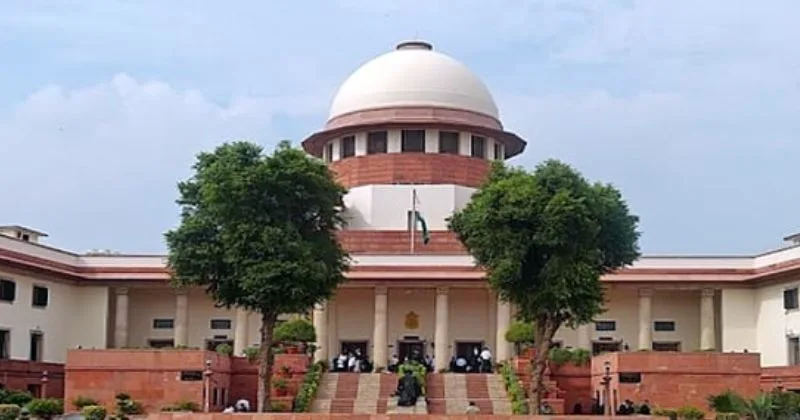
In a major setback to the Mamata Banerjee-led West Bengal government, the Supreme Court of India on Thursday (Feb 5) directed the state to refix the Dearness Allowance (DA) payable to its employees for the period 2008 to 2019, holding that DA is a statutory right and an integral part of total emoluments under the Revision of Pay and Allowances (ROPA) Rules.
The apex court also ordered the release of DA arrears from 2009 to 2019, observing that the state government could not arbitrarily deviate from the prescribed formula governing DA calculation.
The ruling was delivered by a bench comprising Justice Sanjay Karol and Justice P.K. Mishra, which emphasised that once service conditions are governed by statutory rules, the state is bound to follow them in both letter and spirit.
At the heart of the dispute was the West Bengal government’s decision to alter the manner in which DA was calculated for its employees, resulting in significantly lower payments compared to central government employees and long delays in revisions.
Rejecting the state’s position, the Supreme Court categorically held that DA is not an optional or discretionary benefit but a component used to compute total emoluments under the ROPA framework.
“Dearness Allowance is not static in nature. It is dynamic and subject to change under the applicable rules,” the court observed, adding that DA exists to neutralise the impact of inflation and cannot be frozen or diluted without lawful justification.
Taking note of the financial implications involved in releasing arrears spanning over a decade, the Supreme Court constituted a high-level committee to determine the exact quantum of DA payable and the manner of its phased disbursement.
The committee will be headed by former Supreme Court judge Justice Indu Malhotra and will include two retired Chief Justices of High Courts and the Comptroller and Auditor General (CAG) or a senior officer deputed by the CAG.
The panel has been tasked with recalculating DA strictly as per the ROPA Rules, determining the total arrears payable to employees and pensioners, and preparing a phased payment schedule in consultation with the state government.
The Supreme Court directed that the committee must complete its exercise by March 6, 2026.
Importantly, the court has fixed a clear timeline for implementation. It ordered that the first instalment of DA arrears must be paid by March 31, 2026.
The benefit will not be limited to serving employees alone. The court specifically directed that retired employees and pensioners are also entitled to receive the recalculated DA arrears for the relevant period.
This direction is expected to impact lakhs of current and former West Bengal government employees, many of whom have been litigating the issue for years.
The case before the Supreme Court arose from appeals filed by the West Bengal government, challenging adverse rulings passed in earlier litigation, including directions to align DA calculation with established norms.
Employee unions had repeatedly argued that the state’s DA rates lagged far behind inflation-linked benchmarks, causing erosion in real wages. The dispute also drew comparisons with central government employees, whose DA is revised periodically based on the All India Consumer Price Index (AICPI).
During the hearing, the Supreme Court framed and examined 13 key legal and constitutional questions, reflecting the complexity of the dispute. These included the scope of powers under Article 309 of the Constitution, the binding nature and interpretation of the ROPA Rules, whether the state’s DA rules were consistent with ROPA, whether DA is static or dynamic in nature, whether employees’ legitimate expectations had been violated, the relevance of AICPI-based calculations, and whether financial constraints can justify denial or dilution of DA.
The court also examined whether directions issued by the Central Administrative Tribunal (CAT) to follow AICPI norms were valid and whether DA could be considered a fundamental right.
In a sharp rebuke, the Supreme Court described the West Bengal government’s decision to change the DA calculation mechanism as arbitrary and capricious.
The bench noted that the state had deviated from established rules without any underlying rationale or guiding principle, undermining the predictability and fairness expected in service conditions.
Such unilateral alterations, the court held, erode trust and violate the legitimate expectations of employees who structure their financial lives around statutory pay frameworks.
The court underscored that government employees had legitimate expectations arising from periodic revisions under the ROPA Rules and inflation-linked indices like the AICPI.
It rejected the state’s argument that the Centre was attempting to impose its authority on the state through DA-linked mechanisms, calling the contention a “figment of imagination.”
The bench made it clear that adopting objective inflation indices does not amount to surrendering state autonomy.
Addressing the state’s plea of financial constraints, the Supreme Court laid down an important principle of law.
“Once a right is conferred on employees under statutory rules, fiscal policy cannot override that right,” the court observed, adding that budgetary difficulties cannot be used as a shield to deny lawful entitlements.
However, the court clarified that DA cannot be granted more than twice in a year, in line with established practice.
While firmly recognising DA as a statutory and enforceable right, the Supreme Court stopped short of declaring it a fundamental right, leaving that question open to be decided in an appropriate future case.