BENGALURU: Mysuru, once celebrated as Karnataka’s cultural capital, is fast turning into a safe haven for organised drug syndicates and the latest Delhi Narcotics Control Bureau (NCB) operation has brutally exposed the glaring inefficiency of the Karnataka police and the apathy of the state government.
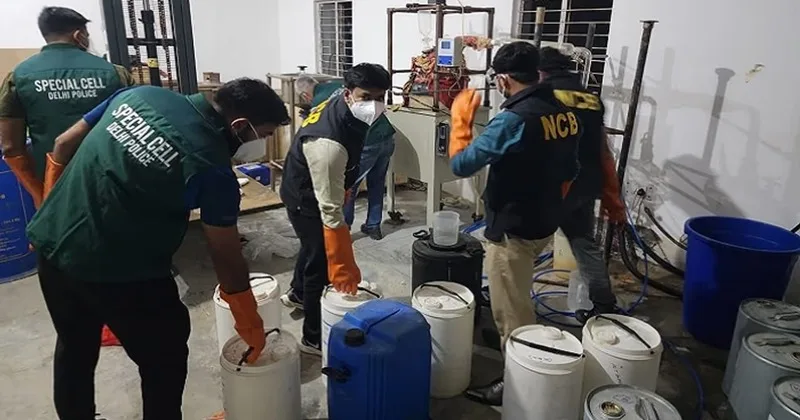
In a sensational raid, NCB officials unearthed a second secret drug manufacturing unit in Mysuru and seized narcotics worth nearly ₹10 crore. Four persons from Rajasthan were arrested, large quantities of chemicals were confiscated, and a sophisticated interstate drug network was busted. But the biggest question is this why did it take an OUTSIDE agency to expose what the local police completely failed to detect?
The fact that a full-fledged illegal drug laboratory was functioning right under the nose of Mysuru police is nothing short of a monumental embarrassment for the law enforcement machinery of Karnataka. The lab was not operating in some remote forest or deserted industrial zone — it was functioning openly within city limits. Yet, the local police remained blissfully unaware.
This is not the first such incident. Earlier too, drug manufacturing and trafficking units were detected in Mysuru — and even then, central agencies or police from other states had to step in. The pattern is disturbing and raises serious doubts about the competence, intent, and alertness of Karnataka’s policing system.
NCB officials, acting on intelligence inputs, raided the facility and recovered huge quantities of banned substances, over 500 kg of chemicals used for drug production, ₹25.6 lakh in cash, and a car registered in Karnataka. The mastermind, operating from jail, had reportedly coordinated the entire operation through relatives and associates — another alarming revelation that exposes how deeply organised crime has penetrated the system.
While central agencies continue to crack down on such networks, Karnataka police appear clueless, reactive, and ineffective. How can a drug lab operate for months in a major city like Mysuru without a single local officer noticing anything suspicious? What were the intelligence units doing? Where were the routine checks, surveillance, and monitoring mechanisms?
The failure is not just administrative, it is a complete breakdown of governance.
Mysuru is a globally recognised heritage and tourism hub. Students, professionals, and families live here in large numbers. If drug cartels are able to establish manufacturing units so easily in such a city, it clearly indicates that criminals no longer fear the local law enforcement.
Public anger is growing. Citizens are asking why the Karnataka government has not taken proactive steps to curb the rising drug menace. Despite repeated incidents across Bengaluru, Mysuru, and coastal Karnataka, the state continues to behave as if everything is under control.
Instead of strengthening anti-narcotics wings, increasing surveillance, and cracking down on interstate drug networks, the government appears more interested in political battles than in protecting its youth from the poison of narcotics.
Even more shocking is the fact that those arrested are from Rajasthan, proving that outsiders consider Karnataka a “safe operational zone” for illegal activities. If criminals from other states can come, rent properties, set up drug labs and run operations without fear what does it say about Karnataka’s internal security?
The involvement of interstate gangs also points to a larger intelligence failure. Police coordination between districts and states seems almost non-existent. There is clearly no effective mechanism to track suspicious rentals, chemical purchases, or unusual movements all of which are basic requirements to prevent such crimes.