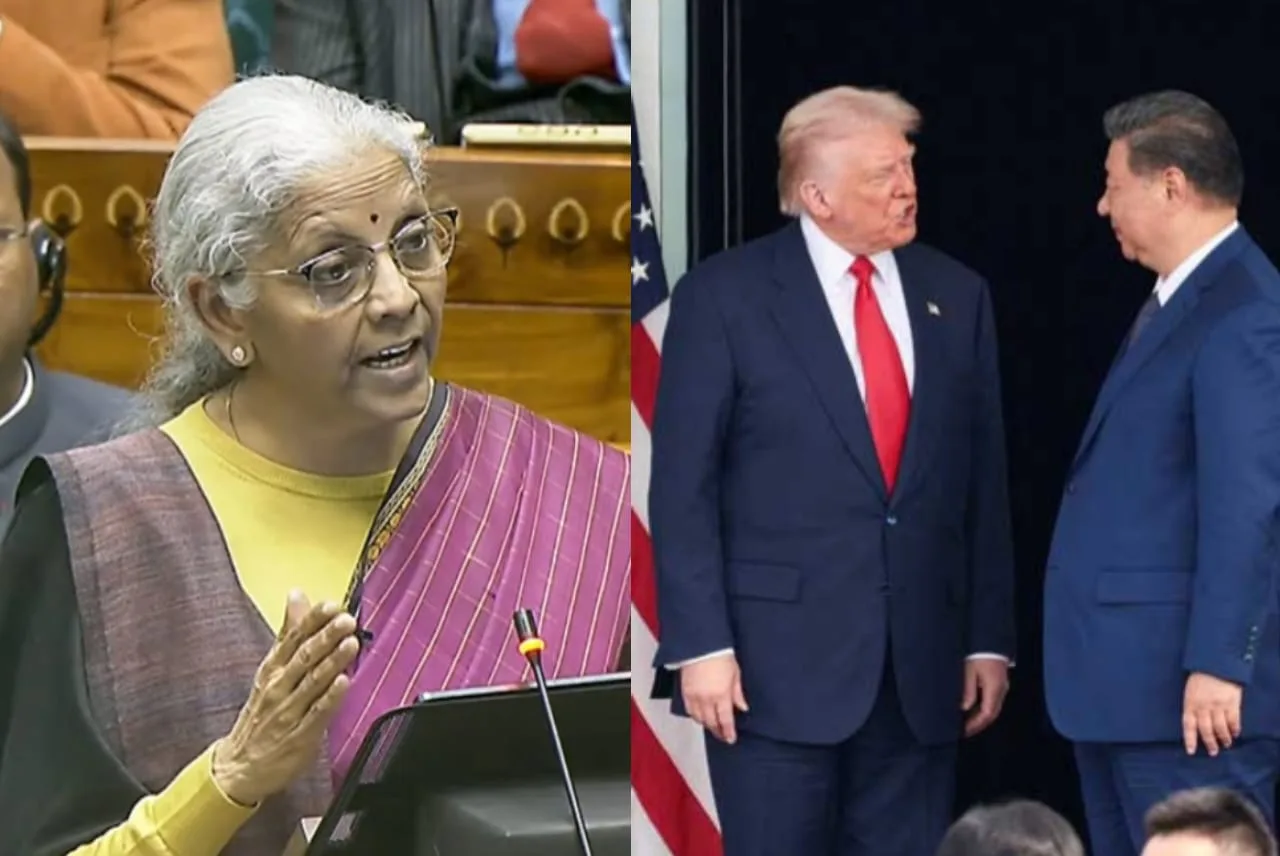
NEW DELHI: The Union Budget 2026 marks a decisive intervention by the Union government to simultaneously counter mounting pressures from the global trade policies of US President Donald Trump and the entrenched manufacturing dominance of China. Finance Minister Nirmala Sitharaman has laid out a clear defensive economic strategy to insulate India’s economy and labour market from external shocks. The budget reflects an unmistakable intent to shield domestic industry from the destabilising effects of protectionism and to preserve employment amid growing uncertainty in global trade.
SEZ relief and textile revival to counter US unilateralism
A key thrust of the budget lies in its targeted measures to support sectors most vulnerable to recent US trade restrictions. In particular, textiles, leather, seafood exports, and container manufacturing have received focused attention. These sectors have been directly affected by higher import duties and non-tariff barriers imposed by the US, as well as by China’s near-monopoly in certain strategic manufacturing segments. The analysts have described this approach as a multi-layered response to what they see as an “American shock” to Indian exports, with an emphasis on immediate relief and medium-term structural correction.
One of the most consequential decisions announced in the budget relates to Special Economic Zones. SEZ units that depend almost entirely on the US market were facing the threat of closure due to shrinking export demand. To prevent large-scale job losses, the government has allowed goods produced in SEZs to be sold in the Domestic Tariff Area under special concessions. This one-time relief is expected to stabilise a sector that employs around 31 lakh workers, offering firms a temporary domestic outlet while global trade conditions remain volatile.
The budget also places strong emphasis on revitalising the textile and handloom sectors, traditionally among India’s largest employers. A new integrated modernisation initiative has been announced, centred on the National Fibre Scheme, which will promote the production of natural fibres such as silk and wool. Alongside this, financial support will be provided to replace outdated machinery with modern technology, supported by new testing and certification centres. The objective is to improve productivity, quality, and global competitiveness while safeguarding livelihoods across the textile value chain.
Export duty relief and push to break China’s container monopoly
Export-oriented sectors such as seafood and leather have also been granted duty-related relief. Import concessions on raw materials used for exports have been expanded, with the incentive for seafood exports increased from 1 per cent to 3 per cent. In the leather sector, the scope of duty-free imports has been expanded beyond finished leather shoes to include materials used to manufacture shoe uppers. Additionally, the deadline for manufacturing and exporting products has been extended from 6 months to one year, providing exporters with much-needed operational flexibility.
Perhaps the most strategically significant announcement is the Rs 10,000 crore plan to reduce India’s dependence on Chinese container manufacturing. With China currently controlling 95 per cent of the global container market, the government aims to position India as a major container manufacturing hub within the next 5 years. By encouraging domestic container production, the initiative seeks to weaken China’s monopoly while strengthening India’s role in global logistics and trade infrastructure. Taken together, these measures signal a concerted effort to protect Indian industry, secure jobs, and assert economic resilience amid an increasingly adversarial global trade environment.